


Suo Motu Revision Powers Cannot Be Exercised After Unreasonable Delay: Gujarat HC
 Copy Link
 Share
 Save
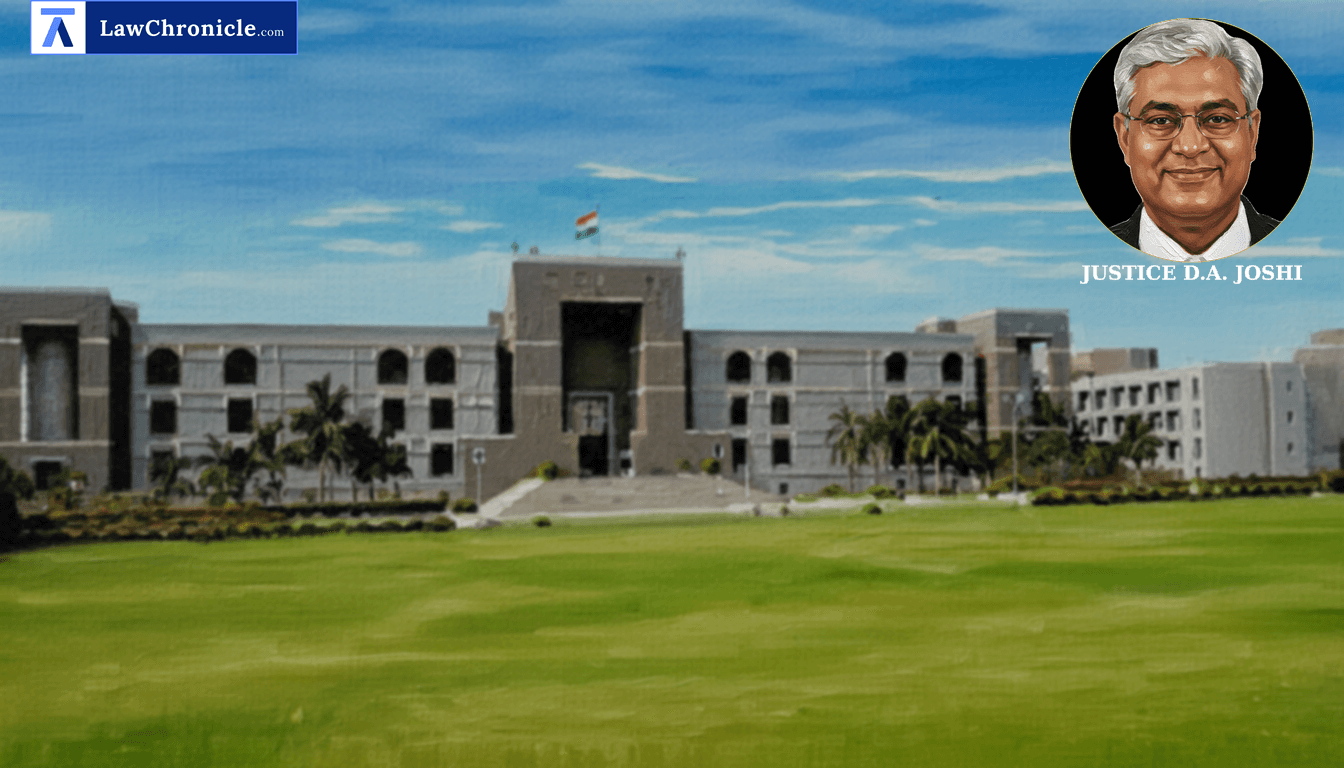
The High Court of Gujarat has quashed forfeiture orders passed by revenue authorities 33 years after an alleged breach of land tenure conditions, affirming that statutory powers of revision must be exercised within a reasonable timeframe to prevent avoidable uncertainty in human affairs. The Court held that even if a transaction is deemed void, the state cannot unsettle long-standing property rights after decades have passed, especially when third-party interests have been created.
A single-judge bench of Justice Divyesh A. Joshi heard a batch of writ petitions involving the forfeiture of land in Village Gochnad, Patan. The dispute centered on whether a mortgage executed in 1980 without prior permission constituted a valid ground for the state to seize the land in 2013, despite the tenure being subsequently converted and the property sold to a bona fide purchaser.
Key Takeaways
Finality of Property Rights
State authorities cannot weaponize suo motu revision powers to disturb settled titles after a lapse of decades, ensuring stability in land transactions.
Protection of Bona Fide Purchasers
Subsequent buyers who verify revenue records and pay full consideration are protected from the consequences of historic, technical breaches by original allottees.
Reasonable Time Doctrine
In the absence of a statutory limitation period, 'reasonable time' for revision is typically measured in months, not decades.
Natural Justice Requirements
The failure to notify a current occupant whose name is in the revenue records before passing a forfeiture order is a fatal violation of procedural fairness.
Invalidity of Belated Suo Motu Proceedings
The Court noted that the initial alleged breach occurred in 1980 when the original grantee, Ramji Garasiya, mortgaged the land. However, the revenue authorities only initiated suo motu proceedings in 2013. The Court emphasized that the law does not expect a settled thing to be unsettled after a long lapse of time. Relying on State of Gujarat Vs. Patel Raghav Natha ( "(1969) 2 SCC 187": 1969 CaseBase(SC) 152), the Court reiterated that revisional powers must be exercised within a reasonable period.
Moreover, the Court observed that the land had already been converted from new tenure to old tenure by the Mamlatdar in 1998 under the Gujarat Land Revenue Code, 1879. Once the tenure was converted, the restrictions attached to the land were effectively lifted, rendering the subsequent forfeiture on the grounds of tenure breach legally unsustainable.
Violation of Natural Justice
The Court highlighted that the current petitioner, who purchased the land in 2010 via a registered sale deed, was not even joined as a party to the forfeiture proceedings. The Court, in its reasoning, observed: "The cardinal point that has to be borne in mind, in every case, is whether the person concerned should have a reasonable opportunity of presenting his case and the authority should act fairly, justly, reasonably and impartially. It is not so much to act judicially but is to act fairly, namely, the procedure adopted must be just, fair and reasonable in the particular circumstances of the case." This principle was further supported by D.K. Yadav Vs. J.M.A. Industries Ltd. ( "(1993) 3 SCC 259": 1993 CaseBase(SC) 496) regarding the protection of fundamental rights under Article 14 of the Constitution of India, 1950.
Bar on Vendors Taking Advantage of Their Own Wrong
The Court dismissed the claim of the original grantee's successors seeking re-grant of the land. It noted that the sellers had already pocketed the sale consideration and were now trying to exploit the state's forfeiture order to regain the land. Citing Navuji Lalji Vaghela Vs. State of Gujarat, the Court held that no man can take advantage of his own wrong.
The Court issued the following directions:
"Special Civil Application No.11994/2018 stands allowed. The impugned order dated 04/19.05.2018 passed by the respondent – SSRD in Revision Application No.MVV/JMN/PTN/23/2017, the order dated 24.11.2017 passed by the respondent – Collector as well as the orders dated 29.04.2013 and 19.11.2013 passed by the respondent – Deputy Collector are hereby quashed and set aside and Entry No.1787 dated 03.02.2011 based on registered sale deed dated 19.01.2010 executed in favour of the petitioner shall stand restored. Rule is made absolute to the aforesaid extent... Special Civil Application No.13970/2018 being devoid of merits, is hereby rejected. Rule is discharged."
Ratio
Even where a statute does not prescribe a limitation period for the exercise of suo motu revisional powers, such powers must be exercised within a reasonable period. A delay of 33 years is gross and unreasonable, precluding the authority from annulling a transaction, particularly when tenure conversion and third-party rights have intervened.
Background
The land in question, originally Government land, was allotted to Ramji Garasiya in 1976 as new tenure land. In 1980, Garasiya mortgaged the land, leading to an uncertified revenue entry. Years later, his successors converted the land to old tenure and sold it to one Kamabhai Chaudhary, who later transferred it to his son, who eventually sold it to the petitioner in 2010. In 2013, the Deputy Collector initiated suo motu proceedings for the 1980 mortgage breach and forfeited the land. The petitioner, despite being the registered owner, was excluded from these proceedings. The Special Secretary (Appeals), Revenue Department (SSRD) upheld the forfeiture, leading to the present challenge before the High Court. The Court relied on Ravjibhai Mavji Jogani Vs. State of Gujarat, State of Gujarat Vs. Jitendrasinh Jagmalsinh Sodha, Chandulal Gordhandas Ranodriya Vs. State of Gujarat, and Rabari Gokalbhai Jaksibhai since Decd. Through Legal Vs. State of Gujarat to conclude that the state's action was arbitrary and barred by delay.
Case Details:
Case No.: R/SPECIAL CIVIL APPLICATION NO. 11994 of 2018
Neutral Citation: 2026:GUJHC:56683
Case Title: Ismailbhai Sulemanbhai Memon Versus State Of Gujarat Through The Secretary & Ors.
Appearances:
For the Petitioner(s): MR HRIDAY BUCH, MR DINESHKUMAR B MORAKHIA
For the Respondent(s): MR RAHUL DAVE (AGP), MR J G VAGHELA
Source: 2026 CaseBase(GUJ) 20683
Similar Articles

 Breaking News


