


Supreme Court Affirms Consortium Lenders’ Status as Financial Creditors, Directs Reconstitution of CoC
 Copy Link
 Share
 Save
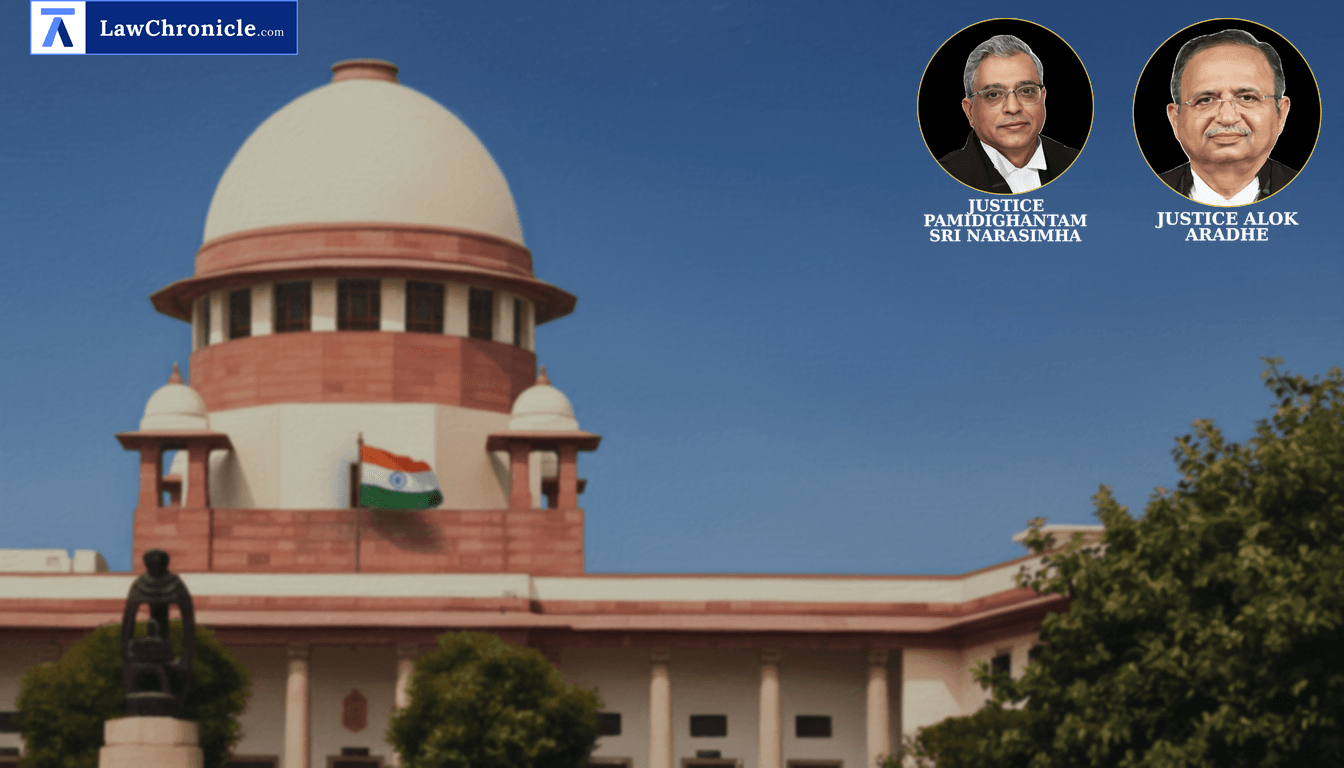
The Supreme Court of India in State Bank Of India & Ors. vs Doha Bank Q.P.S.C. & Anr. held that the corporate guarantees executed by the corporate debtor constituted "financial debt" within the meaning of Section 5(8) of the Insolvency and Bankruptcy Code, 2016, and the appellants were entitled to recognition as financial creditors.
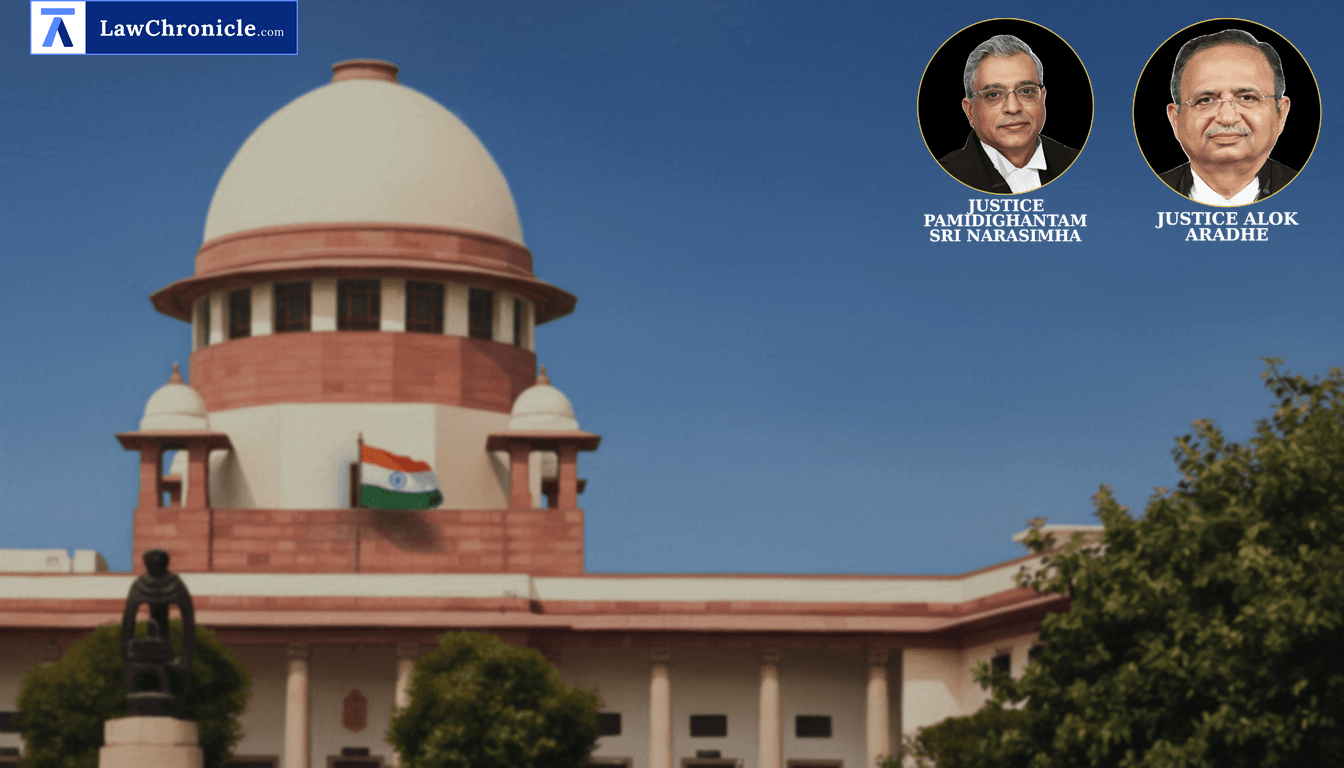
A bench of Justice Pamidighantam Sri Narasimha and Justice Alok Aradhe heard an appeal under Section 62 of the Insolvency and Bankruptcy Code, 2016 challenging orders of the NCLT and NCLAT that had refused recognition to a consortium of banks as financial creditors on the basis of corporate guarantees and had directed reconstitution of the Committee of Creditors.
The Court allowed the appeal and held that the appellants were entitled to recognition as financial creditors of the Corporate Debtor. The Resolution Professional is directed to reconstitute the committee of creditors by including the appellants and to proceed with the corporate insolvency resolution process in accordance with law.. The Court, in its reasoning, observed: "At the outset, it is apposite to note that for a debt to become “financial debt” for the purpose of Part II of the Code, the essential elements of disbursal, and that too against the consideration for time value of money, needs to be found in the genesis of any debt before it may be treated as “financial debt” within the meaning of Section 5(8) of the Code. This debt may be of any nature but a part of it is always required to be carried, or corresponding to, or at least having some traces of disbursal against consideration for the time value of money. Under Section 5(7) of the Code, a person can be categorized as a financial creditor if a financial debt is owed to it. Section 5(8) of the Code stipulates that the essential ingredient of a financial debt is disbursal against consideration for the time value of money. A liability arising from the corporate guarantee squarely falls within the ambit of financial debt as defined under Section 5(8) of the Code. The amount of any liability in respect of any of the guarantees for money borrowed against the payment of interest is a “financial debt” within Section 5(8) of the Code. It is well settled legal proposition that a guarantor incurs a coextensive liability with that of a principal borrower and such liability is enforceable in law."
The Court expressly rejected the contention that the guarantees were void for insufficiency of stamping under the Maharashtra Stamp Act, 1958, observing that non-payment or improper payment of stamp duty was a curable defect and did not render the instrument void. It found that the guarantees had been produced and inspected by the Resolution Professional at the security trustee's office in New Delhi and that the corporate debtor had, by communication, admitted that disclosures regarding the guarantees were made in its financial statements. The Court held that the concurrent factual findings of the tribunals were perverse in several respects and warranted interference.
Background
The dispute arose from rupee and foreign currency facilities extended to group companies and a corporate debtor, and from corporate guarantees executed by the corporate debtor in favour of a security trustee for the benefit of a consortium of banks. Following classification of accounts as NPA and subsequent restructuring, the corporate guarantees were executed in March 2017 and later invoked during the corporate insolvency resolution process initiated in May 2018. The IRP/RP accepted claims of the consortium in Form C but the NCLT held that claims were not supported by adequate documentation and that guarantees were neither properly verified nor disclosed, directing reconstitution of the CoC. The NCLAT affirmed and dismissed the appeal, noting timing of execution, non-disclosure in financial statements and stamping issues.
On appeal, the Supreme Court examined whether a corporate guarantee amounted to "financial debt" under Section 5(8) of the Insolvency and Bankruptcy Code, 2016, considered the verification and substantiation regime under the Insolvency And Bankruptcy Board Of India (Insolvency Resolution Process For Corporate Persons) Regulations, 2016, and dealt with arguments invoking Section 186 of the Companies Act, 2013 and the applicability of the Maharashtra Stamp Act, 1958. The Court reaffirmed established principles from precedents and applied them: it referred to China Development Bank v. Doha Bank Q.P.S.C. & Ors. ( "(2025) 7 SCC 729": 2024 CaseBase(SC) 813) in support of the proposition that liabilities on guarantees are financial debt, considered the principles in Anuj Jain, Interim Resolution Professional for Jaypee Infratech Ltd. v. Axis Bank Ltd. & Ors. ( "(2020) 8 SCC 401": 2020 CaseBase(SC) 1246) concerning the requirement of disbursal in defining financial debt, and relied on decisions such as Phoenix ARC (P) Ltd. v. Spade Financial Services Ltd. & Ors. ( "(2021) 3 SCC 475": 2021 CaseBase(SC) 874) and NN Global Mercantile (P) Ltd. v. Indo Unique Flame Ltd. & Ors. on curability of stamping defects and evidentiary rules. The Court noted earlier authority on stamp law and arbitration interplay in Interplay Between Arbitration Agreements under Arbitration & Conciliation Act, 1996 and Stamp Act, 1899, IN RE while distinguishing factual findings relied upon by respondents and observing the scope of appellate interference explained in Catalyst Trysteeship Ltd. v. Ecstasy Realt (P) Ltd. and SBI & Ors. v. The Consortium of Mr. Murari Lal Jalan and Mr. Florian Fritsch & Anr. ( "2024 INSC 852": 2024 CaseBase(SC) 927).
The Court concluded that the guarantees were genuine, that any stamping irregularity did not void the instruments, and that the IRP/RP had verified the documents by inspection in New Delhi. Consequently, it quashed and set aside the orders of the NCLAT and NCLT, directed reconstitution of the Committee of Creditors to include the appellants and directed the RP to proceed with the CIRP in accordance with law. There was no order as to costs.
Case Details:
Case No.: CIVIL APPEAL No. 8527 OF 2022
NeutralCitation: 2026 INSC 423
Case Title: STATE BANK OF INDIA & ORS. v. DOHA BANK Q.P.S.C. & ANR.
Source: 2026 CaseBase(SC) 366
Similar Articles
 Breaking News


