


Insolvency Code Not A Tool For Coercion Or Debt Recovery: SC
 Copy Link
 Share
 Save
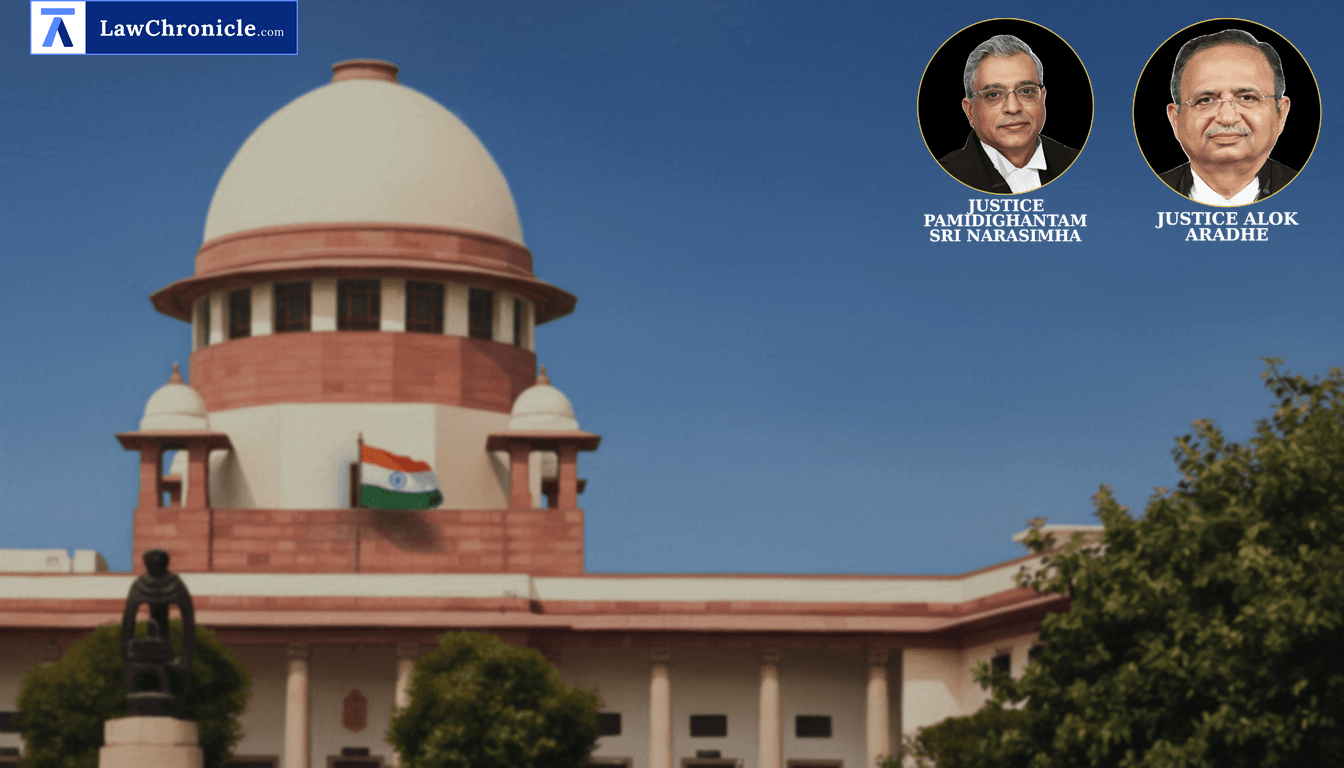
The Supreme Court dismissed an appeal by a financial institution, clarifying that the Insolvency and Bankruptcy Code, 2016 cannot be invoked for recovery purposes when a dispute is predominantly contractual and involves intertwined obligations of multiple parties.
A bench of Justice Pamidighantam Sri Narasimha and Justice Alok Aradhe heard the appeal challenging a decision of the National Company Law Appellate Tribunal (NCLAT) which had set aside the initiation of insolvency proceedings against a corporate debtor. The Court emphasized that the Insolvency and Bankruptcy Code, 2016 operates as a collective resolution mechanism and not as a forum for the adjudication of individual contractual claims.
Contractual Disputes vs. Financial Debt
The Court observed that for the invocation of Section 7 of the Insolvency and Bankruptcy Code, 2016, the existence of a 'financial debt' and a 'default' in its repayment are essential. However, the Court noted that where the object behind the invocation is to compel payment rather than addressing genuine financial distress, it amounts to an abuse of process. Referring to precedents like Innovative Industries Ltd. v. ICICI Bank & Anr. ( "(2018) 1 SCC 407": 2017 CaseBase(SC) 147) and Pioneer Urban Land and Infrastructure Ltd. & Anr. v. Union of India & Ors. ( "(2019) 8 SCC 416": 2019 CaseBase(SC) 2354), the Court reiterated that the Insolvency and Bankruptcy Code, 2016 must not be used as a tool for coercion.
In the current case, the loan was disbursed directly to a builder under a quadripartite agreement involving the bank, the corporate debtor, the builder, and a state corporation. The Court found that the bank’s disbursement was intrinsically linked to the performance of the builder’s obligations regarding construction and transfer of property.
Court's Rationale on Forum Shopping
The Court, in its reasoning, observed: "The present case does not involve a straightforward financial debt-default scenario warranting initiation of CIRP. The facts disclose a dispute which is predominantly contractual in nature and is subject matter of the proceedings before the DRT-the appropriate forum for recovery. The deposit made pursuant to order of the DRT further indicates that the matter is actively being adjudicated in appropriate proceeding. Therefore, permitting invocation of the Code in cases such as the present one, would amount to converting insolvency proceedings into a coercive mechanism for recovery which is impermissible."
The Court noted that the bank had already initiated proceedings under the Recovery of Debts Due to Banks & Financial Institutions Act, 1993 and that the matter was being actively adjudicated. Citing Glas Trust Company LLC v. BYJU Raveendran & Ors. ( "(2025) 3 SCC 625": 2024 CaseBase(SC) 798) and Anjani Technoplast Ltd v. Shubh Gautam ( "2026 INSC 410": 2026 CaseBase(SC) 359), the Court maintained that the Insolvency and Bankruptcy Code, 2016 cannot be used as a recovery tool.
Background:
The dispute originated from a loan sanctioned by Dhanlaxmi Bank to M/s. Emerald Mineral Exim Pvt. Ltd. (Corporate Debtor) for purchasing a unit in a project named "Synthesis Business Park". A quadripartite agreement was executed, and the loan was disbursed directly to the builder. When the Corporate Debtor failed to repay, the bank initiated recovery proceedings before the Debt Recovery Tribunal under the Recovery of Debts Due to Banks & Financial Institutions Act, 1993. Simultaneously, a winding-up petition was filed under the Companies Act, 1956, which was later transferred to the National Company Law Tribunal (NCLT) and treated as a petition under Section 7 of the Insolvency and Bankruptcy Code, 2016.
While the National Company Law Tribunal (NCLT) initially admitted the petition, the National Company Law Appellate Tribunal (NCLAT) reversed the decision, holding that the bank could not be termed a "Financial Creditor" under the specific circumstances and had indulged in forum shopping. The Supreme Court upheld the National Company Law Appellate Tribunal (NCLAT)'s view, concluding that the transaction was not a simple financial lending arrangement but was intertwined with the builder’s performance, making the Insolvency and Bankruptcy Code, 2016 an inappropriate remedy.
Case Details:
Case No.: CIVIL APPEAL No. 7184 OF 2022
NeutralCitation: 2026 INSC 460
Case Title: DHANLAXMI BANK LIMITED v. MOHAMMED JAVED SULTAN & ORS.
Source: 2026 CaseBase(SC) 390
Similar Articles

 Breaking News


