


Supreme Court Directs States to Fill and Expand Open Correctional Institutions, Frames National Oversight and Minimum Standards
 Copy Link
 Share
 Save
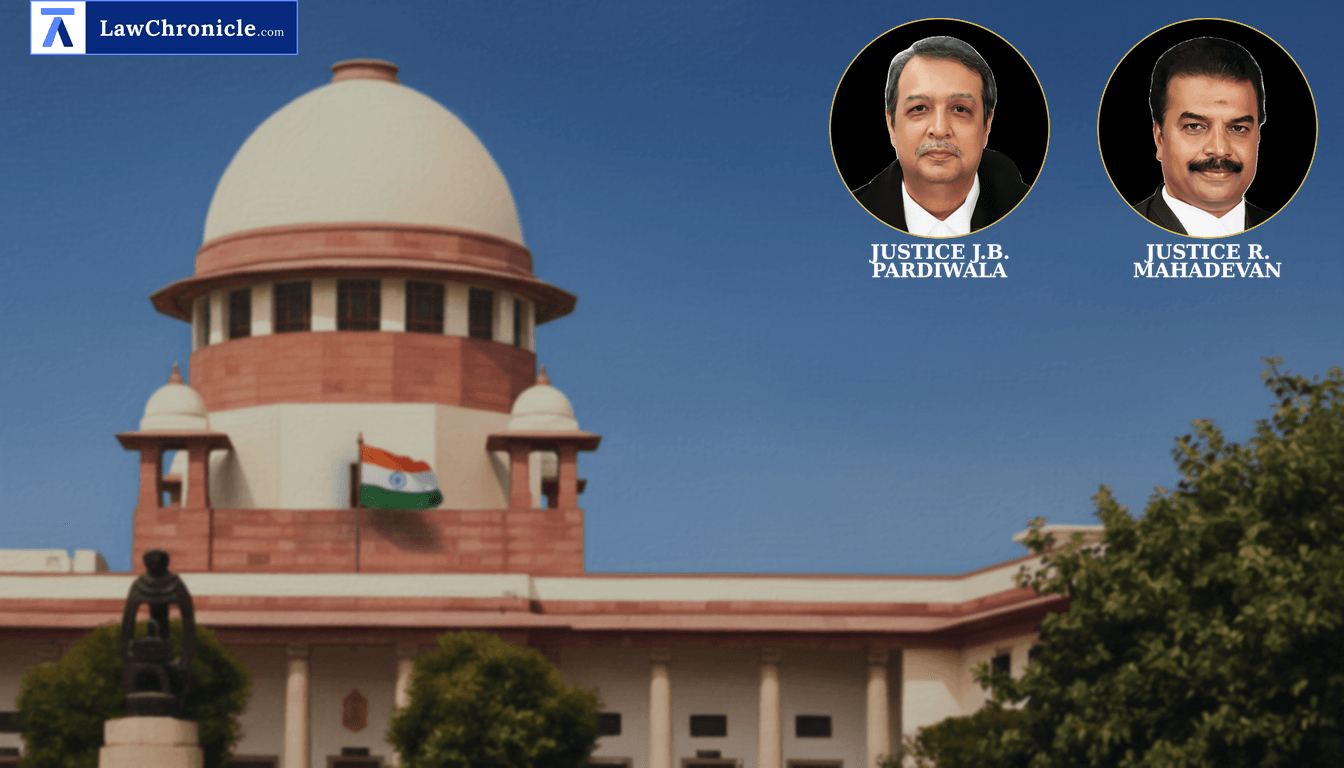
A bench of Justices Vikram Nath and Sandeep Mehta heard a public interest writ petition under Article 32 concerning chronic overcrowding in prisons and the under-utilisation of Open Correctional Institutions (OCIs). The petition, filed by Suhas Chakma, raised systemic issues of prison congestion, rehabilitative deficits and exclusion of women prisoners from OCIs and sought directions for decongestion, expansion of OCIs and institutional reform.
The Court held that OCIs are constitutionally and penologically central to humane incarceration and ordered comprehensive, enforceable steps to operationalise and expand OCIs nationwide. It directed States and Union Territories to fill existing OCI vacancies, create open/semi-open barracks where standalone OCIs were infeasible, ensure gender-inclusive access, rationalise eligibility criteria in favour of reformative indicators, strengthen vocational, educational and healthcare facilities within OCIs, and adopt uniform “Common Minimum Standards.” The Court appointed a High-Powered Committee to draft those standards, mandated State-level monitoring committees and required High Courts to register suo motu matters for ongoing supervision. The judgment relied on empirical cost comparisons from Rajasthan showing a substantial per-prisoner cost advantage in favour of OCIs and emphasised that administrative convenience could not override constitutional duties. The Court, in its reasoning, observed: “The guarantee of life and personal dignity under Article 21 of the Constitution of India extends beyond the prison gates and obliges the State to ensure that incarceration does not degenerate into inhumanity. Overcrowded prisons, bereft of humane living conditions and rehabilitative avenues, strike at the very core of this constitutional promise and call for sustained institutional response rather than sporadic remedial measures.”
Background The petition engaged long-running concerns highlighted in earlier proceedings, including In Re: Inhuman Conditions in 1382 Prisons (2018). The Court recorded that the Union had promulgated the Model Prison Manual, 2016 and the Model Prisons and Correctional Services Act, 2023 and noted studies and BPR&D findings that OCIs represented both a humane rehabilitative model and a cost-effective response to overcrowding. The amicus curiae (Mr K. Parameshwar and Mr Vijay Hansaria) and NALSA assisted the Court; a questionnaire was circulated to States and UTs and data revealed stark under-utilisation of OCIs in many States, absence of OCIs in several States/UTs, and systemic exclusion or under-representation of women prisoners. The Court recorded empirical figures from Rajasthan: per-prisoner per-day expenditure of approximately Rs.333.12 in closed prisons versus Rs.49.60 in open prisons, and highlighted the rehabilitative advantages of OCIs. The State responses showed widely divergent eligibility norms, restricted family integration in many jurisdictions, uneven wages and limited vocational training; some States failed to file complete data. Finding that constitutional obligations of dignity, equality and rehabilitation required more than model prescriptions, the Court issued detailed operative directions: constitution of a High‑Powered Committee (to be chaired by Hon’ble Justice S. Ravindra Bhat, (Retd.)), State Monitoring Committees headed by the Executive Chairperson of the State Legal Services Authority, timelines for assessments and action plans, and quarterly and annual reporting to High Courts and this Court. The Court set review dates and directed immediate steps to ensure women’s access to OCIs, rationalisation of eligibility on reformative criteria, grievance redressal, and capacity-expansion plans with budgetary and implementation timelines.
Case Details: Case No.: Writ Petition (C) No. 1082 of 2020 Case Title: Suhas Chakma v. Union of India and Ors. Appearances: For the Petitioner(s): Suhas Chakma (Petitioner) – counsel not specified in the judgment For the Respondent(s): Union of India – affidavit filed (counsel not specified); Assistance to the Court: Mr. K. Parameshwar (Amicus Curiae), Mr. Vijay Hansaria, Senior Advocate (Amicus Curiae), Ms. Rashmi Nandakumar, counsel for NALSA
The Court listed the matter for further consideration of the High‑Powered Committee’s recommendations and directed annual consolidated reporting by High Courts to ensure implementation of the uniform standards and expansion measures.
Similar Articles


 Breaking News


