


Supreme Court Dismisses Claim on Uncompensated Vesting of Chiefs' Lands in Mizoram
 Copy Link
 Share
 Save
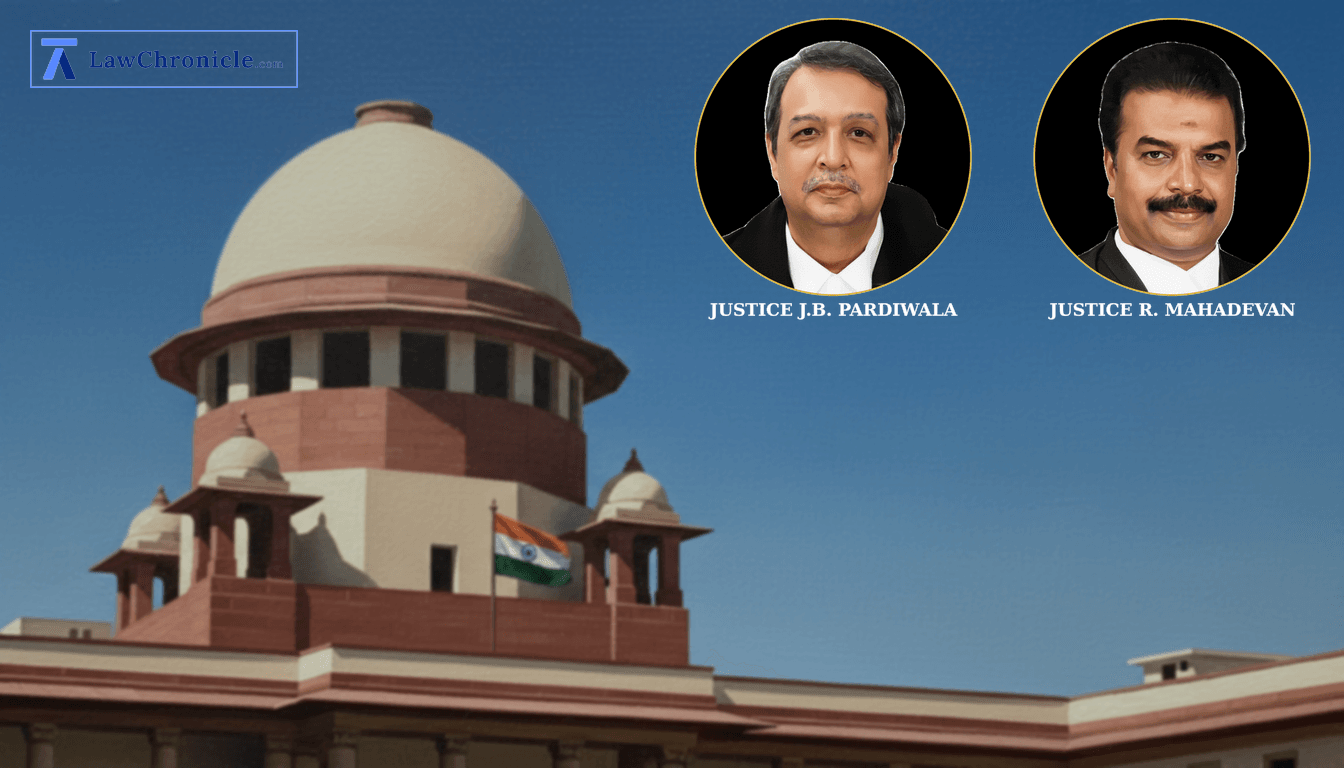
A bench of Justice J.B. Pardiwala and Justice R. Mahadevan heard a writ petition under Article 32 filed by the Mizo Chief Council, through its President, challenging a 1955 notification issued under the Assam Lushai Hills District (Acquisition of Chief’s Rights) Act, 1954. The petitioners, representing tribal chieftains of the erstwhile Lushai Hills, contended that their lands (the chiefs’ “Ram”) were vested in the State without payment of due compensation and that their fundamental right to property, as recognised at the relevant time, was violated.
The Court rejected the petition and dismissed the writ. It held that while there was an inordinate delay in approaching this Court, the petition could not be summarily dismissed at the threshold because of mitigating historical and administrative circumstances; nonetheless, on the merits the petitioners failed to discharge the burden of proving title or that any constitutional right to property had been breached. The Court reiterated established principles on delay: “the law assists those who are vigilant, not those who sleep over their rights,” and accepted that “the doctrine of laches is not an inviolable legal rule but a rule of practice” to be applied with judicial discretion. The Court, in its reasoning, observed: “The material adduced by the respondent, at least on a prima facie examination, indicates that during the British administration of the Lushai Hills district, the title over the land never vested in the Chiefs. Furthermore, the record before us is bereft of any comprehensive compilation or analysis of the boundary papers issued to the Chiefs, nor is it established that these documents were uniform in their conferment of rights and duties. However, an examination of the boundary paper available on record entirely belies the petitioner’s claim, as nothing therein even remotely suggests the conferment or recognition of absolute ownership of land. Consequently, we are constrained to hold that the petitioners have woefully failed to discharge their burden of proving title over the subject lands.”
Background
The petition arose from the historical chieftainship system in the Lushai Hills, where chiefs exercised administrative control and collected customary tribute (“Fathang”). After British annexation, chiefs’ powers were supervised and demarcated by “Ramrilekha” or boundary papers. The Assam legislature enacted the 1954 Act to extinguish certain rights of chiefs and to provide for vesting of such rights in the State by notification, together with a statutory compensation scheme. A notification under Section 3(1) was published on March 23, 1955, and a sum of INR 14,78,980 was paid, which the petitioners said covered only Fathang and not the value of land.
Petitioners argued that chiefs were absolute owners and were deprived without lawful authority or adequate compensation, infringing Articles 19(1)(f) and 31 as they then stood; they also alleged arbitrariness and discrimination vis-à-vis princely rulers. Respondents — Union of India and State of Mizoram — argued that chiefs never held absolute proprietary title, that the 1954 Act extinguished administrative rights and provided compensation accordingly, and that the claim was hopelessly time-barred and would unsettle long-settled matters.
The High Court had earlier declined to decide the merits and disposed of prior petitions with directions that the State consider claims afresh; official assurances and intergovernmental correspondence had, the Supreme Court found, given rise to a legitimate expectation that administrative resolution remained possible, contributing to delay. The Supreme Court undertook a detailed review of laches jurisprudence (including Tilokchand and subsequent authorities), emphasised that delay may be fatal if unexplained but that public-interest or constitutional challenges and historical injustices may warrant hearing despite delay, and concluded that the petition could be heard on merits.
On the merits, the Court found the evidentiary record inadequate to establish conclusive title in the chiefs over the lands. It noted absence of comprehensive boundary-paper analysis and insufficient documentary proof to elevate historical accounts to conclusive legal proof of ownership. The Court did not pronounce on the vires of the 1954 Act, observing that because petitioners failed to establish fundamental-rights infringement, adjudication of the statute’s validity was unnecessary. The writ petition was dismissed and pending applications were also dismissed.
Case Details:
Case No.: WRIT PETITION (Civil) NO. 22 OF 2014
NeutralCitation: 2026 INSC 236
Case Title: Mizo Chief Council Mizoram, thr. President Shri L. Chinzah v. Union of India & Ors.
Source: 2026 CaseBase(SC) 203
 Breaking News


