


Supreme Court Issues Guidelines on Misuse Of POCSO Act In Matrimonial Disputes
 Copy Link
 Share
 Save
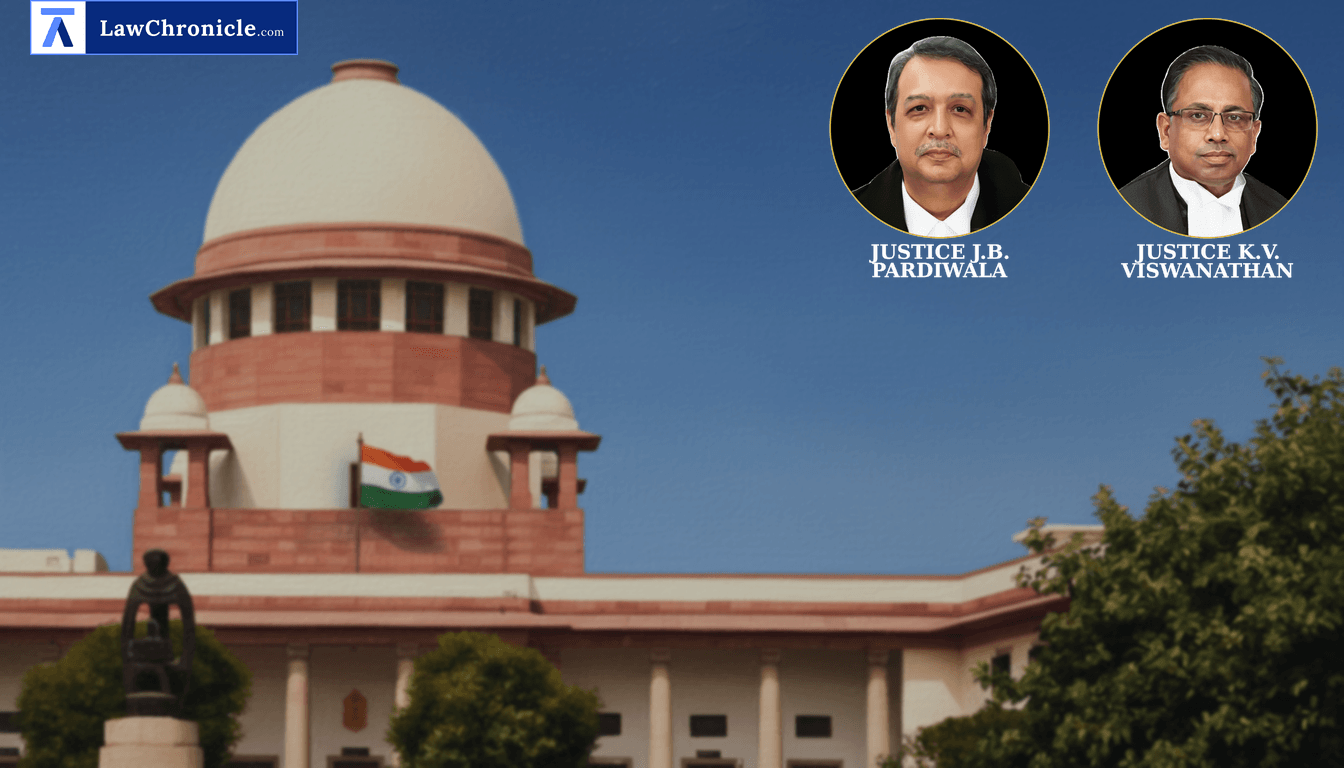
Addressing the alarming rise in false sexual abuse allegations weaponised during custody battles, the Supreme Court has issued strict guidelines on misuse of POCSO Act to prevent the immediate arrest of parents and family members.
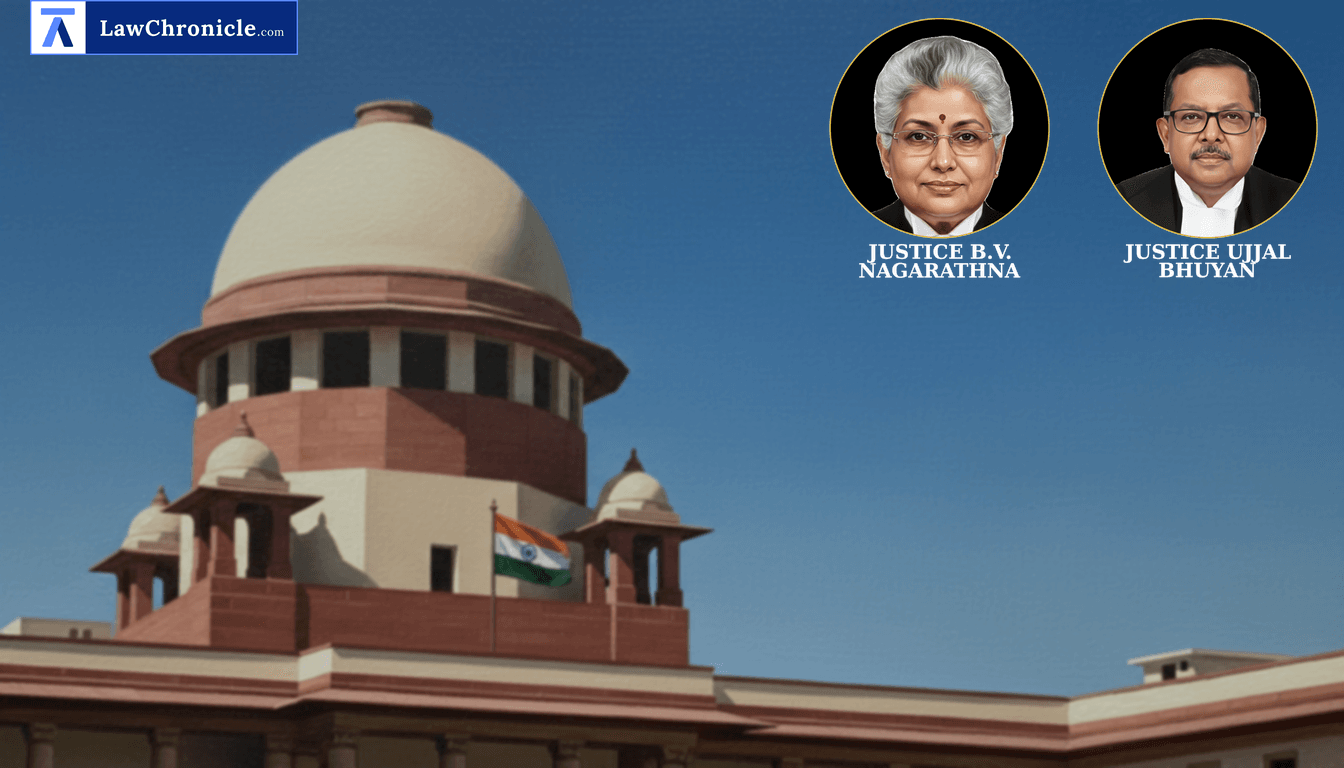
A Bench comprising Justice J.B. Pardiwala and Justice K.V. Viswanathan quashed criminal proceedings arising out of a false Protection of Children from Sexual Offences Act, 2012 case initiated by a mother against the biological father during a prolonged custody battle. The Apex Court observed that using heinous allegations of child abuse as an arm-twisting tactic in matrimonial discord inflicts severe trauma on the child and causes irreparable harm to the accused parent.
Key Takeaways
- Mandatory Expert Evaluation: In POCSO cases arising out of matrimonial disputes, investigating authorities must consult child psychiatrists or clinical psychologists before effecting arrests.
- Protection Against Hasty Arrests: Investigating officers cannot act mechanically; statutory parameters under Section 35 of the Bharatiya Nagarik Suraksha Sanhita, 2023 must be strictly satisfied.
- Directives for Family Courts: Mere registration of a POCSO FIR will not automatically disentitle a parent from seeking custody or guardianship of the minor child.
- Nationwide Guidelines: Supreme Court Guidelines on Misuse of POCSO Act apply to all ongoing investigations and pending private complaints where process is yet to be issued.
Mandatory Safeguards to Prevent Irreparable Harm
The Supreme Court laid down detailed procedural guidelines to be observed when threshold conditions, namely, an alleged Protection of Children from Sexual Offences Act, 2012 offence by a parent/co-habiting family member and an existing matrimonial dispute, are met. The Bench highlighted that "While we are cognizant that the provisions of the POCSO Act are, in some situations, misused, it would be remiss not to bear in mind the avowed object and purpose for which the Act was enacted... What is needed is a balancing exercise: precautions that neither dilute the object of the Act nor weaken its provisions, while allowing sufficient leeway to ensure that irreparable harm is not caused to the accused."
The Apex Court further cited the decision in Rosy Jacob vs. Jacob A. Chakramakkal ( "(1973) 1 SCC 840": 1973 CaseBase(SC) 48), reiterating that the primary consideration in custody matters remains the welfare of the minor. Referring to Geddam Jhansi and Anr. vs. State of Telangana and Ors. ( "2025 SCC OnLine SC 263": 2025 CaseBase(SC) 222), Achin Gupta vs. State of Haryana & Anr. ( "(2025) 3 SCC 756": 2024 CaseBase(SC) 180), and Ishwar Chand Sharma and Ors. vs. State of Uttar Pradesh and Anr. ( "2026 SCC OnLine SC 1004": 2026 CaseBase(SC) 501), the Supreme Court highlighted the worrying trend of turning domestic disputes into criminal proceedings, overburdening the judicial system, and weaponising severe penal laws like the Protection of Children from Sexual Offences Act, 2012 and Section 498A of the Indian Penal Code, 1860.
Recalling its earlier precedents on arrest under Joginder Kumar vs. State of U.P and Ors., Arnesh Kumar v. State of Bihar & Anr. ( "(2014) 8 SCC 273": 2014 CaseBase(SC) 560), Satender Kumar Antil v. CBI & Anr. ( "(2022) 10 SCC 51": 2022 CaseBase(SC) 640), and Satender Kumar Antil v. CBI & Anr., the Supreme Court emphasized that power to arrest is discretionary and requires objective satisfaction of "reason to believe". The Bench also referred to High Court rulings in Suhara vs. Muhammed Jaleel and N. Chandramohan vs. State and Another, noting that Family Courts must scrutinise the veracity of allegations rather than relying solely on the registration of an FIR.
Ratio
Where an offence under the Protection of Children from Sexual Offences Act, 2012 is alleged against a parent or co-habiting family member amidst an ongoing matrimonial dispute, the investigating agency or Special Court must obtain an evaluation from an expert in child/adolescent psychiatry or clinical psychology before taking coercive action such as arrest or issuing process, ensuring that penal provisions are not misused as leverage in custody litigations.
Background
The dispute stemmed from a matrimonial discord between the husband ('R') and wife ('E') who married in 2011. Following separation in 2018, the husband initiated guardianship proceedings under Section 25 of the Guardians and Wards Act, 1890 alongside a divorce petition under Section 13(1)(1-A) of the Hindu Marriage Act, 1955. The Family Court granted custody of the minor daughter to the father, which was affirmed by the High Court and subsequently upheld by the Supreme Court.
Shortly after custody was transferred, the mother lodged an FIR alleging sexual abuse by the father under Section 10 of the Protection of Children from Sexual Offences Act, 2012, Section 75 of the Juvenile Justice (Care and Protection of Children) Act, 2015, and provisions of the Indian Penal Code, 1860. Considering the gravity of the allegations, the Supreme Court directed a comprehensive investigation by the Central Bureau of Investigation (CBI), involving forensic analysis and independent psychiatric evaluations by NIMHANS experts.
The CBI concluded that the allegations were uncorroborated, contradictory, and influenced by continuous parental conflict. Accepting the CBI report, the Supreme Court quashed the FIR, ordered the re-integration of the child with the father, and framed protective safeguards for future cases.
Case Details:
Case No.: Civil Appeal No. 13119 of 2026
Neutral Citation: 2026 INSC 1049
Case Title: ‘R’ v. ‘E’ & Anr.
Source: 2026 CaseBase(SC) 7957
Similar Articles
 Breaking News


