


Karnataka High Court Quashes 'Vexatious' POCSO Charges Against Father Amid Custody Battle
 Copy Link
 Share
 Save
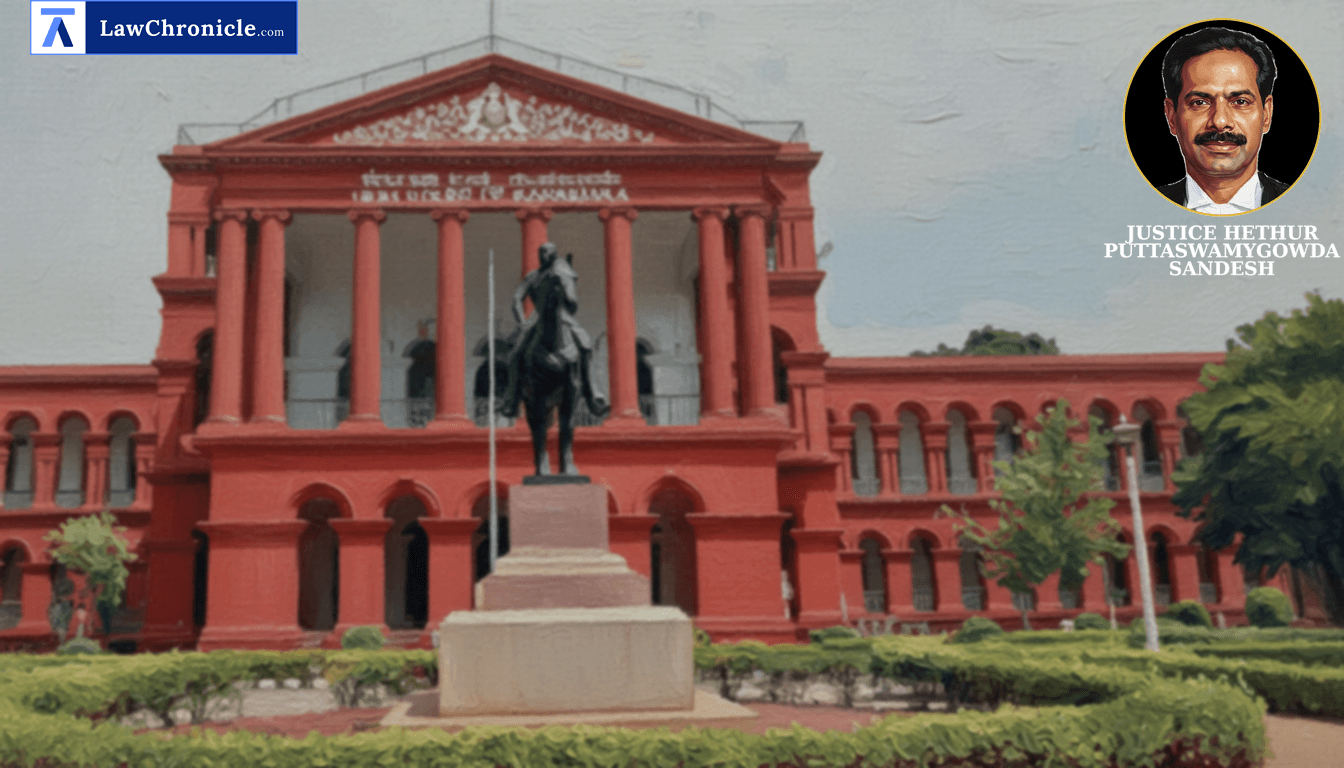
The Karnataka High Court has decried the rising trend of 'malicious parent syndrome,' quashing criminal proceedings against a father accused of sexually assaulting his seven-year-old daughter during a bitter matrimonial and custody dispute. Justice H.P. Sandesh ruled that the allegations, lacking medical corroboration and filed immediately after the mother lost an interim custody application, constituted a gross abuse of the legal process to settle personal scores.
Judicial Intervention Against Vexatious Litigation
A single-judge bench of Justice H.P. Sandesh heard two connected petitions seeking to quash proceedings for serious criminal charges. The first petition challenged a case under Section 354A(1) of the Indian Penal Code, 1860 and Sections 7 and 11(ii) of the Protection Of Children From Sexual Offences Act, 2012. The second petition sought the quashing of charges under Section 498A, Section 323, and Section 506 read with Section 34 of the Indian Penal Code, 1860, alongside Sections 3 and 4 of the Dowry Prohibition Act, 1961.
Key Takeaways
- Check on Malicious Parent Syndrome: The court warned against the growing trend of parents using children as pawns in matrimonial disputes by filing false sexual abuse allegations.
- Timing as an Indicator of Mala Fide: The court observed that criminal complaints filed immediately following adverse orders in Family Courts suggest an ulterior motive to settle personal grudges.
- Requirement of Medical Corroboration: In POCSO cases arising out of matrimonial discord, the absence of medical evidence or consistent victim statements can be grounds for quashing under Section 482 of Code Of Criminal Procedure.
- Relief for In-Laws in Omnibus Allegations: The High Court reiterated that vague and omnibus allegations against in-laws for dowry harassment, especially when living separately, cannot sustain a criminal trial.
Court Observations on 'Afterthought' Allegations
The Court scrutinized the timing of the complaint, noting that while the alleged incident occurred in February, the complaint was only filed on March 23, 2017 exactly five days after the Family Court rejected the wife’s application to restrain the father from visiting the child. The Court, in its reasoning, observed: "Having perused the materials on record, it is very clear that this is a case of classic example of afterthought and for personal vengeance against the husband, a false case was registered and child did not reveal anything... the same not substantiate the accusation made by the wife and no report to that effect that the child was subjected to molestation. Hence, it amounts to an abuse of process."
Regarding the Protection Of Children From Sexual Offences Act, 2012 charges, the Court highlighted that the medical report from NIMHANS cited by the mother actually mentioned parental discord and the child’s fear of separation from the mother, rather than any sexual abuse. Relying on Govind Shivkumar Vs State Of Karnataka And Another And Mahmood Ali And Others Vs State Of Up And Others, the Court emphasized the need for caution in matrimonial litigations that 'wreck havoc and vengeance' on spouses.
The Court has following directions:
"(i) The Crl.P.No.220/2018 is allowed. The proceedings initiated against the petitioner in Spl. C.C.No.559/2017 for the offences punishable under Sections 354A(1) of IPC and Section 7, 11(ii) of POCSO Act is hereby quashed.
(ii) The Crl.P.No.8868/2017 is allowed in part. The proceedings in C.C.No.19854/2017 arising out of Cr.No.36/2016 for the offences punishable under Sections 498A, 323, 506 read with Section 34 of IPC along with Section 3 and 4 of the D.P. Act is hereby quashed only in respect of accused Nos.2 and 3 and in respect of accused No.1 is concerned, the petition is dismissed."
Ratio
The High Court held that where criminal proceedings are initiated with a mala fide intent and ulterior motive to settle personal scores arising out of matrimonial disputes, and where the allegations are not supported by medical evidence or are clearly inconsistent, the High Court must exercise its inherent powers under Section 482 of the Code Of Criminal Procedure to prevent the abuse of the process of law.
Background
The legal battle began after the marriage in 2008 and the birth of a daughter in 2010. By 2016, the relationship soured, leading to the husband filing a petition for custody under the Guardians and Wards Act. While the Family Court granted him weekend visitation, the wife filed multiple criminal cases, including kidnapping and attempt to murder, most of which resulted in 'B' reports (closure reports) by the police.
In the dowry harassment case, the Court found that the allegations against the in-laws (Accused 2 and 3) were vague and omnibus, especially since the couple had lived separately for years. However, it refused to quash the Section 498A charges against the husband (Accused 1), stating that the specific allegations of assault and monetary demands required a trial. The Court relied on precedents like N CHANDRAMOHAN vs STATE AND ANOTHER and ISHWAR CHAND SHARMA AND OTHERS vs STATE OF UTTAR PRADESH AND ANOTHER ( "2026 LiveLaw (SC) 566": 2026 CaseBase(SC) 501) to distinguish between reliable evidence and vexatious accusations.
Case Details:
Case No.: CRL.P No. 220 of 2018 C/W CRL.P No. 8868 of 2017
Case Title: Udaykiran Vasireddi v. State of Karnataka and Another
Appearances:
For the Petitioner(s): Sri. K. Diwakara, Senior Counsel for Sri. Hitesh Gowda & Sri. Aditya Kasturkar, Advocates
For the Respondent(s): Sri. M. Divakar Maddur, HCGP for R1; Smt/Kum. Reny Sebastin & Melanie Sebastin, Advocates for R2
Source: 2026 CaseBase(KAR) 21832
Similar Articles


 Breaking News


