


Bias in ACRs Hit Women SSCOs; Relief Modified, Pension And Permanent Commission Granted by SC
 Copy Link
 Share
 Save
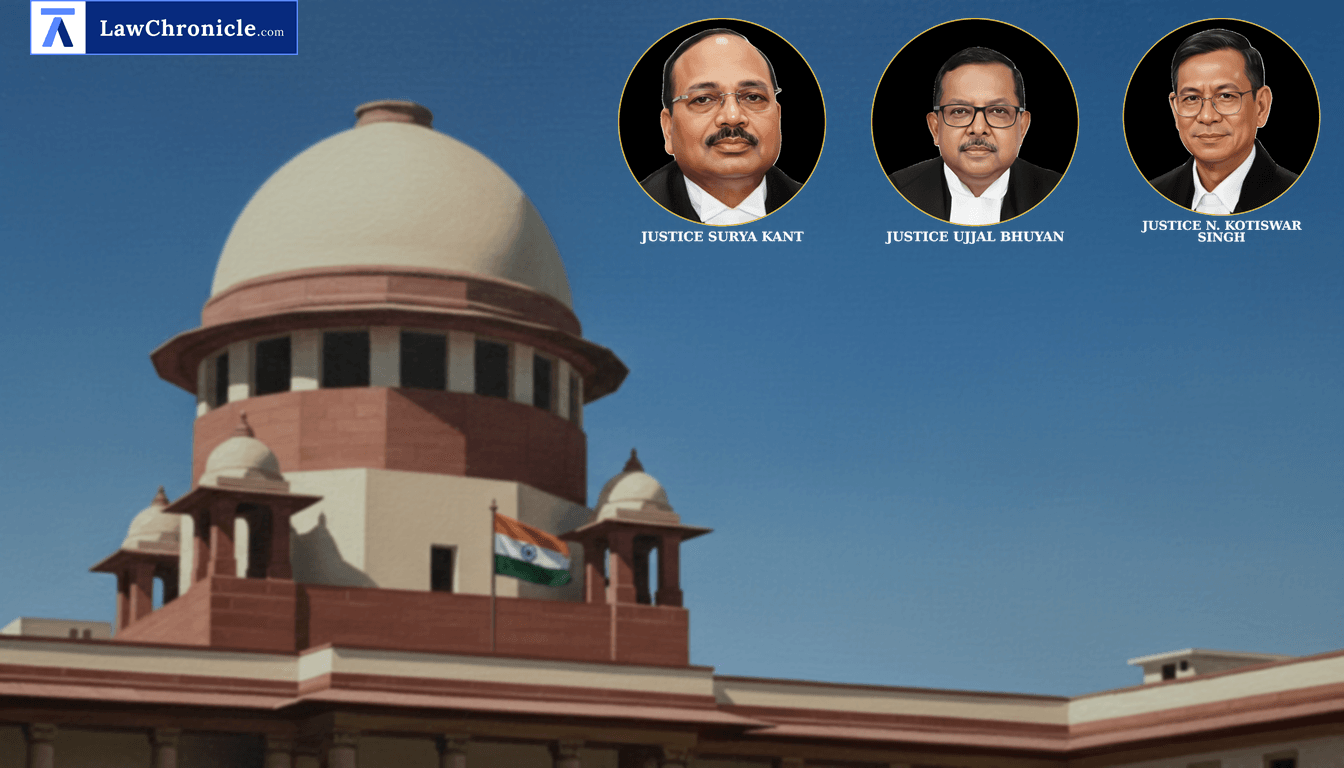
A three-judge bench comprising Chief Justice Surya Kant and Justices Ujjal Bhuyan and Nongmeikapam Kotiswaram Singh heard a batch of civil appeals filed by roughly 73 Short Service Commission Officers (SSCOs), the vast majority women, challenging orders of the Armed Forces Tribunal that had dismissed their Original Applications seeking Permanent Commission (PC). The appeals arose from the method and outcome of the No. 5 Selection Boards held in 2020–21 and disputes over vacancy computation under a standing policy cap.
The Court found that the evaluation framework and attendant career opportunities had materially disadvantaged Short Service Commission Women Officers (SSCWOs) and that the statutory vacancy ceiling could not be wielded to perpetuate unequal treatment. The Court held that many Annual Confidential Reports (ACRs) were authored in a context when SSCWOs outside JAG and AEC cadres were not considered for PC, and that those reports were therefore influenced by the assumption that the officers had no long‑term career horizon. The Court further found that restricted access to criteria appointments and career‑enhancing courses had adversely affected marks awarded under the subjective “value judgement” component. On the institutional cap of vacancies, the Court noted that the policy provided that “A maximum of 250 SSCOs will be granted Permanent Commission per year,” but observed that practice showed the cap had been breached in the past.
The Court, in its reasoning, observed: "The inescapable inference, therefore, is that the ceiling of 250 vacancies is neither sacrosanct nor immutable. As already observed by this Court in Lt. Col. Nitisha (supra), it is amenable to relaxation where adherence to it would perpetuate constitutional inequality." Applying Article 142, the Court allowed the appeals of the SSCWOs, dismissed the appeals filed by certain male SSCOs, and issued tailored directions including deemed service and pensionary reliefs and grant of PC to qualifying officers subject to medical and vigilance clearance.
Background
The SSCO scheme historically excluded women from PC; policy documents produced in the record showed the Government prescribed a cap and methodology by a 15.01.1991 circular: “A maximum of 250 SSCOs will be granted Permanent Commission per year,” and a File Noting of 22.01.1991 explained pro‑rata apportionment between batches. Women were later inducted under separate schemes and—after litigation—Delhi High Court in Babita Puniya (2010) directed that women be considered for PC where they were recruited in the same cadres as men. This Court in Ministry of Defence v. Babita Puniya (2020) and later in Nitisha (2021) addressed the effects of benchmarking and grading practices; Nitisha directed relief to many earlier SSCWOs. The present appellants belonged to courses commissioned in 2010–12 and were considered for PC contemporaneously with male counterparts in the regular No. 5 Selection Board. They alleged systemic casual grading of ACRs, denial of criteria appointments and course opportunities, and incorrect vacancy computation that collectively depressed their comparative merit. The AFT had held that the SSCWOs suffered no prejudice and that the 250‑vacancy ceiling continued to govern grant of PC; it dismissed their OAs. The Union defended anonymisation of MDS and the Army’s cadre management discretion. The Supreme Court concluded that years of ACRs written when women were effectively ineligible for long‑term progression produced a structural disadvantage that anonymisation could not cure; it found disparities in appointments and course exposure affected the Board’s value judgement marks and that the vacancy cap had been relaxed in earlier years and was not absolute. The Court therefore allowed the SSCWOs’ appeals, dismissed male SSCO appeals, declared certain released SSCWOs to have completed 20 years’ qualifying service for pensionary benefits (with arrears from 01.01.2025), and directed that SSCWOs continuing in service who met the 60% cut‑off in the 2020–21 Boards be granted PC subject to medical and clearance conditions; other aggrieved officers retained ordinary remedies.
Case Details:
Case No.: Civil Appeal Nos. 9747 - 9757 / 2024 and connected matters
NeutralCitation: 2026 INSC 281
Case Title: Lt. Col. Pooja Pal and others versus Union of India and others
Appearances:
For the Petitioner(s): Ms. V. Mohana; Ms. Rekha Palli; Dr. Menaka Guruswamy; Mr. Abhinav Mukherji; Ms. Pooja Dhar (AOR); Mr. Sudhanshu S. Pandey
For the Respondent(s): Ms. Aishwarya Bhati, Additional Solicitor‑General of India
Source: 2026 CaseBase(SC) 256
Similar Articles

 Breaking News


