


Supreme Court Holds Degree Title Cannot Defeat Substantive Curriculum; Reinstates Contractual Consultant
 Copy Link
 Share
 Save
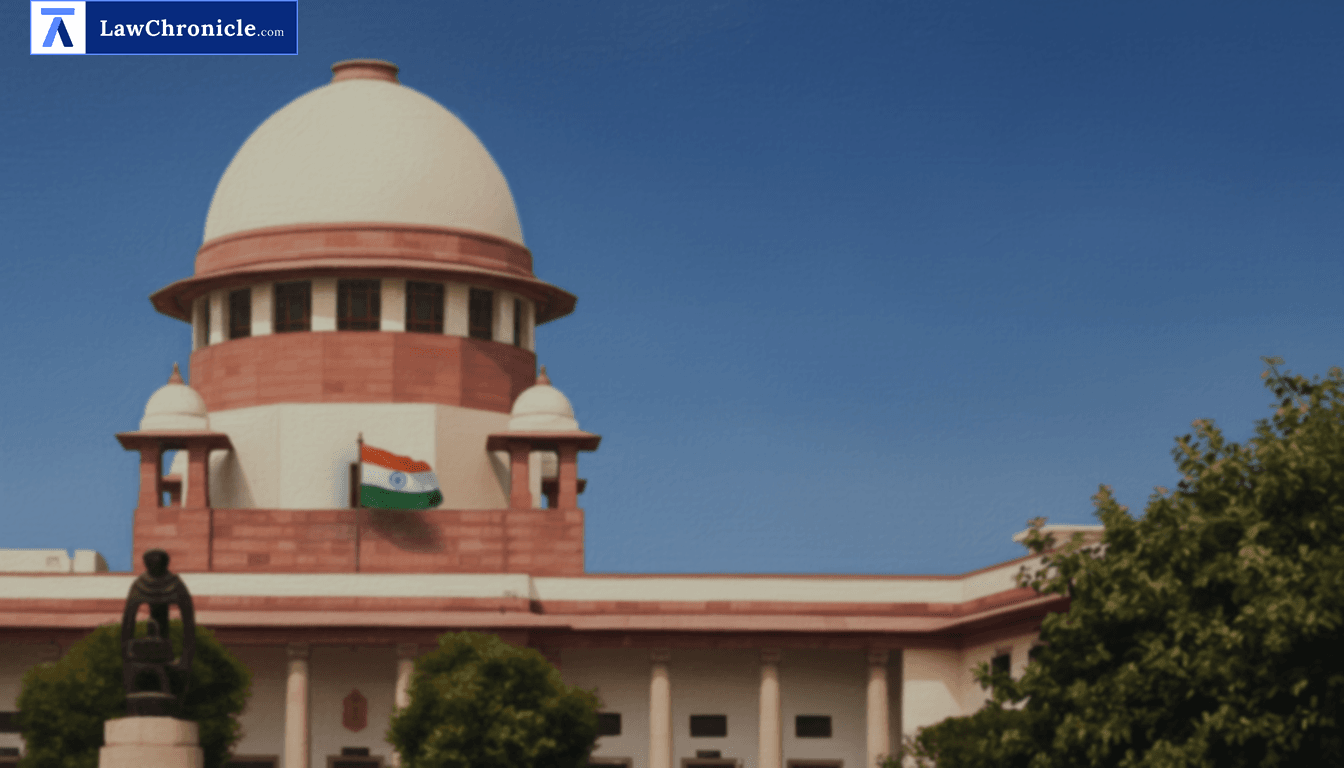
A bench of Justices Sanjay Karol and Vipul M. Pancholi heard an appeal against a Division Bench judgment of the Madhya Pradesh High Court which had affirmed termination of a contractual Monitoring and Evaluation Consultant on the ground that he did not possess a “Postgraduate degree in Statistics” as required by the recruitment advertisement.
The Court allowed the appeal, set aside the impugned High Court order and directed reinstatement of the appellant with all consequential benefits. The Court held that insisting on the nomenclature of a degree, to the exclusion of its actual curriculum, “amounts to elevating form over substance” and found the departmental inquiry and subsequent termination orders to be arbitrary and procedurally flawed. The Court accepted the opinion of the departmental expert and a university certificate demonstrating that statistics formed principal subjects of the appellant’s M.Com. The Court, in its reasoning, observed: “On perusal of such circumstances, we are of the opinion that insisting solely on the title of the degree, without considering the actual curriculum, amounts to elevating form over substance. The law does not compel such an interpretation. In our view, considering the facts of the present case, the expression ‘Postgraduate degree in Statistics’ must be understood contextually and purposively.” The Court directed that the appellant be restored to service within four weeks if otherwise not disqualified, and clarified that the judgment was rendered on the “peculiar facts and circumstances” of the case and “shall not be treated as a precedent in any other matter.”
Background
The dispute arose from an advertisement dated 07.11.2012 which prescribed as minimum qualification a “Postgraduate degree in Statistics from a Government recognised University with at least 60% marks or equivalent grade.” The appellant, who held an M.Com. (Commerce) from a government college (1999) in which Business Statistics and Indian Economic Statistics were principal subjects, was appointed on contract in 2013 and served for nearly a year. An 8‑member committee in September 2013 reported that he did not possess the required qualification and his services were terminated. Earlier High Court orders had intermittently set aside termination orders and remanded for fresh consideration; yet the State issued further termination orders in 2015, 2018 and 2020.
During reconsideration, two documents emerged: a college/university certificate dated 30.03.2019 confirming that the appellant’s M.Com. included Business Statistics as a principal subject, and an expert opinion dated 23.11.2019 by the Director, W.S.O., S.W.M., P.H.E.D., which reviewed marksheets and curriculum and recommended continuation. As the Court recorded, “It is worth mentioning here that the applicants Smt. Sweety Namdev and Shri Laxmikant Sharma have Master degrees in Economics and Commerce respectively which includes Quantitative Methods, Business Statistics and Economic Statistics which are statistical subjects whose certification has been issued by the concerned university. The applicants also have experience in government and non‑government organizations for about 05 years.” The Supreme Court found two infirmities in reliance on the inquiry report: (i) the report’s factual conclusion was contrary to the university certificate, and (ii) the report was prepared without affording the appellant an opportunity to be heard, violating principles of natural justice. The Court further rejected the State’s invocation of “negative equality” and held that singling out the appellant while similarly qualified candidates remained in service violated Article 14. On these findings the appeal succeeded and the impugned orders were set aside; the Court emphasized its limited scope and non‑precedential character.
Case Details: Case No.: 2025 INSC 1385 (Civil Appeal @ SLP (C) No. 18907 of 2025) Case Title: Laxmikant Sharma v. State of Madhya Pradesh & Ors. Appearances: For the Petitioner(s): [Not indicated in the judgment] For the Respondent(s): [Not indicated in the judgment]
Similar Articles
 Breaking News


