


Supreme Court Holds High Court Cannot Ex‑Parte Stay Order Of Discharge; Directs Bail And Quashes Custody Direction
 Copy Link
 Share
 Save
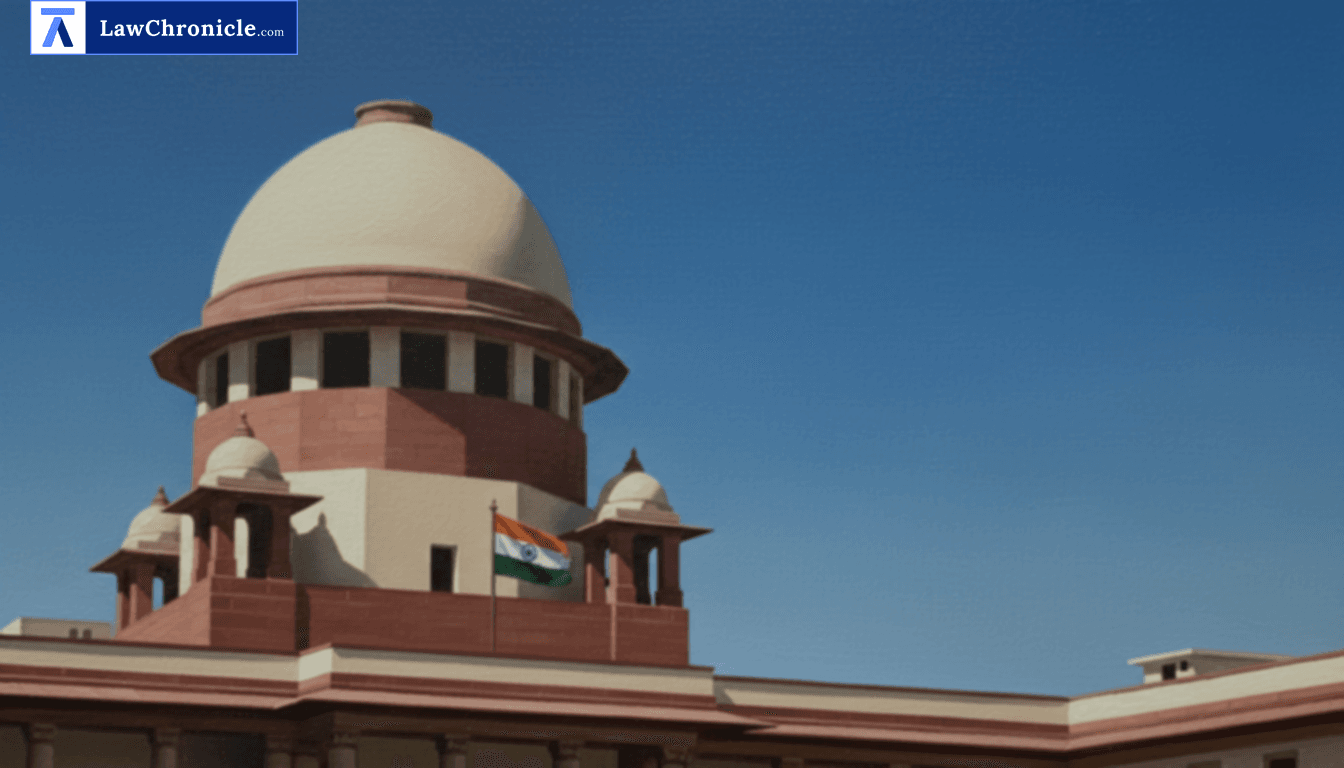
A bench of Justices Abhay S. Oka and Ujjal Bhuyan heard criminal appeals challenging two High Court orders that stayed an order of discharge and directed the appellant to surrender to custody. The appeals arose from proceedings in which the appellant, arraigned subsequently in a chargesheet for offences including Section 302 IPC, was discharged by the Sessions Court but was later affected by an ex‑parte stay and a custodial direction issued by the Delhi High Court in revision.
The Court allowed the appeals, set aside the High Court's ex‑parte orders dated 21 October 2023 and 4 November 2024, and directed the Sessions Court to accept the appellant's appearance and grant bail on conditions effective until disposal of the admitted revision. The bench emphasised that an order staying a discharge is "a very drastic order" and underscored that the power to stay such an order could be exercised only in "rare and exceptional cases" after affording the discharged person an opportunity to be heard. The Court, in its reasoning, observed: "An order staying the order of discharge is a very drastic order which has the effect of curtailing or taking away the liberty granted to the accused by the discharge order. ... It is only in rare and exceptional cases where the order of discharge is ex‑facie perverse that the revisional Court can take the extreme step of staying that order. However, such an order should be passed only after giving an opportunity of being heard to the accused." The judgment further noted that where a revisional Court invoked Section 390 CrPC powers, the normal rule required that an acquitted or discharged person be admitted to bail rather than committed to prison, reflecting the principle that "bail is the rule, and jail is the exception."
Background
The dispute arose after the Sessions Judge, on 20 October 2023, discharged the appellant from charges including murder (Section 302), destruction of evidence (Section 201) and read with Section 34 IPC, and released him on a personal bond and surety under Section 437A CrPC. The NCT of Delhi filed a revision seeking to challenge the discharge and sought a stay; the High Court issued an ex‑parte order staying the discharge while issuing notice and later, by a detailed order dated 4 November 2024, directed the appellant to surrender to custody and permitted him to apply for bail. The Supreme Court had earlier stayed the custodial direction while permitting the High Court to proceed with hearing the revision.
Senior counsel for the appellant argued that the High Court should not have stayed a discharge order, that grant of stay would nullify discharge without adjudication, and that the appellant's personal bond secured his presence. The State, represented by the Additional Solicitor General, contended that the Sessions Judge had overlooked material evidence and that the High Court, exercising revisional jurisdiction under Sections 397 and 401 CrPC (and the powers under Section 390), was entitled to secure the accused's custody given prima facie material.
The Supreme Court analysed the revisional powers of the High Court, the nature and consequence of a discharge under Section 227 CrPC, and the scope of Section 390 CrPC when applied in revision under Section 401. The Court held that while the High Court could exercise Section 390 powers in revision, an ex‑parte stay of a discharge order was impermissible save in rare and exceptional circumstances and only after hearing the person affected. The Court quashed the two impugned High Court orders, directed the appellant to appear before the Sessions Court within four weeks, and ordered that bail be furnished effective till disposal of the revision, with usual conditions and an obligation to cooperate for early disposal; failure to comply would attract immediate custody.
Case Details: Case No.: 2025 INSC 281; Criminal Appeal Nos. 536-537 of 2025 Case Title: Sudershan Singh Wazir v. State (NCT of Delhi) & Ors. Appearances: For the Petitioner(s): Shri Siddharth Luthra, Senior Counsel For the Respondent(s): Shri Satya Darshi Sanjay, Additional Solicitor General (for State, NCT of Delhi); Shri Arjun Deewan (for fifth respondent)
Similar Articles
 Breaking News


