


Can Discharge Application be Filed After Framing of Charges? Bombay HC Answers
 Copy Link
 Share
 Save
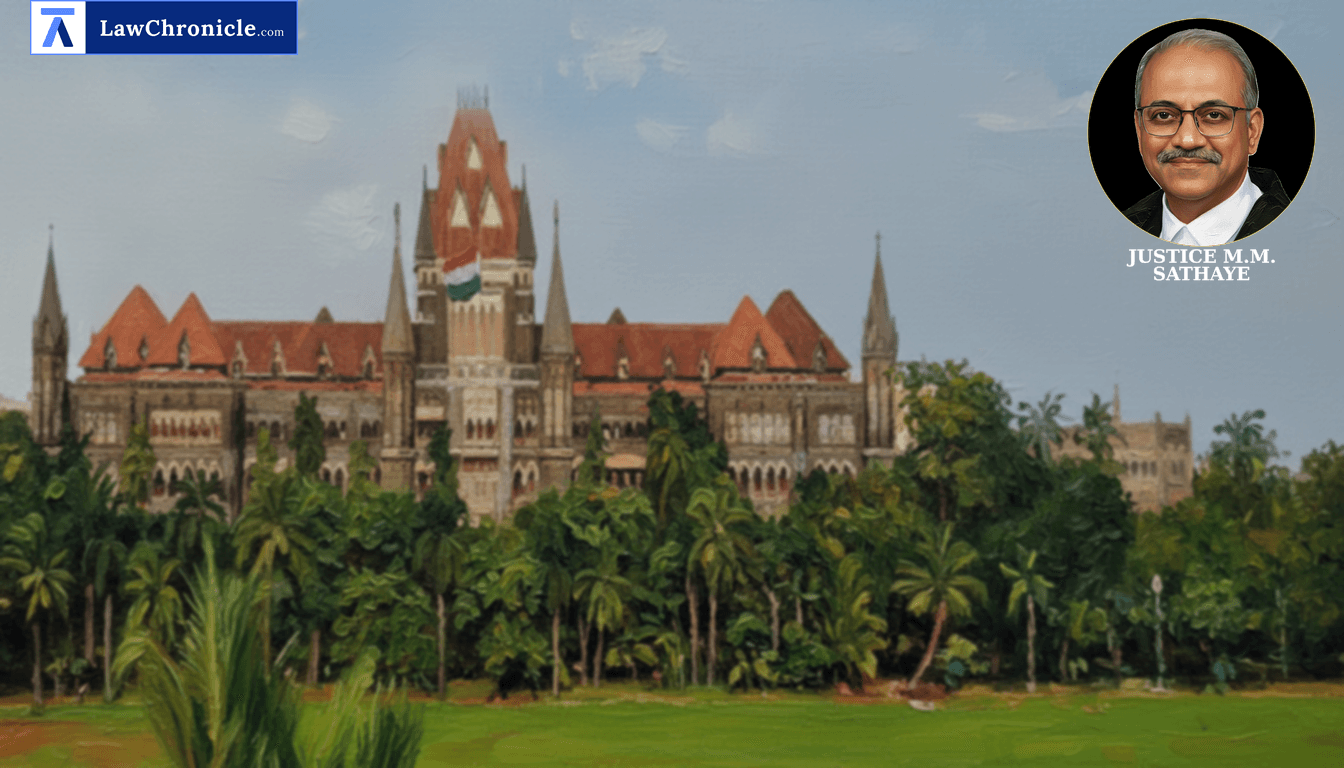
Can discharge application be filed after framing of charges? Bombay High Court has clarified that the accused persons cannot seek discharge once trial court charges have been framed. It affirmed that the High Court’s revisional jurisdiction must yield to the effective and timely administration of criminal justice when a trial has significantly progressed.
Justice M.M. Sathaye of the Bombay High Court dismissed a revision application filed by an accused seeking discharge from Indian Penal Code, 1860 offenses. The Bench emphasized that the framing of charges and the subsequent examination of nine witnesses rendered the plea for discharge infructuous, especially in light of recent Supreme Court directives emphasizing trial expedition.
Key Takeaways
No Discharge Post-Charge Framing
Once charges are framed under Section 228 of Criminal Procedure Code, 1973, the accused must face trial and cannot be discharged through Sections 227 or 216.
Primacy of Trial Progress
Revisional courts must be circumspect in interfering when substantial judicial time has been invested and witnesses have already been examined.
Narrowed Revisional Scope
High Courts cannot act as appellate courts to re-appreciate evidence or find inconsistencies in witness statements during a revision against a discharge rejection.
Impact of Supreme Court Mandate on Revisional Power
The Bombay High Court noted that the scope of revision under Section 397 of Criminal Procedure Code, 1973 is inherently limited. Relying on State of Gujarat v/s. Dilipsinh Kishorsinh Rao ( "(2023) 17 SCC 688": 2023 CaseBase(SC) 760), the Bench reiterated that it is legally impermissible for a revisional court to appreciate evidence as if it were an appellate body. This scope is further narrowed by the recent mandate in The Directorate of Revenue Intelligence Vs. Raj Kumar Arora ( "Criminal Appeal No.1319 of 2013 Judgment dated 17.04.2025": 2025 CaseBase(SC) 452), which held that post-framing of charges, an accused must either be convicted or acquitted, and no "shortcuts" like deletion of charges under Section 216 should be allowed.
Guidelines for Exercise of Jurisdiction
Addressing the conflict between the right to seek discharge and the progress of trial, the Court referenced Sanjay Kumar Rai Vs. State of Uttar Pradesh and anr. ( "(2022) 15 SCC 720": 2021 CaseBase(SC) 1641). While acknowledging discharge as a valuable right, the Bombay High Court highlighted the caveat that High Courts must exercise discretion judiciously for the timely administration of justice. The Bench observed that factors such as the stage of trial, number of witnesses examined, and precious judicial time invested assume paramount importance.
The Bombay High Court expressed that "We are in agreement with the view that once charges have been framed by the Trial Court in exercise of the powers under Section 228 Cr.P.C., the accused cannot thereafter be discharged, be it through an exercise of the powers under Sections 227 of 216 CrPC... Therefore, at such a stage of the trial, the accused must necessarily either be convicted or acquitted of the charges that were so framed against him. No shortcuts must be allowed."
Ratio
Once a competent court frames charges under Section 228 of the Criminal Procedure Code, 1973, the accused loses the right to seek discharge under Section 227 or deletion of charges under Section 216. A High Court exercising revisional jurisdiction under Section 397 must decline interference if the trial has significantly advanced, to ensure the effective and timely administration of criminal justice.
Background
The case originated from a 2021 dispute over a plot in Dahisar, where the complainant and others were allegedly assaulted by a group of 15-20 persons using swords, iron rods, and wooden logs. Investigation by the DCB, CID revealed the involvement of an organized crime syndicate, leading to the invocation of the Maharashtra Control of Organised Crime Act, 1999. The Trial Court had partially discharged the applicant from Maharashtra Control of Organised Crime Act, 1999 offenses but refused discharge for offenses under the Indian Penal Code, 1860.
While the revision was pending, the Trial Court framed charges on December 17, 2025, for offenses including Section 120B, 307, and 326 of Indian Penal Code, 1860, along with provisions of the Arms Act, 1959 and Maharashtra Police Act, 1951. The Bombay High Court found that since the trial was proceeding on a day-to-day basis following orders and nine witnesses were already examined, the revision application lacked merit.
Case Details:
Case No.: CRIMINAL REVISION APPLICATION NO.480 OF 2025
Neutral Citation: 2026:BHC-AS:44449
Case Title: Mukesh Chunnilal Bhatia Vs. The State of Maharashtra
Appearances:
For the Petitioner(s): Mr. Shekhar K. Jagtap, Advocate; Ms. Sairuchita Chowdhary, Advocate; Mr. Ajinkya Jagdale, Advocate; Mr. Akash Pandey, Advocate i/b. J. Shekhar Associates.
For the Respondent(s): Mr. Sagar Agarkar, APP.
Source: 2026 CaseBase(BOM) 7141
Similar Articles
 Breaking News


