


Supreme Court holds preliminary inquiry in corruption probes discretionary, restores FIR where detailed source report existed
 Copy Link
 Share
 Save

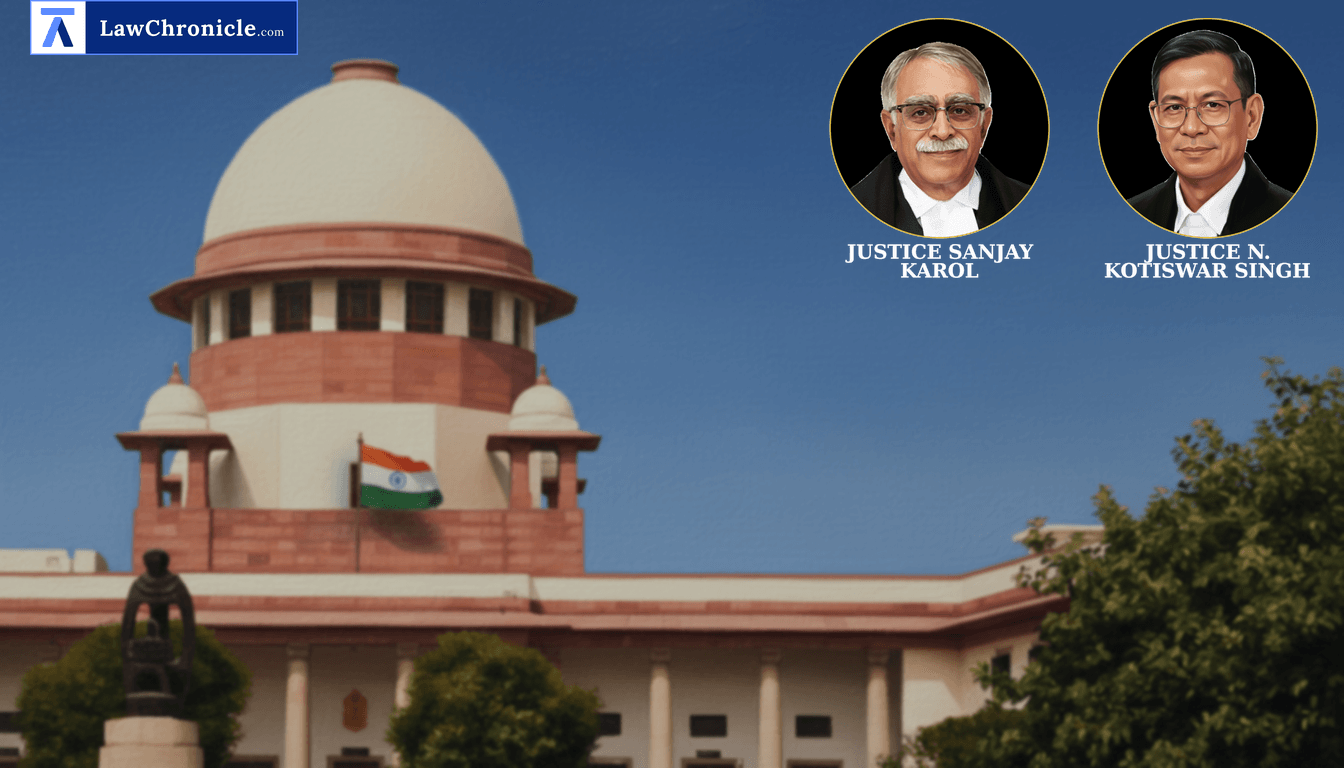
A Bench of Justices Sudhanshu Dhulia and K. Vinod Chandran heard the State of Karnataka’s appeal against a Karnataka High Court order quashing FIR No.54/2023 registered under Section 13(1)(b) read with Section 13(2) of the Prevention of Corruption Act, 1988 in a disproportionate assets (DA) case involving a public servant. The challenge raised the question whether a preliminary enquiry or hearing was mandatory before the Superintendent of Police could order registration of an FIR in corruption matters falling under clause (b) of Section 13(1).
The Court allowed the appeal, set aside the High Court order dated 25.04.2024 and held that while a preliminary enquiry was desirable, it was not an absolute or mandatory precondition to registration of an FIR under the PC Act where a superior officer was seised of a detailed, well-reasoned source report. The Court noted that the SP had passed the impugned order on the basis of material contained in a source report and had applied his mind to the material before directing registration. The Court, in its reasoning, observed: “The preliminary inquiry is not mandatory in every case under the PC Act. If a superior officer is in seisin of a source information report which is both detailed and well-reasoned and such that any reasonable person would be of the view that it prima facie discloses the commission of a cognizable offence, the preliminary inquiry may be avoided.” The Court further quoted precedent to underscore that “an accused public servant does not have any right to explain the alleged disproportionate assets before filing of an FIR.”
Background
The respondent was an Executive Engineer in the Bangalore Electricity Supply Corporation (BESCOM) and was alleged to have amassed assets disproportionate to his known sources of income. A source report prepared by a Deputy Superintendent of Police dated 05.10.2023 recorded prima facie acquisition of assets to the tune of Rs. 6,64,67,000 (approximately 92.54% disproportionate) for the check period from 11.11.1998 to 30.09.2023 and recommended registration of a case under Section 13(1)(b) read with Section 13(2) of the PC Act. Acting on that material, the Superintendent of Police issued an order dated 04.12.2023 directing registration of FIR No.54/2023 at Karnataka Lokayukta, Bangalore Town.
The respondent challenged registration by filing a writ petition before the Karnataka High Court which quashed the FIR on 25.04.2024 on the ground that the SP had not conducted any preliminary enquiry and there was “no application of mind” before passing the order. The State moved this Court by special leave petition.
Before the Supreme Court, the State relied on this Court’s subsequent authority that a preliminary inquiry in corruption matters was desirable but discretionary, including the principle that a detailed source report could obviate the need for a separate preliminary inquiry. The respondent contended that no opportunity to explain was afforded to him and that the FIR was being used to harass the public servant.
The Court examined earlier precedents, including Lalita Kumari v. Government of Uttar Pradesh and subsequent rulings that treated corruption cases as a category where a preliminary inquiry “may be made,” not as a mandatory requirement in every case. Applying those authorities, the Court concluded that where a superior officer was in possession of a detailed and reasoned source information report disclosing a prima facie cognizable offence, the preliminary inquiry requirement could be relaxed. It found that the SP had acted on relevant material and had applied his mind, and therefore the High Court erred in quashing the FIR. The appeal was allowed, the impugned order set aside, interim orders (if any) were vacated, and pending applications were disposed of.
Case Details: Case No.: 2025 INSC 471 Case Title: State of Karnataka v. Sri Channakeshava H.D. & Anr. Appearances: For the Petitioner(s): Mr. Devadatt Kamat, Senior Counsel For the Respondent(s): Mr. Ranjit Kumar, Senior Counsel
Similar Articles

 Breaking News


