


Supreme Court Invokes Article 142 to Dissolve Marriage After Eight-Year Separation
 Copy Link
 Share
 Save
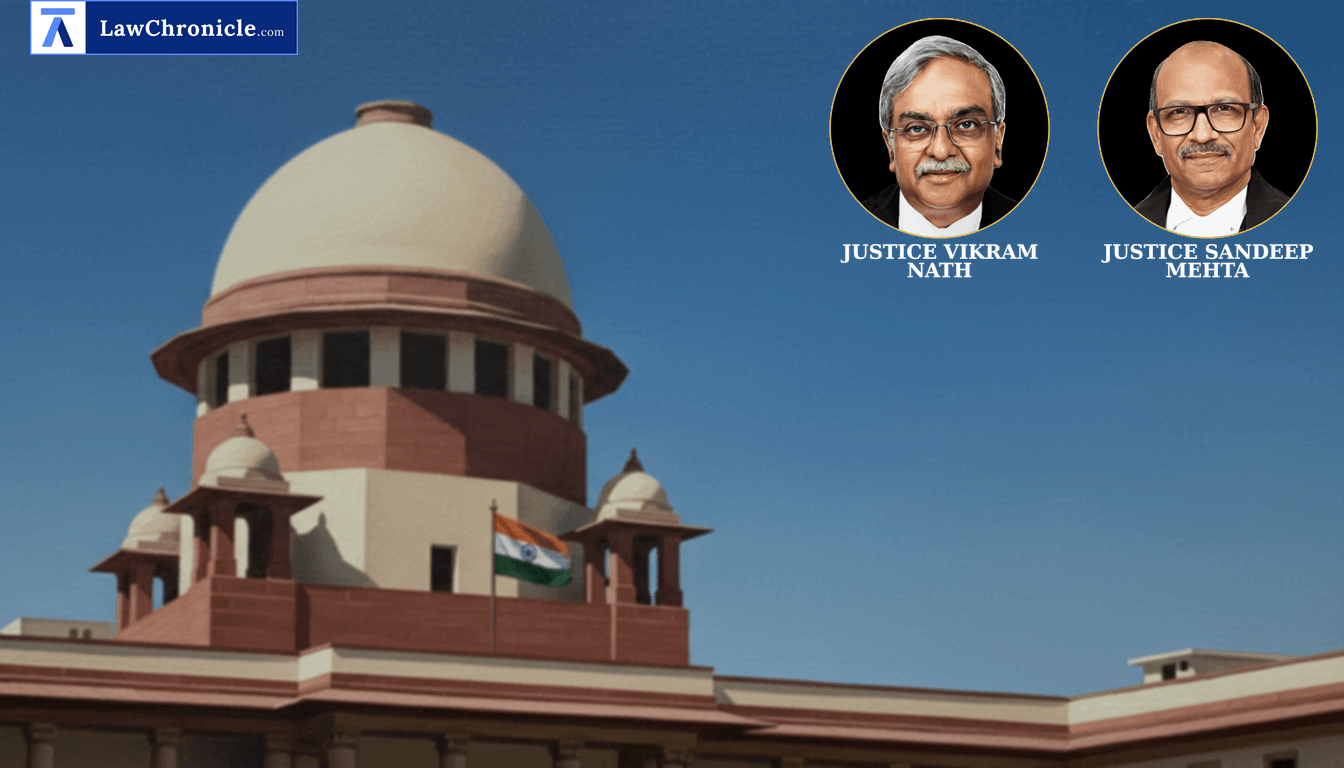
In Salil Dhawan v. Priyanshi Ghai, the Supreme Court, to bring finality to a long-standing matrimonial dispute, invoked its extraordinary powers under the Constitution of India, 1950, to dissolve a marriage that had existed only on paper for over eight years. The Court observed that where reconciliation is impossible and the relationship has turned acrimonious, forcing the parties to remain bound serves no legitimate purpose.
Justice Vikram Nath and Justice Sandeep Mehta presided over the appeal, which challenged a decision by the Allahabad High Court. The High Court had previously upheld a Family Court's dismissal of a divorce petition because the wife had withdrawn her consent during the second motion of mutual divorce proceedings. While the husband sought the dissolution of marriage, the wife, despite acknowledging the breakdown, initially opposed the grant of divorce under Constitution of India, 1950, expressing an intent to pursue a contested petition on the grounds of adultery.
Court's Rationale on Irretrievable Breakdown
The Court noted that the parties, an Army officer and a qualified doctor, had been embroiled in a multiplicity of civil and criminal proceedings, including claims under the Army Act, 1950, the Protection Of Women From Domestic Violence Act, 2005, and the Code Of Criminal Procedure, 1973. Despite the wife's opposition to a decree under Constitution of India, 1950, the bench found that the marriage was beyond repair.
The Court, in its reasoning, observed: "The parties have been living separately for over eight years. The record shows long standing acrimony between the parties and a multiplicity of civil and criminal proceedings initiated by both sides. The ties of matrimony, in every meaningful sense, have long since been severed. In such circumstances, to compel the parties to remain bound in a marriage that exists only on paper would serve no legitimate purpose."
Finality through Comprehensive Permanent Alimony
To ensure a clean break, the Court enhanced the permanent alimony to Rs. 50 Lakhs, superseding previous agreements. It clarified that this one-time payment would extinguish all future claims, including those arising under the Army Act, 1950 or Army regulations.
Background:
The dispute began shortly after the parties married in April 2017. Following allegations of adultery and harassment, the wife initiated maintenance claims under Section 90(i) of the Army Act, 1950 and filed a complaint under Section 12 of the Protection Of Women From Domestic Violence Act, 2005. She also sought maintenance under Section 125 of the Code Of Criminal Procedure, 1973.
In 2019, the parties reached a settlement to divorce by mutual consent for Rs. 31 Lakhs, later revised to Rs. 32 Lakhs. The husband paid Rs. 20 Lakhs in two instalments. However, the wife subsequently failed to sign the second motion petition, leading the Family Court to dismiss the proceedings. The High Court directed that the Rs. 20 Lakhs already paid be adjusted against maintenance arrears. During the Supreme Court proceedings, the wife returned the Rs. 20 Lakhs to the husband, but the Apex Court ultimately decided to end the marriage while fixing a higher alimony amount of Rs. 50 Lakhs to ensure the wife's financial security.
Case Details:
Case No.: Civil Appeal No. of 2026 (Arising out of SLP (C) No.971 of 2025)
NeutralCitation: 2026 INSC 577
Case Title: Salil Dhawan v. Priyanshi Ghai
Source: 2026 CaseBase(SC) 493
Similar Articles

 Breaking News


