


Supreme Court Restricts High Court From Directing CBI Probe In Bail Proceedings
 Copy Link
 Share
 Save
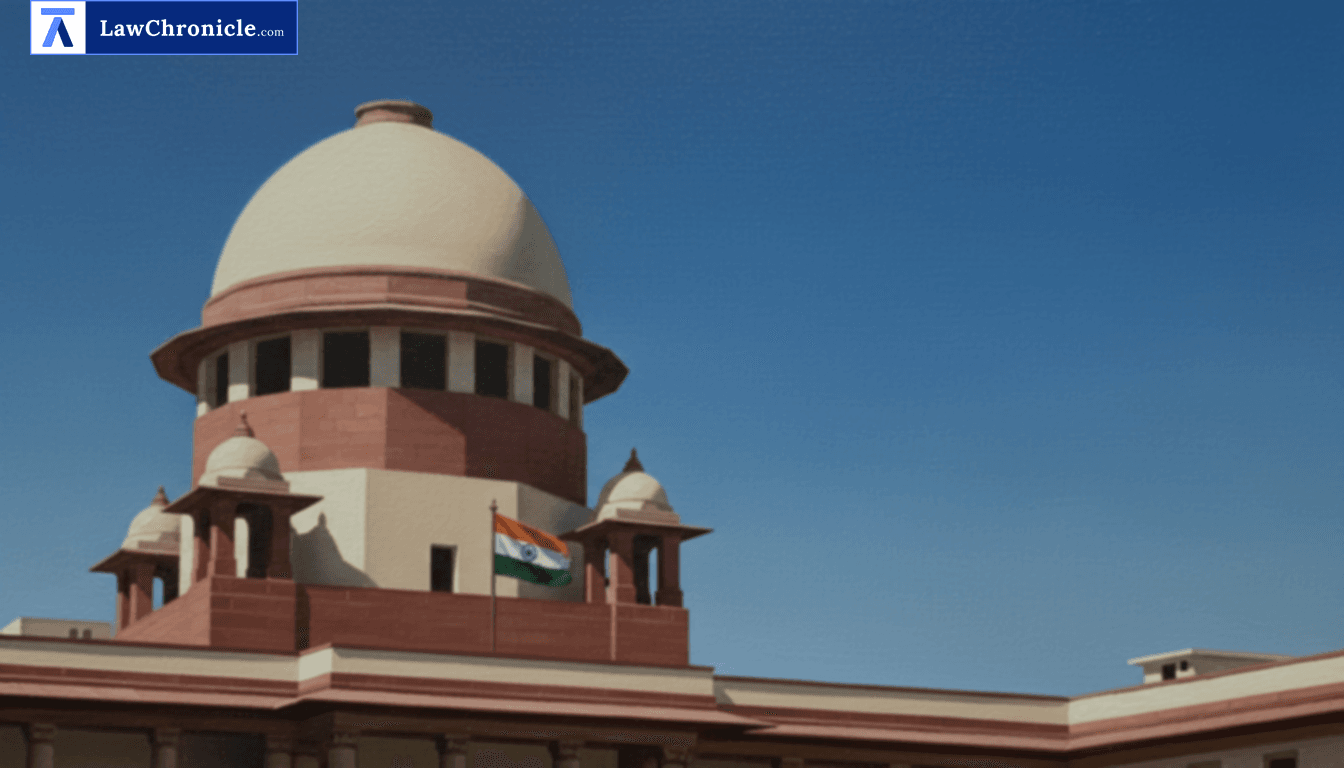
A bench of Justice Sudhanshu Dhulia and Justice K. Vinod Chandran heard the State of Uttar Pradesh’s appeal against a Single Judge’s direction that the Director, Central Bureau of Investigation register a case and investigate on the basis of a Section 161 Cr.P.C. statement produced in a bail application. The question before the Court was whether a High Court could, in the course of deciding bail, issue directions to the CBI to take over or register an investigation.
The Court allowed the appeal and set aside the High Court order insofar as it directed the CBI to register a case. The bench held that issuing such directions in a bail proceeding was impermissible in the absence of exceptional circumstances. The Court noted earlier authorities permitting courts to direct CBI inquiries only in “extraordinary” situations but cautioned that the power must be exercised “sparingly, cautiously and in exceptional situations.” The Court, in its reasoning, observed: “It was permissible for the High Court under Article 226 and the Supreme Court under Article 32 of the Constitution of India in exercise of the power of judicial review, to protect and enforce fundamental rights in general and Article 21 in particular, to issue directions to the CBI to investigate a case even without the consent of the State Government. However, it was cautioned that this extraordinary power has to be exercised sparingly, cautiously and in exceptional situations where it becomes necessary to provide credibility and instil confidence in investigations or where the incident may have national and international ramifications or where such an order may be necessary for doing complete justice or enforcing fundamental rights.” The Court further observed that “there can be no such direction issued in a bail application” when no exceptional circumstance was made out.
Background The dispute arose after a Single Judge of the High Court directed the CBI to register and investigate a case based on the Section 161 statement of one Dr. Umakant, which was relied upon in a bail application by the respondent. The State challenged those directions before the Supreme Court. The State’s counsel argued that the High Court had overstepped its jurisdiction in a bail proceeding and relied on precedents including State of West Bengal v. Committee for Protection of Democratic Rights, State v. M. Murugesan, Seemant Kumar Singh v. Mahesh PS and Union of India v. Man Singh Verma to show that courts must exercise the power to order CBI probes only in exceptional cases.
The State also placed on record that the Uttar Pradesh Government had earlier sought a CBI inquiry and that the Government of India had responded that a transfer was not feasible; by the time of the appeal the local investigation had progressed and transferring it might affect police morale. The respondent’s counsel did not contest the State’s appeal on the point. The Supreme Court found no exceptional circumstances in the Section 161 statement or the Investigating Officer’s in-court remarks to justify directing a central probe in a bail application and relied on the line of authority cautioning against courts overstepping jurisdiction in bail matters. The Court set aside the impugned direction to the CBI, noted that the State did not oppose the bail granted, and refrained from re-examining facts that might interfere with ongoing investigation. The appeal was allowed and pending applications were disposed of.
Case Details: Case No.: Criminal Appeal No. ___ of 2025 (@Special Leave Petition (Crl.) No.7422 of 2023) Case Title: State of Uttar Pradesh v. Dr. Ritu Garg & Ors. Appearances: For the Petitioner(s): Shri K.M. Nataraj, Senior Counsel (for the State) For the Respondent(s): (Counsel for respondent did not join issue; names not recorded in judgment)
Similar Articles
 Breaking News


