


Supreme Court Sets Aside High Court Bail in Alleged Fake-Degree Racket; Directs Accused to Surrender
 Copy Link
 Share
 Save
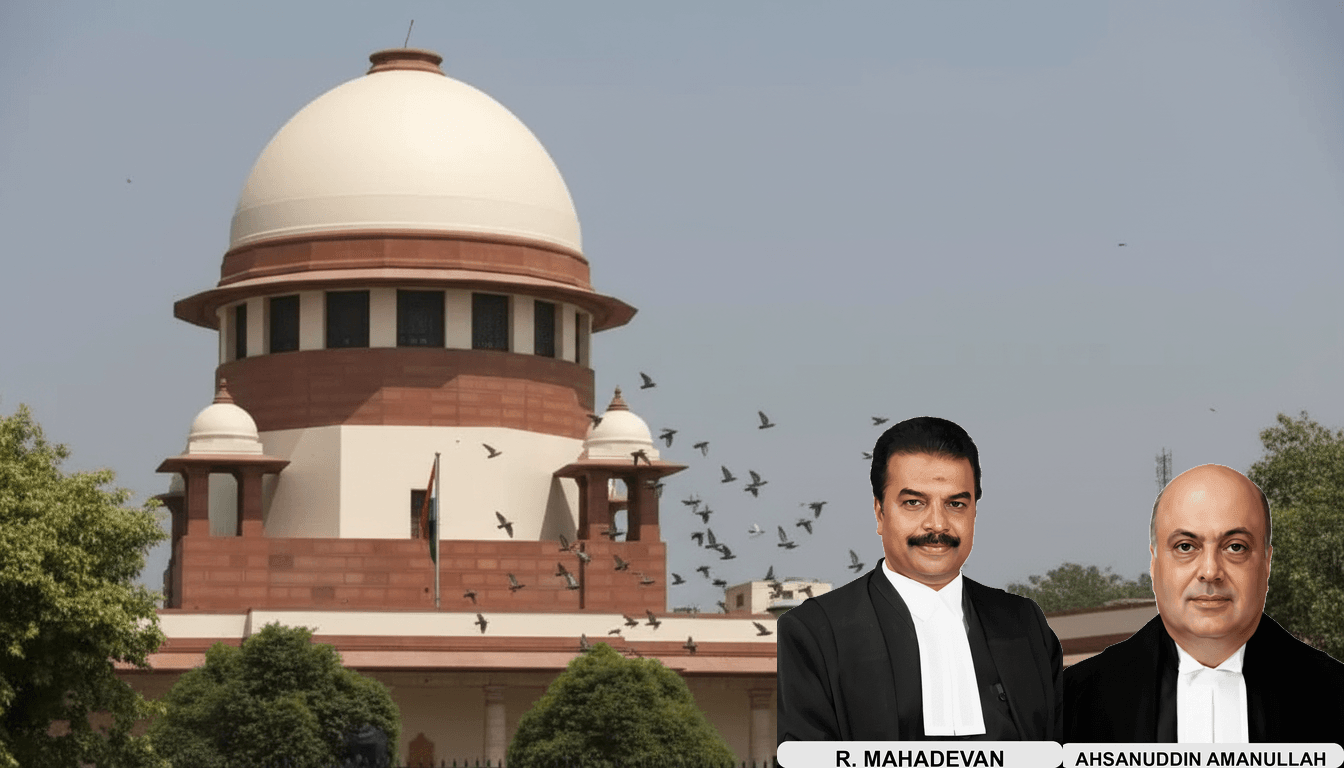
A bench of Justices Ahsanuddin Amanullah and R. Mahadevan heard an appeal by the complainant challenging the High Court order that had granted bail to Mazahar Khan in connection with FIR No. 314 of 2024 registered at Saray Khwaja Police Station, Jaunpur, for offences under Sections 419, 420, 467, 468 and 471 IPC arising from an alleged organised racket in forged academic qualifications.
The Court allowed the appeal, held that the High Court's grant of bail was legally unsustainable and set aside the impugned bail order. The judges observed that discretionary relief of bail "is subject to judicial discipline and appellate oversight" and emphasised that interference was warranted where the exercise of discretion was "perverse, illegal, or manifestly unjustified." The Court, in its reasoning, observed: “Thus, a consistent and well settled doctrinal thread emerges from the aforesaid decisions: the power to grant bail, though discretionary, is subject to judicial discipline and appellate oversight. While personal liberty remains a cherished constitutional value, a bail order is liable to be interfered with where the exercise of discretion is perverse, illegal, or manifestly unjustified; where it is founded on irrelevant or extraneous considerations; or where material and relevant factors bearing on the grant of bail have been ignored.” The Court cancelled the bail granted to Respondent No. 2 and directed that "Respondent No. 2 is directed to surrender before the jurisdictional Court within a period of two weeks from today." The Court declined the prayer to transfer the investigation to a special agency.
Background
The dispute arose from FIR No. 314 of 2024 lodged on 23.08.2024 alleging a large-scale racket producing and circulating forged legal qualifications and academic certificates, including fake LL.B. degrees used to falsely represent individuals as advocates. The complainant alleged that Mazahar Khan resided intermittently in Maharashtra, never enrolled or appeared in law exams in Uttar Pradesh, yet procured and used an LL.B. degree and marksheets purportedly from Sarvodaya Group of Institutions affiliated to Veer Bahadur Singh Purvanchal University. The University, by communication dated 10.08.2024, informed that the institution was not affiliated and that the marksheet was never issued. Investigation disclosed multiple FIRs across States alleging similar offences.
Respondent No. 2 was arrested on 28.04.2025 and his bail plea was rejected by the Sessions Judge. The High Court thereafter granted bail, a decision challenged before the Supreme Court by the complainant. The appellant urged that the High Court ignored material documents (including the University’s denial and a college’s clarification that it did not offer LL.B.), relied on a downloaded verification copy bearing a disclaimer and failed to take into account at least nine prior FIRs and serious antecedents. The State supported annulment. Respondent No. 2 contended that bail was properly granted after completion of investigation and filing of the chargesheet, that bail is the rule and no supervening circumstance arose to cancel it, and alleged the proceedings were motivated by family and property disputes.
The Supreme Court examined extant bail jurisprudence and precedent (including this Court’s decisions distinguishing appeals against bail from cancellation proceedings) and concluded that the High Court had relied on disputed material that formed the core of prosecution, and that suppression or non-disclosure of criminal antecedents had materially affected the exercise of discretion. The Court noted that "suppression of material facts constitutes an abuse of the process of law" and recalled authorities stressing full and candid disclosure in bail applications. Having found the bail order vitiated by non-application of mind and reliance on prima facie suspect material, the Court set aside the High Court order, cancelled bail and directed surrender within two weeks; it also directed the trial court to proceed expeditiously. The Court refused to transfer investigation to a central agency, observing that the investigation had culminated in a chargesheet and no exceptional circumstances of bias or mala fides had been shown. The Bar Council of India had, in the interim, removed the enrolment of Respondent No. 2 and debarred him from practice; the Court also recorded earlier cautions against intimidation of the complainant.
Case Details: Case No.: CRIMINAL APPEAL NO. 825 OF 2026 Case Title: ZEBA KHAN v. STATE OF U.P. & OTHERS Appearances: For the Petitioner(s): [Advocates not specified in the judgment] For the Respondent(s): [Advocates not specified in the judgment]
Similar Articles
 Breaking News


