


Prior Statutory Claim Overrides New UGC Qualifications: Kerala High Court
 Copy Link
 Share
 Save
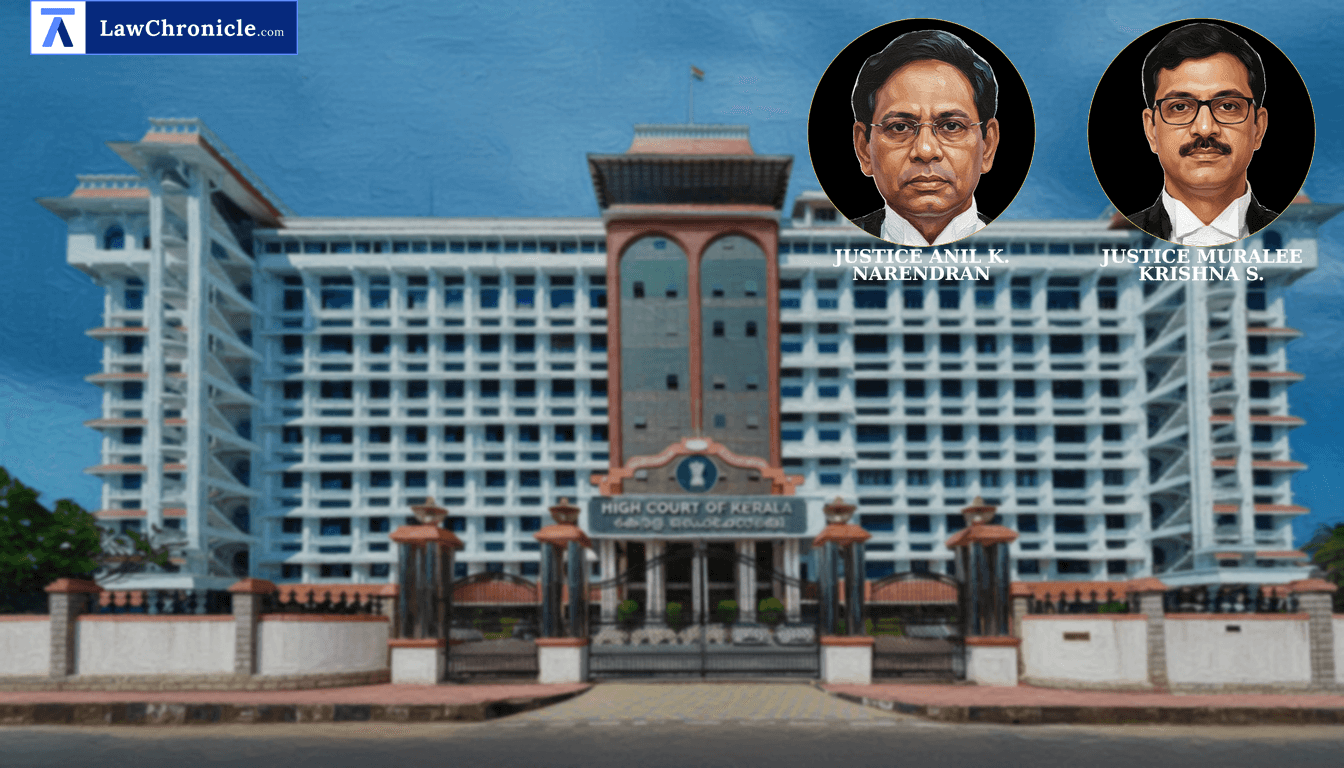
The Kerala High Court has fortified the 'vested rights' of teaching staff under state legislation, ruling that a teacher’s preferential right to reappointment remains insulated even if the government later adopts stricter UGC regulations standards. This decision establishes that statutory claims crystallized under the Calicut University Act, 1975 cannot be defeated by subsequent administrative orders introducing new eligibility criteria like NET or Ph.D.
In a combined hearing, a Division Bench comprising Justice Anil K. Narendran and Justice Muralee Krishna S. adjudicated on the validity of a reappointment claim challenged by the Calicut University Act, 1975 and the State Government. The core dispute involved whether a lecturer who had previously served in a leave vacancy could claim a permanent retirement vacancy despite not meeting the revised UGC regulations qualifications implemented in the interim.
Key Takeaways
Statutory Priority Over Policy Shifts
Rights crystallized under Section 57(6)(b) of the Calicut University Act, 1975 override subsequent administrative adoptions of higher qualification schemes.
Exemption for Pre-2010 Service
Teachers who underwent a valid selection process and served prior to March 27, 2010, are entitled to exemptions from mandatory NET/Ph.D. requirements for reappointment.
Preferential Right is Absolute
Section 57(6)(b) confers a right to appointment itself, not merely a right to be 'considered' alongside other fresh applicants.
Preservation of Vested Rights
Legislative protections for relieved teachers are in the nature of vested property interests that cannot be unilaterally retracted by new executive guidelines.
Judicial Protection of Re-appointment Rights
The Court examined the scope of Section 57(6)(b) of the Calicut University Act, 1975, comparing it with similar provisions in the Kerala University Act, 1974 and Mahatma Gandhi University Act, 1985. It observed that the petitioner, having served from 2005 to 2009 in a leave vacancy, had acquired a 'crystallised' right to future appointments before the state extended UGC regulations benefits to Arabic Colleges in 2013. The Bench rejected the University's argument that the petitioner was ineligible due to the lack of a Ph.D. or NET, noting that the selection process completed in 2005 remained valid for subsequent regular vacancies.
The Court has following directions:
"...quashed Ext.P12 order dated 03.07.2023 issued by the 4th respondent and further directed the 4th respondent to approve the appointment of the petitioner as Lecturer, the post which was redesignated as Assistant Professor in the College, with effect from 01.06.2022 with all consequential benefits. It was further directed that the order shall be issued within one month from the date of receipt of a certified copy of the judgment. The respondents 1 to 3 are directed to disburse the salary with arrears to the petitioner on the grant of approval of the appointment by the 4th respondent, which shall be disbursed to the petitioner within four months from the grant of approval by the 4th respondent."
The Court, in its reasoning, observed: "...the right of the writ petitioner to get preference is not a right for preferential consideration but a preference in appointment. The aforesaid right of the petitioner is crystallised even before Ext.P9 order of the Government making the UGC scheme applicable to the Arabic colleges. Therefore, the exemption stated in Ext.P10 order of the Government is available to the writ petitioner."
Ratio
A teacher relieved from a private college due to cessation of a vacancy or abolition of a course under Section 57(6)(b) of the Calicut University Act, 1975 possesses a statutory right to preference in future appointments. This right is a vested interest that cannot be superseded by the subsequent introduction of new educational qualifications or UGC regulations standards, provided the initial appointment was made through a valid selection process against a sanctioned workload.
Background
The litigation arose when the University of Calicut rejected the proposal to approve the appointment of a Lecturer in English at Anvarul Islam Arabic College. The petitioner had previously served in a leave vacancy from 2005 to 2009 and claimed the retirement vacancy of the same post in 2022. The University and the State Government contended that since the UGC regulations scheme was adopted for Arabic Colleges in 2013, the petitioner was ineligible as he lacked NET/Ph.D. qualifications.
The Bench relied on precedents like Sree Usha v. State of Kerala and Usha Ratnam v. State of Kerala to hold that mandatory qualifications introduced after initial approved service cannot defeat the statutory right to reappointment. Paraphrasing the principle from Mother Anasthasia v. University Appellate Tribunal, the court noted that termination of service by effluxion of time in a temporary vacancy does not extinguish the teacher's right to future preference under the Act. Finding no illegality in the Single Judge's decision, the Division Bench dismissed the appeals.
Case Details:
Case No.: WA No.781 of 2024 and WA No.2660 of 2025
Neutral Citation: 2026:KER:72997
Case Title: University of Calicut v. Noushad M.C & Ors.
Appearances:
For the Petitioner(s): Shri. P.C. Sasidharan, Adv; Shri. N Anand, SC
For the Respondent(s): Shri. K.S. Madhusoodanan, Adv; Shri. Chethan Krishna R., Government Pleader
Source: 2026 CaseBase(KER) 23511
Similar Articles

 Breaking News


