


Supreme Court Upholds Life Sentence for Knife Murder, Declines to Convert Conviction and Grants Liberty to Seek Remission
 Copy Link
 Share
 Save
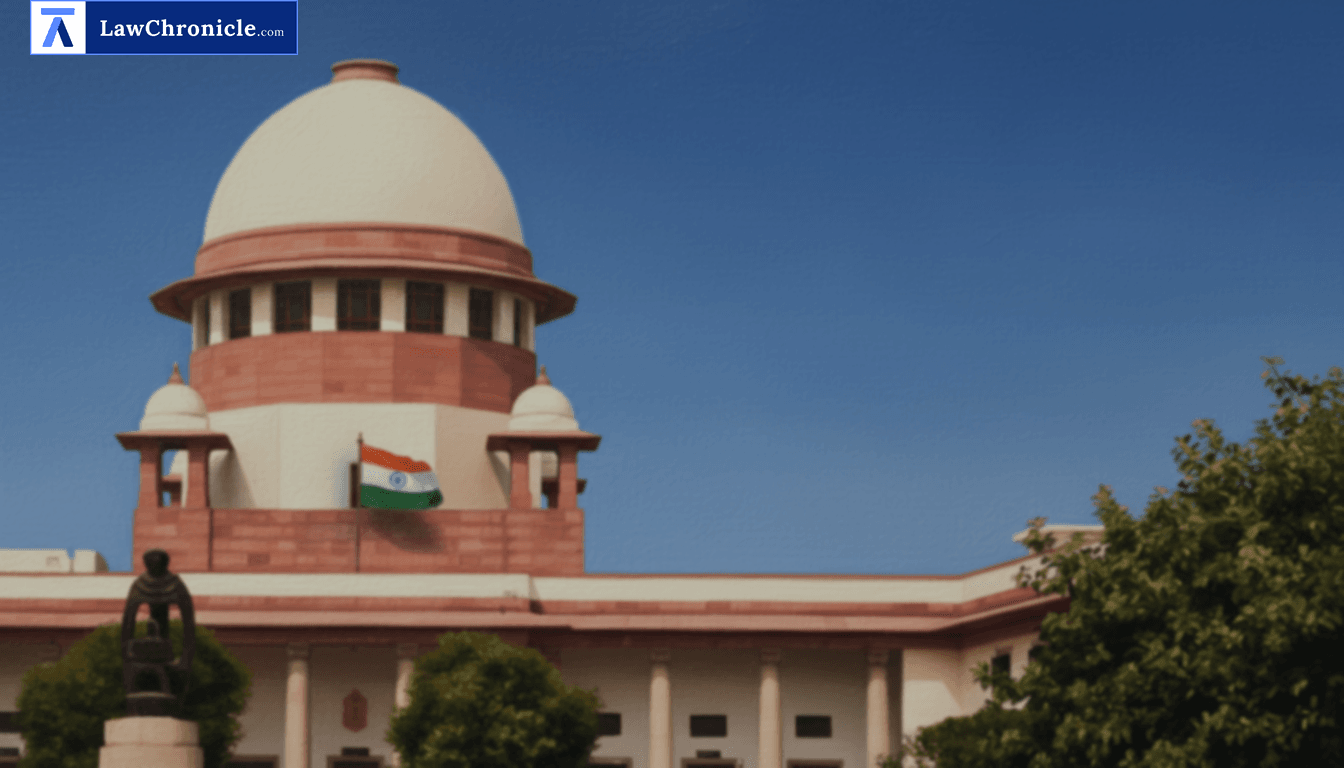
A bench of Justices Abhay S. Oka, Ahsanuddin Amanullah and Augustine George Masih heard an appeal challenging concurrent convictions for murder and life imprisonment; the appeal assailed the Bombay High Court’s confirmation of the Trial Court’s verdict under Section 302 read with Section 34 IPC arising from a fatal knife assault.
The Court dismissed the appeal and upheld the conviction and sentence imposed on the appellant for murder. The judges held that the prosecution proved its case beyond reasonable doubt, finding the testimony of multiple eyewitnesses consistently attributable to the appellant’s having inflicted repeated knife stabs on the deceased and rejecting the defence plea to convert the conviction to culpable homicide not amounting to murder. The Court emphasised that "minor and immaterial inconsistencies and/or discrepancies shall not harm the case of the prosecution" and found no merit in suggestions that delayed recording of statements or communal disturbances vitiated the prosecution case. The Court, in its reasoning, observed: "Every eyewitness has maintained that the appellant inflicted the knife stabs on the deceased which could only have been possible if the knife was already with him, which clearly indicates that he had come with prior intention to cause bodily injury by knife which obviously is a weapon sufficient to cause of death. In other words, the intention to kill was was very much present from the beginning and is not covered by any exception to Section 300 of the IPC. This persuades us to refrain from converting conviction from under Section 302, IPC to one under Section 304-I, IPC. No fault can be found with the Trial Court and the High Court, which have rightly reached the conclusion that the appellant was guilty as charged." The Court also granted the appellant liberty to renew a remission representation and directed the State to decide it by a reasoned order within three months.
Background
The prosecution case arose from an early morning incident on 19 April 2005 at Gujri Bazar, Village Hiwarkhed, where the deceased, Sukhdeo Mahadeorao Dhurve, sustained fatal stab injuries after an earlier quarrel the previous night. The appellant and two co-accused were charged under Section 302 read with Section 34 IPC. The Trial Court convicted accused nos.1 and 2 and sentenced them to life imprisonment; accused no.3 was acquitted. The High Court dismissed the appellant’s appeal in July 2012, prompting the present challenge.
At trial the prosecution relied on evidence of several eyewitnesses (PW3–PW6), the informant (who later testified as a defence witness), the investigating officer (PW7) and the doctor who performed the post-mortem (PW8). The defence contended false implication on communal grounds, delay of 2–3 days in recording Section 161 statements, inconsistent eyewitness conduct amid a crowd of 100–150 people and argued that the assault occurred in the heat of the moment warranting conviction under Section 304-I IPC at best. The State maintained that the evidence was coherent and proved the appellant’s culpability; it also relied on circumstances including the appellant’s flight from the scene and seizure of blood-stained clothes from the co-accused.
The Court reviewed authorities on discrepancies in eyewitness accounts, delay in recording statements and principles governing remission policy. It followed precedents that minor variances do not nullify eyewitness testimony where the core narrative remains reliable, distinguishing cases where unexplained or inordinate delays and surrounding circumstances cast a "cloud of suspicion" over the prosecution. On the question of remission, the Court referred to settled law that a life convict has a right to have his case considered under the remission policy prevailing at conviction or, if unavailable, a more liberal policy; it noted the appellant’s claim of over 14 years’ actual incarceration and about 20 years with remission.
Result: the appeal was dismissed and the conviction and sentence under Section 302 IPC were affirmed. The Court granted liberty to the appellant to file a detailed representation for premature release/remission; it directed the State Government to pass a reasoned order within three months of such representation. I.A. No.21892/2021 was dismissed as not pressed.
Case Details: Case No.: Criminal Appeal No.257 of 2013 (2025 INSC 387) Case Title: Firoz Khan Akbarkhan v. The State of Maharashtra Appearances: For the Petitioner(s): Mrs. Kiran Suri, learned senior counsel; Ms. Nidhi, Advocate-on-Record (Supreme Court Legal Services Committee) For the Respondent(s): Learned counsel for the State of Maharashtra (name not recorded in judgment)
Similar Articles



 Breaking News


