


Temporary Status Casual Labourers Entitled to Pension Without Formal Regularisation: SC
 Copy Link
 Share
 Save
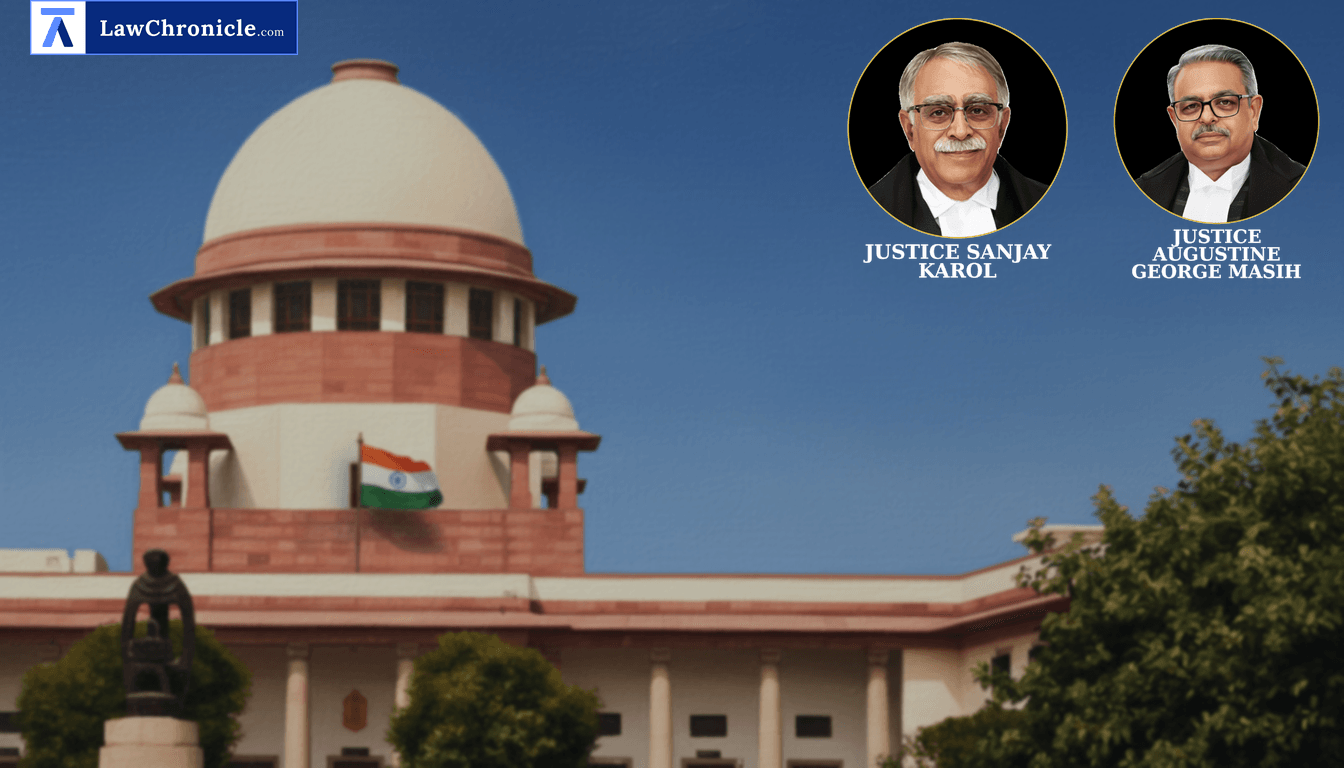
The Supreme Court, in Bhikhani Devi and Etc. v. Union of India and Others, affirmed that casual labourers who have been conferred temporary status and have completed the requisite period of service are entitled to pensionary benefits, even in the absence of a formal order of regularisation. In a decision rooted in the constitutional mandate of social justice, the Court emphasized that the State, as a model employer, cannot deny hard-earned retirement benefits to employees who have dedicated decades of service to the government.
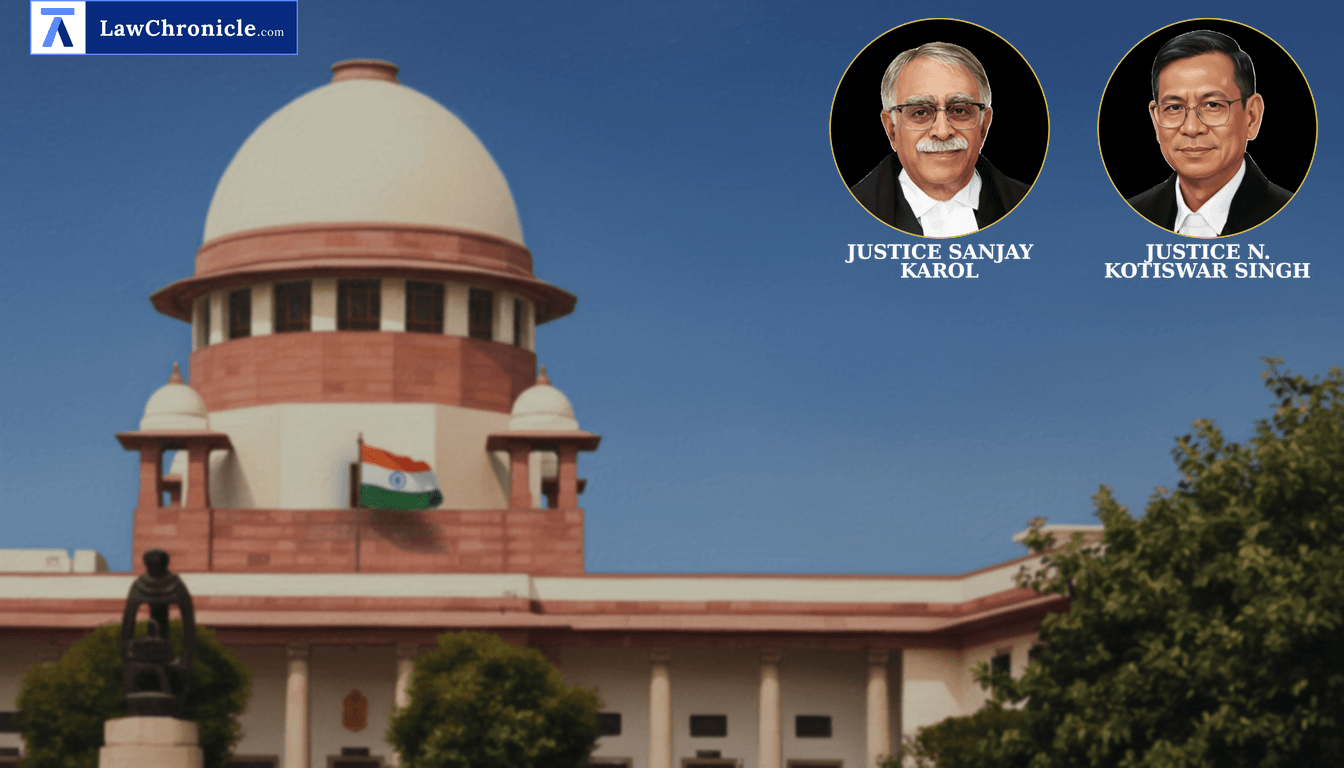
A bench of Justice Sanjay Karol and Justice Augustine George Masih heard the appeals filed by former casual labourers of the Department of Posts. The appellants, who served as Night Guards for several decades, challenged the Patna High Court's decision that had denied them pensionary benefits on the grounds of lack of formal regularisation and delay in approaching the court.
The Mandate of the 1991 Scheme and Parity with Group ‘D’
The Court analyzed the 'Casual Labourers (Grant of Temporary Status and Regularisation) Scheme, 1991', which was formulated following the directions in Jagrit Mazdoor Union (Regd.) and Others v. Mahanagar Telephone Nigam Ltd. and Another. The Court observed that once a casual labourer completes three years of continuous service after the grant of temporary status, they must be treated at par with temporary Group ‘D’ employees. This parity, the Court held, extends to all service benefits, including pension under the Central Civil Services (Temporary Service) Rules, 1965.
The Court, in its reasoning, observed: "A casual labour, on being conferred the temporary status, upon completion of three years of continuous service as temporary status casual labourer becomes entitled to benefits admissible to temporary Group ‘D’ employees, which necessarily includes pensionary benefits available under Rule 10(1-B) of the Central Civil Services (Temporary Service) Rules, 1965 subject, of course, to fulfilling the eligibility criteria provided therein. This right is not dependent on regularisation."
Court's Observations on Pension as a Constitutional Right
Rejecting the government's argument regarding financial burden and the necessity of formal regularisation, the Court reiterated the principles laid down in State of Jharkhand and Others v. Jitendra Kumar Srivastava and Another ( "(2013) 12 SCC 210": 2013 CaseBase(SC) 638), noting that pension is not a bounty but a vested constitutional right in the nature of property under Article 300A of the Constitution of India, 1950. The bench noted that long-serving employees cannot be kept in a precarious condition while extracting services identical to regular employees.
Directions Issued to the Department of Posts
The Court has the following directions: "The Respondents are accordingly directed to compute and release the pensionary and consequential retiral benefits payable to the Appellants in accordance with law within a period of three months from the date of this judgment. In case of default, interest @ 6% per annum from the date of accrual till disbursement shall be payable to the appellants."
Background:
The dispute arose when the widows and retired employees of the Department of Posts were denied family pension and retiral benefits. The employees had been appointed in the 1970s and 80s, granted temporary status in 1992, but were never 'formally regularised' before their retirement or death. While the Central Administrative Tribunal (CAT) ruled in favor of the employees, the High Court set aside those orders citing delay and the absence of formal regularisation.
The Supreme Court set aside the High Court's judgment, relying on M.L. Patil (Dead) through LRs v. State of Goa and Another to clarify that pension is a recurring cause of action and cannot be denied solely on the ground of delay. The Court also drew support from Vinod Kumar and Others v. Union of India and Others, Jaggo v. Union of India and Others ( "2024 SCC OnLine SC 3826": 2024 CaseBase(SC) 715), and Yashwant Hari Katakkar v. Union of India and Others ( "(1996) 7 SCC 113": 1994 CaseBase(SC) 231) to conclude that the nature of service rendered over decades transcends mere nomenclature.
Case Details:
Case No.: Civil Appeal Nos. of 2026 (Arising out of SLP (C) Nos. 28802-28804 of 2019)
Case Title: Bhikhani Devi and Etc. v. Union of India and Others
Source: 2026 CaseBase(SC) 520
Similar Articles
 Breaking News


