


TNCSC is Government or Private for Service Tax Exemption? Madras High Court Answers
 Copy Link
 Share
 Save
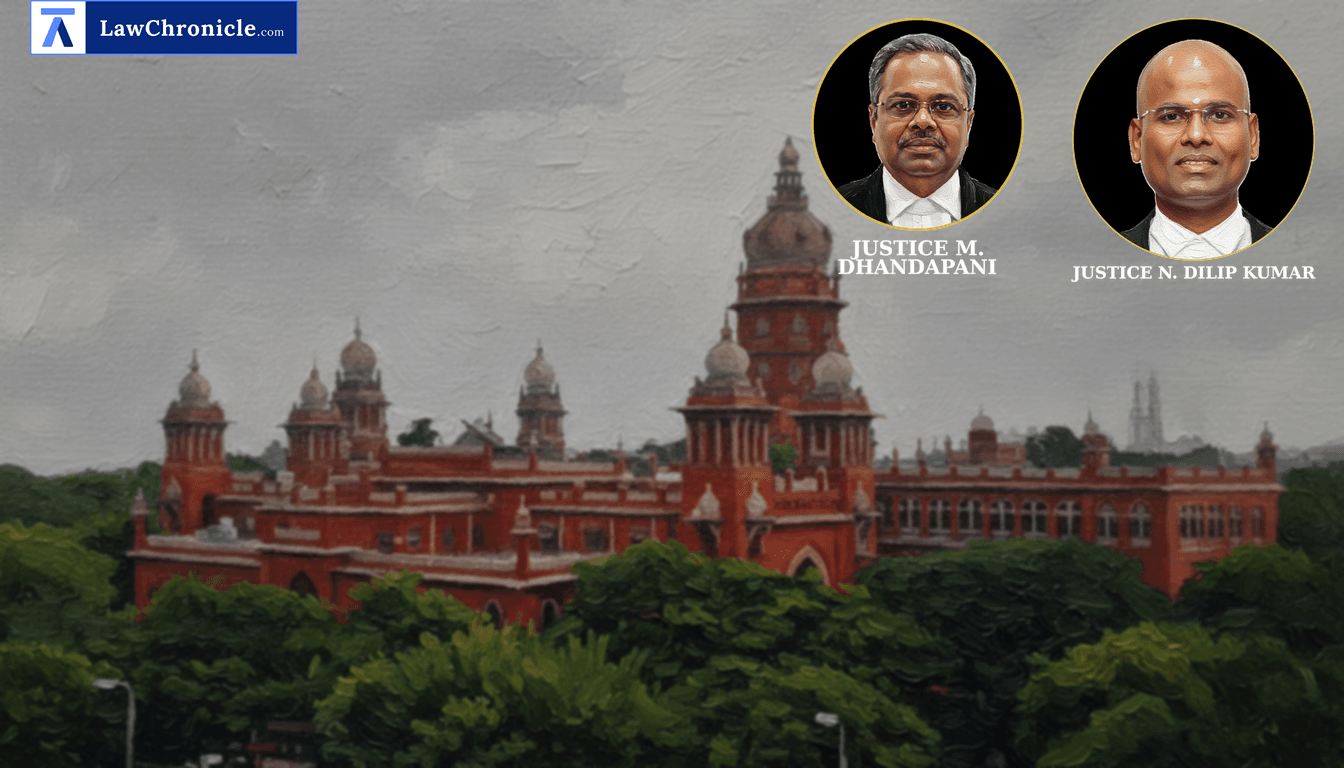
The Madras High Court has fortified the immunity of state-run welfare entities against tax demands, ruling that the Tamil Nadu Civil Supplies Corporation qualifies as a 'Governmental Authority' performing constitutional functions, thereby exempting its storage infrastructure from multi-crore service tax levies.
A Division Bench comprising Justice M. Dhandapani and Justice N. Dilip Kumar delivered the verdict while dismissing a writ appeal filed by the GST and Central Excise department against a Single Judge’s order.
Key Takeaways
Shielding Public Welfare Entities
The ruling establishes that bodies with over 90% government equity performing functions under Article 243W are immune from service tax on essential infrastructure construction.
Judicial Discipline Binding on Revenue
The Madras High Court reaffirmed that subordinate tax authorities must follow orders of higher appellate authorities unreservedly, even if an appeal is pending, unless a stay is granted.
Infrastructure-Centric Exemption Test
Exemption eligibility for storage facilities is determined by their 'objective design and actual immediate use' at the time of construction, rather than hypothetical future commercial uses.
Revenue Authorities Must Respect Judicial Hierarchy
The Madras High Court expressed significant disapproval of the second appellant's decision to deviate from an earlier order passed by the Commissioner (Appeals) regarding the same subject matter. The Bench highlighted that the revenue department failed to secure an interim stay from the CESTAT against the previous favorable order for the respondent.
Referring to the principle of judicial discipline, the Bench noted that the revenue officers are bound by the decisions of the appellate authorities while disposing of quasi-judicial matters. The Madras High Court expressed that "The principles of judicial discipline require that the orders of the higher appellate authorities should be followed unreservedly by the subordinate authorities... the refusal of the Second appellant to follow the earlier order of the appellate Commissioner is contrary to the principles of judicial discipline."
TNCSC's Status Under Article 243W
The central legal dispute was whether the Tamil Nadu Civil Supplies Corporation (TNCSC) met the definition of a "Governmental Authority" to claim benefit under the Mega Exemption Notification No.25/2012. The Department argued that TNCSC did not carry out functions entrusted to a Municipality under Article 243W of the Constitution of India.
However, the Madras High Court found that TNCSC, being a Section 25 company under Companies Act, 1956 with 99% government equity, performed functions such as poverty alleviation and social development by distributing essential commodities at subsidized rates. These activities align with Serial Nos. 3, 9, and 11 of the 12th Schedule of the Constitution of India.
Infrastructure for Post-Harvest Storage
The Madras High Court further addressed the exemption under Clause 14(d) of the notification regarding Scientific Storage (SS) Godowns. The Bench rejected the Revenue's argument that these godowns could be used for other commodities like cement, rendering them commercial.
The Madras High Court explained that “The primary test for eligibility to claim exemption from service tax is the objective, design and actual immediate use of the infrastructure at the time of its execution... As long as the infrastructure fits the definition of post–harvest storage at the time of the service provision, subsequent or auxiliary changes in utilisation do not retro-actively dissolve a valid statutory exemption.”
Ratio
An entity established by the Government with 90% or more equity/control, which performs functions listed under the 12th Schedule of the Constitution of India (such as poverty alleviation or social development), constitutes a 'Governmental Authority' for tax exemption purposes. Furthermore, statutory exemptions for 'post-harvest storage infrastructure' are determined by the primary design and immediate use at the time of service, and cannot be denied based on hypothetical future alternative uses.
Background
The dispute originated from an Order in Original passed on 19.02.2019, where the Commissioner of GST and Central Excise demanded Rs. 2.63 Crore in service tax from TNCSC for the construction of SS Godowns by private contractors between 2015 and 2017. The Department also imposed penalties for failure to register and submit returns under the Finance Act, 1994.
TNCSC challenged this before a Single Judge, who quashed the demand by relying on a previous appellate order for an earlier period (2012-2015). The Revenue appealed this, raising a preliminary objection regarding the availability of an alternative remedy. The Division Bench, relying on Godrej Sara Lee Limited Vs Excise and Taxation Officer -cum- assessing authority and others, held that the existence of an alternative remedy does not oust the High Court's jurisdiction under Article 226, especially when the controversy is purely legal. The Madras High Court ultimately found TNCSC eligible for exemptions under Clauses 12A and 14(d) of the Mega Exemption Notification.
Case Details:
Case No.: WA(MD) No. 2147 of 2021
Case Title: The Principal Chief Commissioner Of Gst And Central Excise & Ors. Vs The Senior Regional Manager, Tamilnadu Civil Supplies Corporation
Appearances:
For the Petitioner(s): M/s. R.Gowrishankar (Senior standing counsel)
For the Respondent(s): Mr. B. Saravanan (Additional Advocate General), Mr. G. Mohan Kumar (Additional Government Pleader)
Source: 2026 CaseBase(MAD) 24691
Similar Articles
 Breaking News


