


Trademark Procedures Cannot Block Copyright Prosecution for Logo Counterfeiting: Gujarat HC
 Copy Link
 Share
 Save
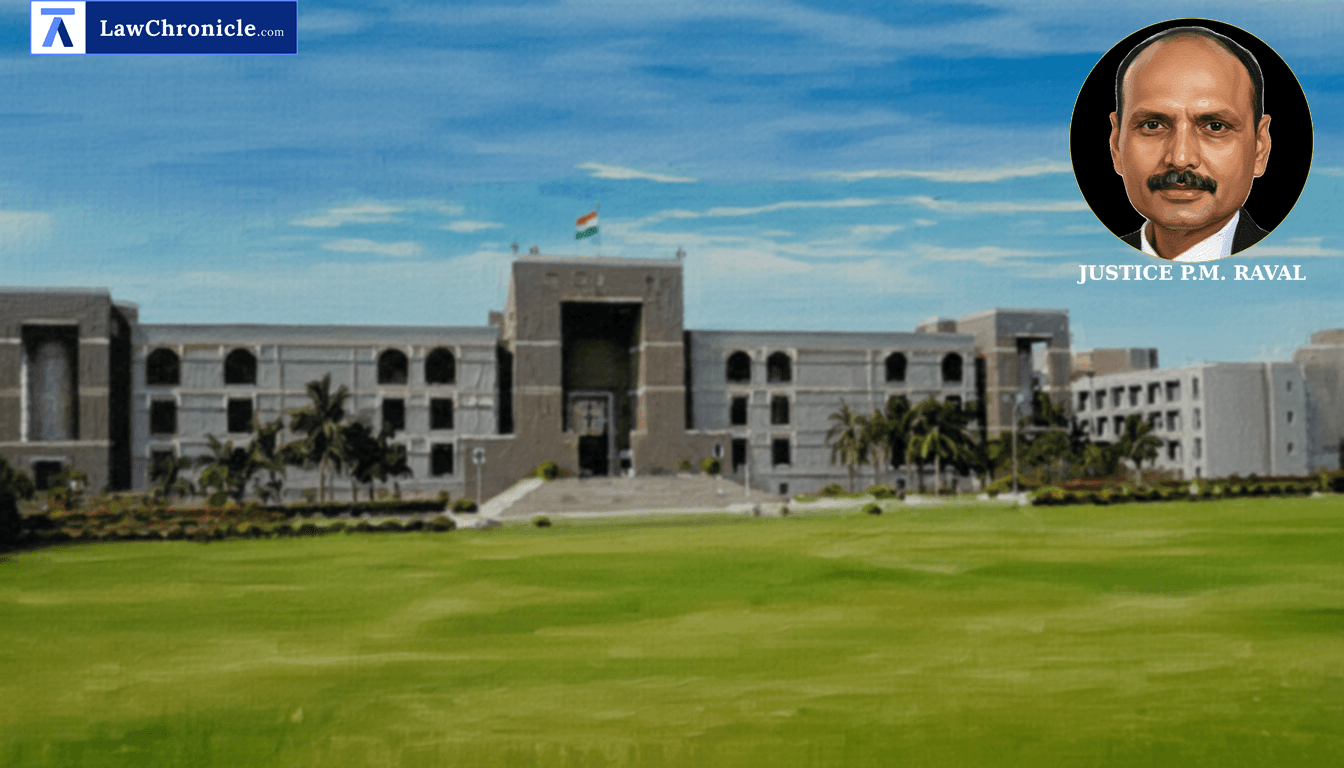
The Gujarat High Court has fortified the independent enforcement of intellectual property rights, ruling that the procedural safeguards of trademark law cannot be used to stifle criminal prosecution for the unauthorized reproduction of registered artistic logos under copyright law. This decision clarifies that the seizure of counterfeit stickers bearing registered artistic marks by police officers is valid, even if the strict pre-requisites for trademark search and seizure are not met.
In a petition seeking the quashing of an FIR involving the mass seizure of counterfeit automobile accessories and stickers, a Bench of Justice P. M. Raval held that the existence of a registered copyright in an artistic logo provides a distinct criminal cause of action. The Court emphasized that procedural lapses, such as the non-inclusion of registration certificates in a charge-sheet, are curable irregularities and do not warrant the termination of criminal proceedings at the threshold.
Key Takeaways
Dual Protection Strategy
Artistic logos enjoy concurrent protection under both copyright and trademark laws, allowing brand owners to choose the more effective enforcement route against counterfeiters.
Procedural Lapses Are Curable
The failure of investigating officers to annex statutory public documents like copyright certificates to a charge-sheet is a curable defect and not a ground for quashing under Section 482 of the Code of Criminal Procedure, 1973.
Designs Act Bar Clarified
Graphic artworks and brand logos are explicitly excluded from the definition of a 'design,' ensuring that copyright protection does not expire even when the logo is reproduced industrially.
Police Search Powers Upheld
Police officers not below the rank of Sub-Inspector possess the statutory authority under Section 64 of the Copyright Act, 1957 to seize infringing copies without the mandatory Registrar's opinion required under trademark law.
Copyright Protection Independent of Trademark Safeguards
The court rejected the applicant's contention that the police should have followed the mandatory safeguards under Section 115(4) of the Trade Marks Act, 1999. The applicant argued that since the dispute related to brand identity on spare parts, the police registered the case under the Copyright Act, 1957 solely to bypass the requirement of obtaining a Registrar's opinion and ensuring a search by a high-ranking officer.
However, the Bench noted that the "Honda Wing Logo" was registered as an artistic work under Section 2(c) of the Copyright Act, 1957. The Court observed: "The remedies under the Copyright Act, 1957, exist independently of the Trade Marks Act, 1999, and the search conducted under Section 64 of the Copyright Act, 1957 is valid in law."
Inapplicability of the Designs Act Bar
The applicant further contended that under Section 15(2) of the Copyright Act, 1957, copyright ceases once a work is reproduced industrially more than 50 times. The Court dismissed this, pointing to an explicit endorsement on the Copyright Registration Certificate stating the work was not registered under the Designs Act, 2000. The Bench clarified that brand logos are legally exempt from design registration, keeping the copyright alive regardless of industrial use.
Regarding the non-annexure of certificates in the charge-sheet, the Court, in its reasoning, observed: "The mere administrative lapse of the Investigating Officer in not annexing a copy of the registration certificate with the charge-sheet is a procedural irregularity curable during trial. It does not go to the root of the jurisdiction of the Magistrate, nor does it justify quashing the entire prosecution at the threshold under Section 482 Code of Criminal Procedure, 1973."
The Court has the following directions:
"1. Criminal Miscellaneous Application No.520 of 2022 is hereby dismissed.
2. Interim relief, if any granted earlier, stands vacated. Rule is discharged.
3. The learned Trial Court is directed to proceed with the trial in accordance with law, without being influenced by any factual observations made in this judgment, which are limited solely to the determination of the application under Section 482 Code of Criminal Procedure, 1973."
Ratio
The procedural constraints and mandatory safeguards prescribed under Section 115(4) of the Trade Marks Act, 1999 apply exclusively to offences prosecuted under that Act and cannot be imported to restrict or nullify the independent powers of search and seizure granted to police officers under Section 64 of the Copyright Act, 1957. Furthermore, the non-inclusion of statutory public documents in a charge-sheet is a curable irregularity under Sections 242 and 294 of the Code of Criminal Procedure, 1973 and does not constitute a ground for quashing criminal proceedings.
Background
The case originated from a police raid at commercial premises in Ahmedabad following information from an authorized representative of Honda. The search led to the recovery of counterfeit spare parts and 250 standalone stickers featuring the "Honda Wing Logo," valued at over Rs. 7 lakh. The applicant, Atul Bhalerao Patil, was charged under Sections 51, 63, and 64 of the Copyright Act, 1957.
The applicant moved the High Court to quash the FIR, relying on Jitendrabhai Mohanbhai Kripalani v. State of Gujarat to argue that documents not in the charge-sheet cannot be considered, and State of Haryana v. Bhajan Lal to argue the allegations did not disclose an offence. The High Court distinguished Jitendrabhai Mohanbhai Kripalani v. State of Gujarat, noting that in the present case, a valid, subsisting copyright certificate existed with an explicit endorsement excluding the Designs Act, 2000. Citing Vishwa Mitter v. O.P. Poddar ( "AIR 1984 SC 5": 1983 CaseBase(SC) 301), the Court affirmed that any person could set the criminal law into motion, upholding the locus standi of the complainant.
Case Details:
Case No.: R/CRIMINAL MISC.APPLICATION NO. 520 of 2022
Neutral Citation: 2026:GUJHC:61868
Case Title: Atul Bhaleraav Patil Versus State Of Gujarat & Ors.
Appearances:
For the Petitioner(s): Mr Harsh M Surti, Mr Sikander Saiyed
For the Respondent(s): Mr. Rohan Shah (App For R-1), Dr. Abhisst K Thaker, Mr. Amol Dikshit, Mr. Ishan Rajdev
Source: 2026 CaseBase(GUJ) 25089
Similar Articles
 Breaking News


