


Tribunal Powers To Impose Conditions On Interim Relief Transcend RERA Section 13(1) Limits: Bombay HC
 Copy Link
 Share
 Save
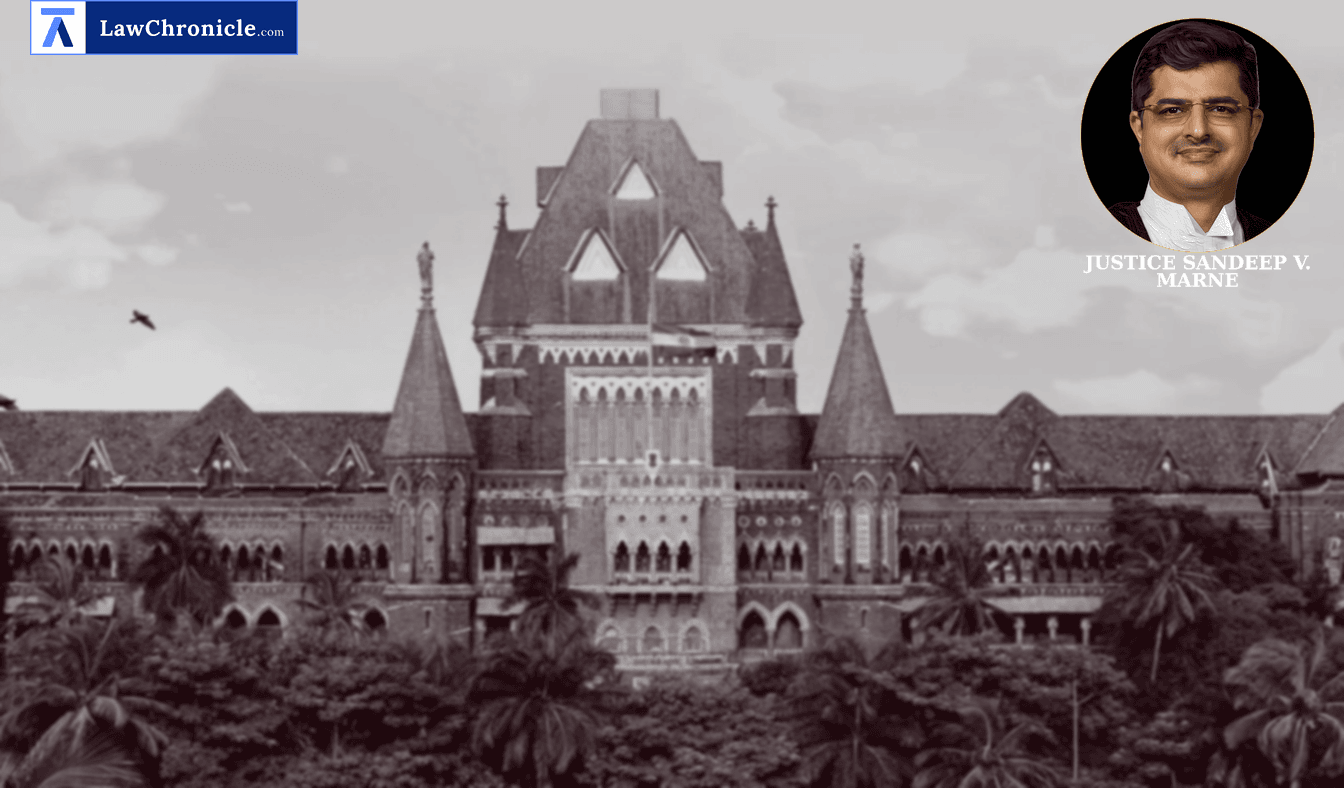
The Bombay High Court has clarified that the Real Estate Appellate Tribunal (REAT) possesses wide discretionary powers to impose deposit conditions exceeding the 10% statutory cap while granting interim relief to allottees. Justice Sandeep V. Marne delivered the judgment while hearing a second appeal under Section 58 of the Real Estate (Regulation and Development) Act, 2016. The Bench examined whether a Tribunal's power to grant conditional stay is fettered by the operational limits placed on promoters regarding advance payments.
Key Takeaways
Tribunal Discretion Unfettered by Promoter Restrictions
The prohibition on promoters accepting more than 10% advance under Section 13(1) of Real Estate (Regulation and Development) Act, 2016 does not apply to the adjudicatory discretion of the REAT when granting interim orders.
Testing 'Bona Fides' at the Appellate Stage
Appellate Tribunals are entitled to test the readiness and willingness of an unsuccessful complainant by directing a substantial deposit as a precondition for staying third-party rights.
Balancing Equities in High-Value Projects
Granting an unconditional stay on a project near completion, where full consideration is due, would cause irreparable financial injury to promoters and must be countered by reasonable security deposits.
REAT's Wide Discretionary Powers Under Sections 44(3) and 53
The Bombay High Court observed that the powers conferred upon the Tribunal under Section 44(3) and Section 53 of the Real Estate (Regulation and Development) Act, 2016 are separate and distinct from the restrictions placed on promoters. The Bench explained that "The concept of discretionary power of REAT to impose conditions for grant of interim order cannot be conflated with the concept of restriction/prohibition imposed on the promoter under Section 13(1) to accept advance amount from an allottee. Imposing such a restriction on the powers of the REAT would amount to rewriting the statute. Such restriction would also provide an undue advantage to an allottee who has paid an insignificant amount to the promoter, enabling such allottee to entangle the flat in a protracted and endless litigation."
The Bombay High Court noted that while Section 13(1) of Real Estate (Regulation and Development) Act, 2016 and Section 4 of MOFA protect homebuyers from unsecured advance payments, they do not bind the REAT.
Ratio
The restriction imposed on a promoter under Section 13(1) of the Real Estate (Regulation and Development) Act, 2016, prohibiting the acceptance of more than 10% of the cost of an apartment without a registered agreement, does not limit the wide discretionary powers of the Real Estate Appellate Tribunal under Sections 44(3) and 53. The Tribunal may, to balance equities and test the bona fides of a litigant, direct a deposit exceeding the 10% limit as a precondition for granting interim relief.
Background
The dispute involved an allottee who was issued an allotment letter in 2010 for a flat in the 'Palais Royale' project for Rs. 76.36 crores. The allottee paid only Rs. 5.51 crores and failed to pay the first tranche of Rs. 38.18 crores required for executing a registered agreement. Following the winding up of the original promoter and subsequent takeover by the Respondent through a SARFAESI auction, the allotment was terminated in 2022.
MahaRERA dismissed the allottee's complaint, holding that the relationship of allottee-promoter ended upon termination. The REAT, in an appeal, granted a status quo order but conditioned it upon the deposit of Rs. 38.18 crores. The allottee challenged this in the High Court, arguing it violated Section 13 of Real Estate (Regulation and Development) Act, 2016 and relied on Standard Chartered Bank Versus. Dharminder Bhohi & Ors. ( "(2013) 15 SCC 341": 2013 CaseBase(SC) 463) and Praveen Chhabra Versus. Real Estate REAT to argue that a Tribunal cannot exceed statutory limits.
Rejecting these arguments, the Bombay High Court cited U.N. Krishnamurthy (since deceased) through Legal Heirs Versus. A.M. Krishnamurthy regarding the necessity of proving readiness and willingness in specific performance cases. It also relied on Wander Ltd. & Anr. Versus. Antox India P. Ltd. ( "1990 Supp SCC 727": 1990 CaseBase(SC) 836) and Mohd Mehtab Khan & Ors. Versus. Khushnuma Ibrahim Khan & Ors. to emphasize that appellate courts should not interfere with discretionary interim orders unless they are arbitrary. The Court further noted the principles in Bal Krishan Gupta & Anr. Versus. Vikas Aggarwal & Anr. and Mohan Overseas Pvt. Ltd. Versus. Goyal Tin & General Industries regarding the balancing of equities during litigation. Consequently, the Bombay High Court found the REAT's condition to be sound and dismissed the appeal.
Case Details:
Case No.: SECOND APPEAL NO. 534 OF 2024
Neutral Citation: 2026:BHC-AS:45353
Case Title: Sachin Bajla Versus Honest Shelters Pvt. Ltd. & Anr.
Appearances:
For the Petitioner(s): Mr. Kunal Mehta with Mr. Robin Fernandes, Mr. Sukrit Parashar, Ms. Anushka Dubey, Mr. Shiroy Pavri and Mr. Surya Kale i.b. Vesta Legal
For the Respondent(s): Mr. Gaurav Joshi, Senior Advocate with Mr. Rubin Vakil, Ms. Sonam Mhatre, Ms. Saloni Sulakhe and Mr. Declan Fernandes i/b. Mr. Dhaval Vussonji & Associates
Source: 2026 CaseBase(BOM) 7164
Similar Articles
 Breaking News


