


Unilateral Arbitrator Appointment Vitiates Award At Source: Calcutta HC
 Copy Link
 Share
 Save
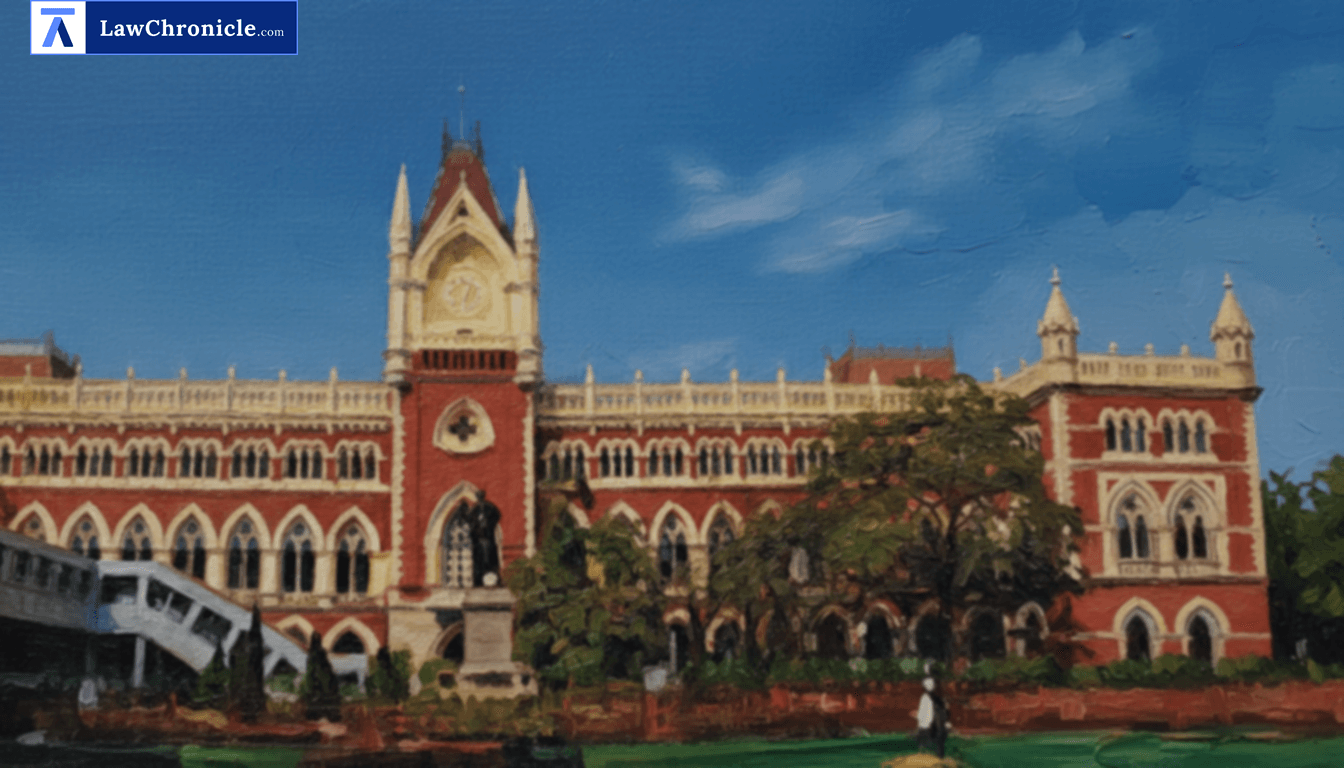
Striking at the root of invalid arbitration clauses, the Calcutta High Court held that an arbitral award passed by an arbitrator unilaterally appointed by an interested authority is a complete nullity and void ab initio. The High Court underscored that statutory disqualifications under arbitration law cannot be bypassed through general pre-dispute contractual waivers or mere participation in arbitral proceedings.
A Division Bench comprising Justice Debangsu Basak and Justice Ajay Kumar Gupta dismissed a commercial appeal challenging the setting aside of an arbitral award. The appeal arose out of an order passed by the Commercial Court at Asansol under Section 34 of the Arbitration and Conciliation Act, 1996, which had set aside the award passed by a Sole Arbitrator for lacking inherent jurisdiction.
Invalid Appointment Mechanism Vitiates Arbitral Proceedings
The High Court observed that Clause 25 of the General Conditions of Contract vested the power to appoint the sole arbitrator exclusively in the Managing Director of the respondent-corporation, who was an interested party in the dispute. Applying the settled position of law established in TRF Ltd. v. Energo Engineering Projects Ltd. ( "(2017) 8 SCC 377": 2017 CaseBase(SC) 1263) and Perkins Eastman Architects DPC and Anr. Vs. HSCC (India) Ltd. ( "(2020) 20 SCC 760 : 2019 SCC OnLine SC 1517": 2019 CaseBase(SC) 1956), the Court reiterated that once an appointing authority is itself ineligible under Section 12(5) read with the Seventh Schedule of the Arbitration and Conciliation Act, 1996, it loses the power to nominate any other person as an arbitrator.
The Court noted that the non-obstante clause in Section 12(5) invalidates prior standard-form contractual terms, and waiver can only occur through an express agreement in writing entered into after the disputes have arisen, as clarified in Bharat Broadband Network Ltd. Vs. United Telecoms Ltd. ( "(2019) 5 SCC 755 : 2019 SCC OnLine SC 547": 2019 CaseBase(SC) 1804) and Bhadra International (India) Pvt. Ltd. and Ors. Vs. Airports Authority of India ( "2026 SCC OnLine SC 7": 2026 CaseBase(SC) 9). The Court affirmed the principles in Cholamandalam Investment v. Amrapali Enterprises regarding the nullity of awards rendered by unilaterally appointed arbitrators.
The Court, in its reasoning, observed: "...once the appointing authority is himself ineligible to act as an arbitrator, he is equally incompetent to nominate any other person as arbitrator, 'once the infrastructure collapses, the superstructure is bound to collapse' with it. Therefore it does not matter whether the appointee happened to be a serving or a retired employee of the Corporation: the appointment stands vitiated at its very source, in the unilateral exercise of power by an interested Managing Director..."
The Court has following directions:
"Accordingly, AO-COM 35 of 2025 is dismissed. There shall be no order as to costs."
Key Takeaways
- Unilateral Appointments Invalid: An interested party or its officer cannot unilaterally appoint a sole arbitrator, and any appointment so made is void ab initio.
- Strict Waiver Requirements: Section 12(5) disqualifications can only be waived through an explicit written agreement entered into after disputes have arisen.
- Participation Is Not Waiver: Participation in arbitral proceedings or filing pleadings does not constitute an implied waiver of statutory ineligibility.
- Incurable Jurisdictional Defect: An arbitral award rendered by a unilaterally appointed arbitrator is a nullity without inherent jurisdiction.
Ratio
An appointing authority rendered statutorily ineligible under Section 12(5) read with the Seventh Schedule of the Arbitration and Conciliation Act, 1996 lacks the inherent authority to nominate a sole arbitrator, and any arbitral award originating from such a unilateral appointment is void ab initio and incapable of being cured by conduct or prior contractual agreement.
Background:
The dispute originated from a tender issued by the Central Warehousing Corporation (CWC) on April 26, 2011, for constructing a godown at C.W. Santragachi. The appellant was awarded the contract, but disputes arose over penalty deductions and payment withholdings from the final bill. The appellant invoked arbitration, and the Managing Director of CWC appointed a retired IRSE employee as sole arbitrator under Clause 25 of the contract. The arbitrator awarded Rs. 16,15,017/- with interest to the appellant.
CWC challenged the award under Section 34 of the Arbitration and Conciliation Act, 1996. The Commercial Court at Asansol set aside the award, holding the appointment void ab initio. The appellant appealed under Section 37 (AO-COM 35 of 2025), relying on Hindustan Construction Company Ltd. through its Authorised Signatory Yogesh Dalal Vs. Bihar Rajya Pul Nirman Nigam Limited and Ors. ( "(2026) 3 SCC 264": 2025 CaseBase(SC) 1412) to argue that participation without objection waived the right to challenge. The High Court rejected the contention, holding that statutory disqualification under Section 12(5) cannot be overridden by procedural waiver, and dismissed the appeal.
Case Details:
Case No.: AO-COM 35 of 2025
NeutralCitation: 2026:CHC-AS:1139-DB
Case Title: Amal Krishna Dey Vs. Central Warehousing Corporation
Appearances:
For the Petitioner(s): Mr. Amitava Ghosh, Adv., Mr. Malay Kumar Das, Adv., Mr. Tapas Kumar Dey, Adv., Mr. Sourav Chatterjee, Adv.
For the Respondent(s): Mr. Samrat Chowdhury, Adv.
Source: 2026 CaseBase(CAL) 1589
Similar Articles


 Breaking News


