


Unilateral Appointment By Public Authority Renders Award Void; Court Allows Fresh Arbitration
 Copy Link
 Share
 Save
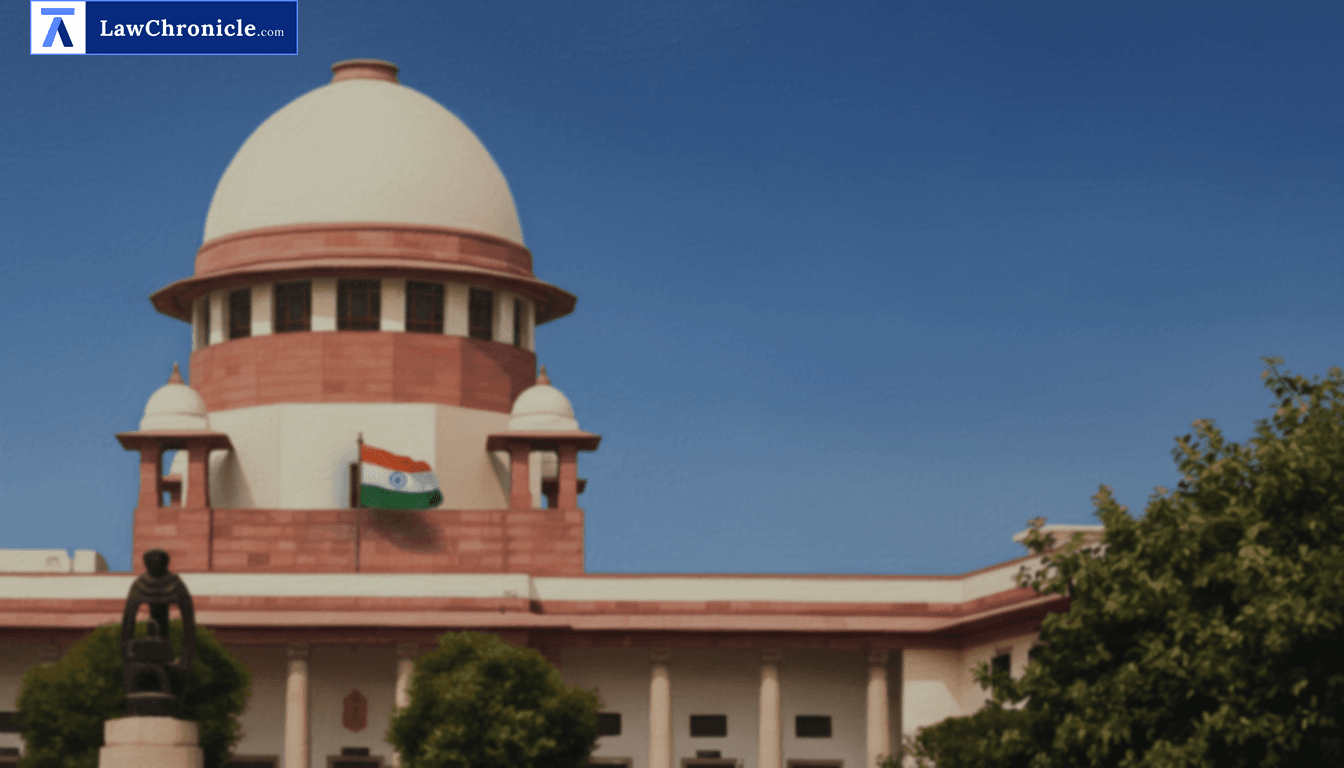
A bench of Justices J.B. Pardiwala and K.V. Viswanathan heard appeals arising from the Delhi High Court’s dismissal of challenges to arbitral awards and considered whether a sole arbitrator appointed pursuant to a license clause by a public authority was ineligible under Section 12(5) of the Arbitration and Conciliation Act, 1996 (as amended). The appeals were disposed of by a judgment dated 5 January 2026.
The Court allowed the appeals and held that the appointment of the sole arbitrator by the Airports Authority of India (AAI) was void under Section 12(5) read with the Seventh Schedule because the appointing authority fell within disqualifying categories; an appointing person who became ineligible by operation of law could not validly appoint or nominate an arbitrator. The Court reiterated that the proviso to Section 12(5) permitted waiver of ineligibility only by an “express agreement in writing” entered into after disputes had arisen and that participation in proceedings or a procedural record of consent did not satisfy that requirement. The Court set aside the arbitral awards dated 30 July 2018 and directed that the parties were free to initiate fresh arbitration in accordance with law. The Court, in its reasoning, observed: “once the arbitrator has become ineligible by operation of law, he cannot nominate another as an arbitrator. The arbitrator becomes ineligible as per prescription contained in Section 12(5) of the Act. It is inconceivable in law that person who is statutorily ineligible can nominate a person. Needless to say, once the infrastructure collapses, the superstructure is bound to collapse. … once the identity of the Managing Director as the sole arbitrator is lost, the power to nominate someone else as an arbitrator is obliterated.” The Court further noted that a mere procedural note that “None of the parties have any objection to my appointment as the Sole Arbitrator. I declare that I have no interest in any of the Parties, or in the disputes referred to the Sole Arbitrator” did not amount to the statutorily required written waiver.
Background The dispute arose from two License Agreements (dated 29.11.2010) between a consortium led by Bhadra International (India) Pvt. Ltd. and the Airports Authority of India (AAI) for ground handling services. Clause 78 of the agreement provided for reference of disputes to the “sole arbitration of a person, to be appointed by the Chairman of the Authority,” and expressly stated that “It will be no objection… that the Arbitrator so appointed is a servant of the Authority.” After disagreements, the claimant invoked arbitration by notice dated 27.11.2015. The Arbitration and Conciliation (Amendment) Act, 2015, which came into force on 23.10.2015, inserted Section 12(5) and the Seventh Schedule prescribing relationships that rendered persons ineligible to be appointed arbitrators; the proviso allowed parties, post-dispute, to waive ineligibility by an express written agreement.
AAI appointed a sole arbitrator who recorded on 22.03.2016 in a procedural order that none of the parties objected to his appointment. The tribunal later granted extensions under Section 29A on joint requests and ultimately passed awards on 30.07.2018 dismissing claims and counterclaims. The claimants challenged the awards under Section 34 before the Delhi High Court and sought to amend pleadings to contend that the sole arbitrator had been unilaterally appointed by an ineligible appointing authority. The Single Judge dismissed the preliminary objection; a Division Bench of the Delhi High Court affirmed on 11.02.2025. The claimants then appealed to the Supreme Court.
The Supreme Court analysed the statutory scheme, precedent (including TRF Ltd. v. Energo Engg. Projects Ltd., Bharat Broadband Network Ltd. v. United Telecoms Ltd., Perkins Eastman, and the Constitution Bench in CORE II), and held that Section 12(5) created de jure ineligibility that went to the root of an appointment. The Court clarified that the statutory requirement of an “express agreement in writing” for waiver could not be satisfied by participation in proceedings, filing of pleadings, joint applications under Section 29A, or a procedural note of consent; such conduct did not demonstrate the conscious, post-dispute written waiver contemplated by the proviso. As the appointing authority fell within the disqualifying categories in the Seventh Schedule, the appointment and resulting awards were void ab initio. The appeals were allowed, the awards were set aside, and the parties were left free to initiate fresh arbitration proceedings in accordance with law. No other interim directions were issued.
Case Details: Case No.: Civil Appeal Nos. 37-38 of 2026 (Arising out of Special Leave Petition (C) Nos. 16107-16108 of 2025) Case Title: BHADRA INTERNATIONAL (INDIA) PVT. LTD. & ORS. v. AIRPORTS AUTHORITY OF INDIA Appearances: For the Petitioner(s): Mr. Navin Pahwa, Senior Counsel For the Respondent(s): Mr. Parag Tripathi, Senior Counsel
Similar Articles

 Breaking News


