


Uttarakhand HC: Section 197 CrPC Sanction Mandatory to Prosecute Govt Doctors for Power Theft
 Copy Link
 Share
 Save

The High Court of Uttarakhand has reinforced the immunity of public servants by quashing criminal proceedings against a government medical officer, ruling that prosecution for electricity theft committed during official tenure requires mandatory prior government sanction. This decision underscores that even allegations of statutory violations like power theft do not bypass the protective shield of Section 197 of the Code of Criminal Procedure when the accused is a public servant acting in their official capacity.
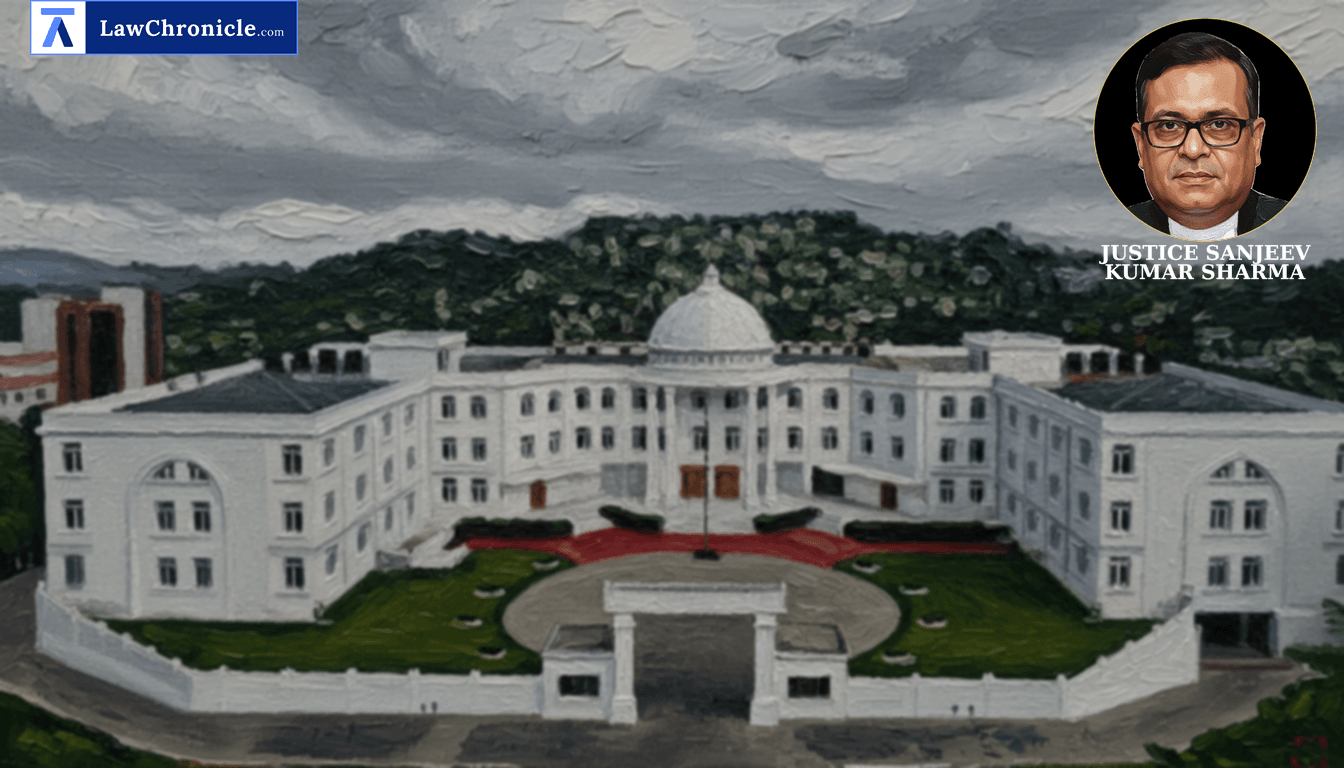
Justice Siddhartha Sah presided over the matter, which arose from an application seeking the quashing of a summoning order issued by the Sessions Judge, Haridwar. The applicant, a Medical Officer at a Primary Health Centre, challenged the trial court's decision to reject a police final report and summon him for trial under Section 135 of the Electricity Act, 2003 without the requisite state sanction.
The Mandate of Prior Sanction for Public Servants
The Court focused on the interplay between the Electricity Act, 2003 and the procedural requirements of the Code of Criminal Procedure. While the respondent argued that theft of electricity cannot be considered a part of official duty, the Court observed that the alleged act was inextricably linked to the applicant's position as the In-charge of the Government Health Centre.
The Court, in its reasoning, observed: "A perusal of Section 197 of the Code of Criminal Procedure would show that when a public servant is accused of any offence alleged to have been committed by him while acting or purporting to act in the discharge of his official duty, no court shall take cognizance of such offence except with the previous sanction. In the present case, it is not the case of respondent No. 2 that the applicant committed the offence of theft of electricity while not acting or purporting to act in the discharge of his official duty."
Distinguishing Criminal Misconduct from Official Duty
The Court carefully distinguished the present case from precedents involving fabrication of records or misappropriation of funds. Relying on the principles laid down in R. Balakrishna Pillai v. State of Kerala ( "(1996) 1 SCC 478": 1995 CaseBase(SC) 343), the Court noted that if an act is directly and reasonably connected to official duty, even if alleged to be illegal, it attracts the protection of Section 197. The Court found that since the electricity was consumed in a government building where the applicant was posted, the nexus to his official capacity was established.
The Court has the following directions:
"The present criminal miscellaneous application under Section 482 of the Cr.P.C. deserves to be allowed, and the impugned summoning order dated 06.08.2016 passed by the District and Sessions Judge, Camp Court, Roorkee, District Haridwar, in Criminal Miscellaneous Case No. 214 of 2015 (Ishwar Chand v. Dr. Suraj Soni), is hereby quashed. The criminal miscellaneous application is allowed in the aforesaid terms."
Key Takeaways:
Absolute Necessity of Sanction
Prior sanction under Section 197 is a sine qua non for taking cognizance of offences against public servants when the act is linked to their official tenure.
Nexus Between Act and Office
Protection is available if the alleged offence is committed while the public servant is 'purporting to act' in their official capacity, even if the act itself is an alleged statutory violation.
Electricity Theft in Government Premises
Charges under Section 135 of the Electricity Act against government officials for consumption in official premises are subject to procedural safeguards of the CrPC.
Narrow Interpretation of Non-Protected Acts
Only acts like fabrication of records or personal misappropriation, which have no link to official duty, are excluded from the requirement of prior sanction.
Ratio Decidendi:
Where a public servant is accused of an offence under the Electricity Act, 2003 involving a government property under their charge, such an act is deemed to be connected to the discharge of official duties. Consequently, the trial court is barred from taking cognizance under Section 197 of the Code of Criminal Procedure without a valid sanction from the State Government.
Background:
The applicant, Dr. Suraj Soni, was a Medical Officer at the Primary Health Centre, Buggawala. In 2012, an FIR was lodged alleging electricity theft at the health centre campus via a direct cable connection. While the police investigation resulted in a final report (closure report) due to lack of evidence, the Junior Engineer of the Electricity Department filed objections. The Sessions Judge, Haridwar, subsequently rejected the final report and summoned the doctor, concluding that as the In-charge, he was prima facie responsible. The applicant moved the High Court arguing that as a government servant, he could not be prosecuted without sanction. The High Court upheld this contention, citing R. Balakrishna Pillai v. State of Kerala ( "(1996) 1 SCC 478": 1995 CaseBase(SC) 343) and distinguishing Shambhoo Nath Misra v. State of U.P., Devinder Singh v. State of Punjab ( "(2016) 12 SCC 87": 2016 CaseBase(SC) 614), and Inspector of Police v. Battenapatla Venkata Ratnam ( "(2015) 13, SCC 87": 2015 CaseBase(SC) 403), and quashed the proceedings.
Case Details:
Case No.: Criminal Misc. Application No.284 of 2017
NeutralCitation: 2025:UHC:10894
Case Title: Dr. Suraj Soni Vs. State of Uttarakhand and another
Appearances:
For the Petitioner(s): Mr. Devansh Kaushik, learned counsel
For the Respondent(s): Mr. Vipul Panuli, learned AGA for the State; Mr. Dharmendra Barthwal, learned counsel for respondent no.2.
Source: 2026 CaseBase(UTT) 4
Similar Articles



 Breaking News


