


Vague Taunts and Small Loans Do Not Amount to Abetment of Suicide: Himachal Pradesh HC
 Copy Link
 Share
 Save
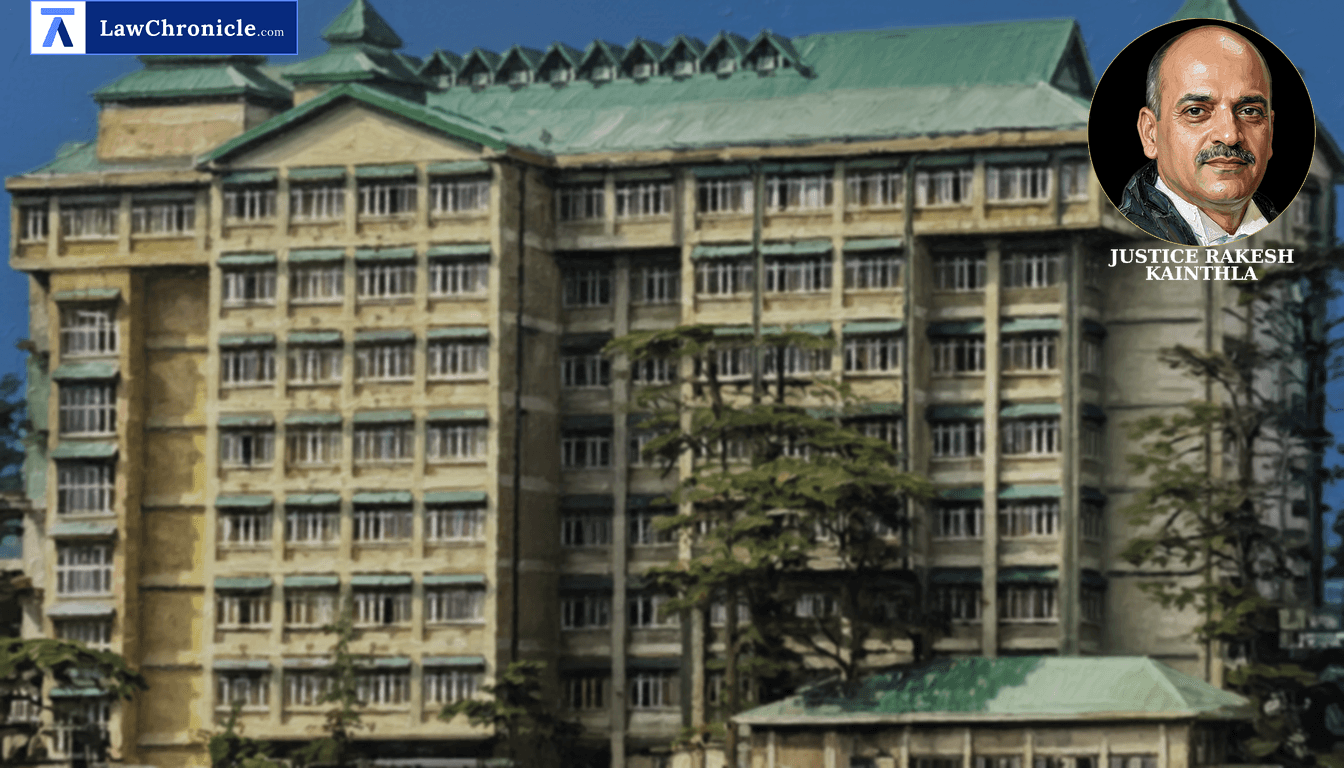
In a robust defense of marital family members against omnibus allegations, the Himachal Pradesh High Court has ruled that mere domestic quibbles, vague taunts, or the inability to provide small financial assistance do not constitute 'cruelty' or 'instigation' sufficient to sustain a conviction for abetment of suicide. The court emphasized that criminalizing domestic disputes without specific, credible evidence of active incitement risks the destruction of the family institution based on high-running emotions during matrimonial discord.
Justice Rakesh Kainthla, sitting as a single-judge bench, heard an appeal challenging a 2015 conviction where a mother-in-law was sentenced for offences under Section 498A and Section 306 of the Indian Penal Code, 1860. The High Court, after a meticulous re-evaluation of the evidence, set aside the trial court's findings, noting that the prosecution had failed to establish a direct link between the accused's conduct and the deceased's decision to end her life.
Insufficiency of Vague Allegations in Matrimonial Disputes
The High Court observed that the testimony of the deceased's mother and sister regarding harassment was 'sadly vague' and lacked the particulars required by law. Paraphrasing the principle from Neelu Chopra v. Bharti, the Court noted that a proper complaint must detail the specific role of each accused rather than relying on general mentions of statutory language. The Court highlighted that false implications via omnibus allegations, if unchecked, result in an abuse of the process of law, as previously warned in Abhishek v. State of M.P. ( "2023 SCC OnLine SC 1083: 2023 INSC 779": 2023 CaseBase(SC) 541).
Regarding the trial court's reliance on the deceased's request for ₹250 from her maternal uncle as evidence of deprivation, the Court found this reasoning flawed. It noted that there was no evidence regarding the financial condition of the accused to prove she deliberately withheld necessities. The Court, in its reasoning, observed: "In the absence of evidence of the financial condition of the accused, it is difficult to say that the accused had not provided the financial assistance to Meenu, and she was compelled to borrow money from her relatives... The Courts cannot apply the standards to which they are accustomed without realising the difficulties being faced by others."
Legal Standards for Abetment under Section 306 IPC
The Court reiterated that for a conviction under Section 306 of the Indian Penal Code, 1860, there must be a clear mens rea and a positive act of instigation. Relying on Naresh Kumar versus the State of Haryana ( "(2024) 3 SCC 573": 2024 CaseBase(SC) 505), the Court noted that unless the accused creates circumstances where the deceased is left with no other option, an acquittal must follow. Referring to Kamal & others vs. State of Gujarat & anr. and Patel Babubhai Manohardas and others vs State of Gujarat ( "2025 INSC 322": 2025 CaseBase(SC) 311), the Bench underscored that mere harassment, without a proximate act of incitement, is insufficient for a conviction.
Scope of Presumption Under Section 113-A Evidence Act
Addressing the trial court's use of the statutory presumption, the High Court clarified that Section 113-A of the Indian Evidence Act, 1872 is discretionary. The Court, in its reasoning, observed: "The mere fact that the deceased committed suicide within a period of seven years of her marriage, the presumption under Section 113-A of the Evidence Act, would not automatically apply. The legislative mandate is that where a woman commits suicide within seven years of her marriage, and it is shown that her husband or any relative of her husband had subjected her to cruelty, the presumption under Section 113-A of the Evidence Act may be raised... In the absence of any cogent evidence of harassment or cruelty, an accused cannot be held guilty of the offence under Section 306 IPC by raising a presumption under Section 113-A."
The Court's Directions
The Court has following directions:
"The present appeal is allowed. Judgment and order passed by the learned Trial Court are set aside, and the accused is acquitted of the charged offences. The fine amount, if deposited, be refunded after the expiry of the period of limitation for filing the appeal in case no appeal is preferred, and in case of appeal, the same be dealt with as per the orders of the Hon’ble Supreme Court. In view of the provisions of Section 437-A of the Code of Criminal Procedure [Section 481 of Bharatiya Nagarik Suraksha Sanhita, 2023], the appellant/accused is directed to furnish his personal bond in the sum of ₹25,000/- with one surety in the like amount to the satisfaction of the learned Registrar (Judicial) of this Court/learned Trial Court within four weeks, which shall be effective for six months with stipulation that in the event of Special Leave Petition being filed against this judgment, or on grant of the leave, the appellant/accused, on receipt of notice thereof, shall appear before the Hon’ble Supreme Court."
Key Takeaways:
Specific Allegations Mandatory for Section 498A
General and omnibus allegations against in-laws without specific dates, times, or roles are insufficient to sustain a criminal trial and constitute an abuse of process.
Presumption under Section 113-A is Discretionary
Unlike the mandatory presumption for dowry deaths, the presumption for abetment of suicide within seven years of marriage requires prior proof of cruelty and is not automatic.
Taunts vs. Instigation
Routine domestic discord and vague taunts do not qualify as 'instigation' unless they are of such a nature that they leave the victim with no alternative but to commit suicide.
Financial Hardship is not Deprivation
Requests for small sums of money from parents do not automatically prove cruelty by in-laws, especially when the financial status of the matrimonial home is not established.
Ratio Decidendi:
A conviction under Section 306 of the Indian Penal Code, 1860 requires proof of a direct or indirect act of incitement proximate to the time of suicide, revealing a clear mens rea to abet the act; discretionary presumptions under Section 113-A of the Indian Evidence Act, 1872 cannot be invoked without cogent evidence of cruelty as defined under the law.
Background:
The case arose from the death of Meenu Devi, who consumed poison in December 2008, within years of her marriage. The mother of the deceased (PW1) and sister (PW3) alleged that the mother-in-law (appellant) taunted the deceased for insufficient dowry and restricted her movements. The Trial Court convicted the appellant, largely influenced by the fact that the deceased had asked her uncle for ₹250 for medical treatment, interpreting this as a denial of basic amenities. However, the High Court found that the witnesses' testimonies were inconsistent specifically, the uncle (PW2) made no mention of dowry harassment and that the allegations were too general to meet the threshold of criminal 'cruelty' or 'abetment'. Consequently, the High Court acquitted the accused.
Case Details:
Case No.: Cr. Appeal No. 192 of 2015
NeutralCitation: 2026:HHC:28267
Case Title: Gyatari Devi Versus State of H.P.
Appearances:
For the Petitioner(s): Ms Anjali Soni Verma, Advocate.
For the Respondent(s): Mr Ajit Sharma, Deputy Advocate General; Mr Lokender Kutlehria, Additional Advocate General.
Source: 2026 CaseBase(HP) 31
Similar Articles

 Breaking News


