


Mens Rea Essential for Section 306 Conviction; Mere Harassment Insufficient: Jharkhand HC
 Copy Link
 Share
 Save
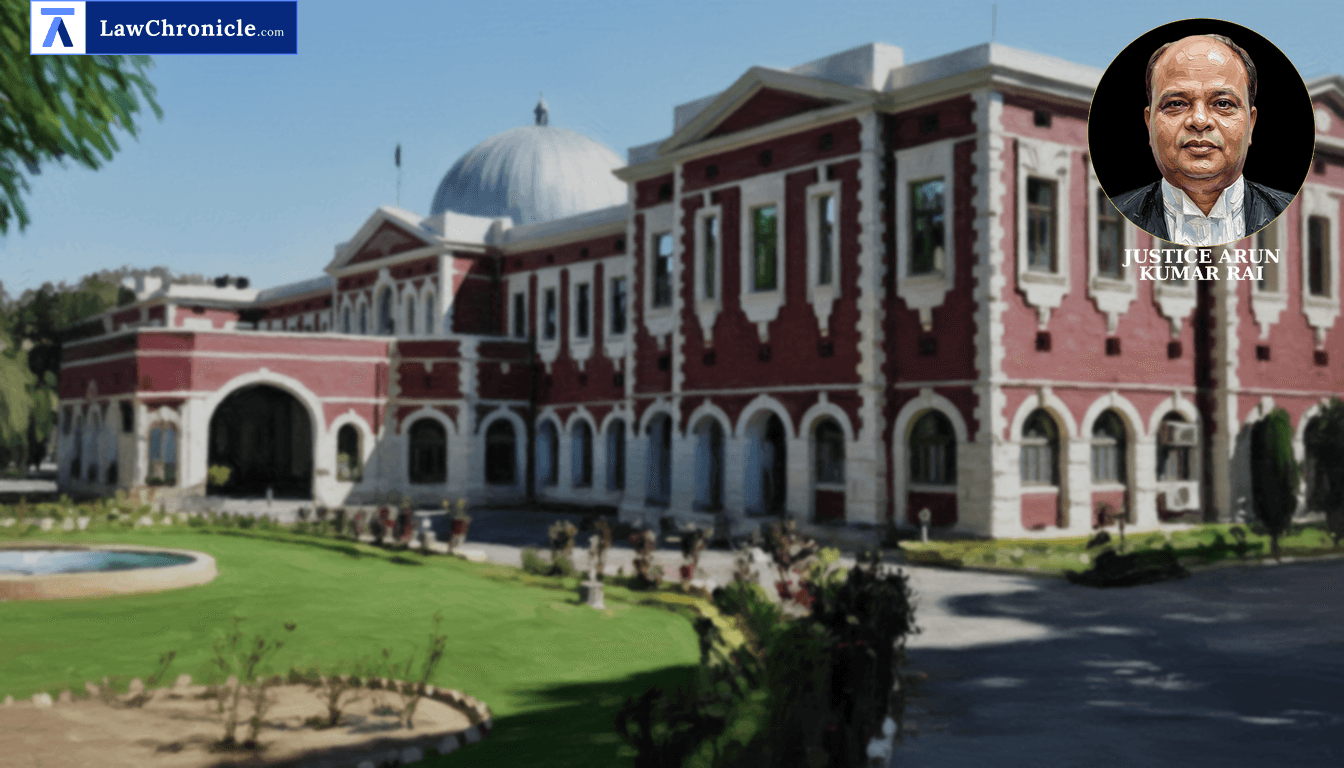
The Jharkhand High Court has reinforced the stringent standards required to establish abetment of suicide, ruling that the absence of visible mens rea or a direct act of instigation precludes a conviction even in cases involving allegations of dowry harassment shortly after marriage. Setting aside a seven-year sentence, the Court clarified that discretionary presumptions regarding a married woman’s suicide cannot be triggered without cogent evidence of incessant cruelty that leaves a victim with no alternative but to end their life.
In a verdict delivered by Justice Arun Kumar Rai, the Court allowed an appeal against a Sessions Court judgment that had convicted a husband for the death of his wife within just 35 days of their marriage. The bench scrutinized whether the legal ingredients of Indian Penal Code, 1860 and the definition of abetment under Section 107 of IPC were satisfied amidst conflicting testimonies and a lack of proximity between the alleged harassment and the fatal incident.
The Requirement of Active Instigation and Mens Rea
The High Court emphasized that the prosecution must establish a direct nexus between the actions of the accused and the commission of suicide. Paraphrasing settled legal principles, the Court noted that for an offence to stand, there must be a mental process of instigating or intentionally aiding the victim. It observed that mere domestic discord or demand for money, without more, does not suffice to prove that the accused intended to push the deceased into a position of no return.
Addressing the evidentiary standards, the Court, in its reasoning, observed: "...the prosecution has failed to establish the active role and mens reas (if any) of the appellant/accused by leading any cogent evidence which constitute offence under Indian Penal Code, 1860... The ingredient of mens rea cannot be assumed to be ostensibly present but has to be visible and conspicuous."
Limits of Discretionary Presumptions under Section 113-A
A critical aspect of the ruling was the interpretation of Section 113-A of the Evidence Act. The State argued that because the suicide occurred within seven years of marriage, the presumption of abetment should automatically apply. However, the Court rejected this mandatory application, highlighting the distinction between the discretionary nature of Section 113-A and the mandatory presumption found in Section 113-B of the same Act.
Referring to the precedent in Mangat Ram v. State of Haryana ( "(2014) 12 SCC 595": 2014 CaseBase(SC) 4), the Court noted: "The term 'the court may presume having regard to all other circumstances of the case that such suicide had been abetted by her husband' would indicate that the presumption is discretionary, unlike the presumption under Section 113-B of the Evidence Act, which is mandatory. Therefore, before the presumption under Section 113-A of the Evidence Act is raised; the prosecution must show evidence of cruelty or incessant harassment in that regard."
Court Directions
Upon finding that the prosecution failed to prove guilt beyond reasonable doubt, the Court issued the following directions:
"The impugned the judgment of conviction dated 20.05.2016 and order of sentence dated 26.05.2015 passed by Sessions Judge, Lohardaga in S.T. No. 81 of 2014, is hereby set aside. Resultantly, the instant appeal being Criminal Appeal (S.J.) No. 07 of 2017 is hereby allowed. Since, the appellant/accused is on bail, he is discharged from the liability of his bail bond."
Key Takeaways
Mens Rea is Non-Negotiable
To convict under Section 306 IPC, the prosecution must prove a visible and conspicuous intent to drive the victim to suicide; mere allegations of harassment are insufficient.
Presumption is Discretionary
Section 113-A of the Evidence Act does not automatically apply upon the death of a married woman within seven years; it requires prior proof of cruelty and a judicial assessment of all circumstances.
Direct Instigation Required
Abetment requires an active or direct act of incitement proximate to the time of death, shifting the focus from general marital disharmony to specific provocations.
Heightened Scrutiny of Witness Credibility
Contradictions in testimonies regarding dowry demands and the failure of family members to intervene in alleged harassment can significantly weaken the prosecution's case.
Ratio
For a conviction under Section 306 of the Indian Penal Code, 1860, the prosecution must provide cogent and convincing proof of a direct or indirect act of incitement to suicide. The existence of mens rea is essential and cannot be assumed. Furthermore, the presumption under Section 113-A of the Evidence Act is discretionary; it is not triggered by the mere fact of suicide within seven years of marriage unless the prosecution first establishes that the deceased was subjected to cruelty of such a nature that it was intended to provoke the suicide.
Background:
The case arose from the death of Reena Kumari, who committed suicide by setting herself ablaze in April 2014, just over a month after her marriage to the appellant. The mother of the deceased (the informant) alleged that the appellant had been demandining a bicycle and shoes as dowry and had subjected Reena to regular beatings and threats. Based on these allegations, the appellant was convicted by the Sessions Judge, Lohardaga, and sentenced to seven years of rigorous imprisonment.
In the appeal before the High Court, the appellant’s counsel relied on Naresh Kumar v. State of Haryana ( "(2024) 3 SCC 573": 2024 CaseBase(SC) 505) to argue that mere harassment does not equate to abetment. The High Court noted that during cross-examination, the mother admitted that a bicycle and shoes were provided at the time of marriage, contradicting her earlier claims of persistent demands. Furthermore, the Court observed that no panchayats or complaints were lodged prior to the incident. Consequently, the Court found the evidence insufficient to satisfy the requirements of Section 107 of IPC and acquitted the appellant.
Case Details:
Case No.: Criminal Appeal (S.J.) No. 07 of 2017
NeutralCitation: 2026:JHHC:21509
Case Title: Shanicharwa Oraon v. The State of Jharkhand
Appearances:
For the Petitioner(s): Mr. Rajesh Kumar, Advocate
For the Respondent(s): Mrs. Vandana Bharti, A.P.P.
Source: 2026 CaseBase(JHKD) 30
Similar Articles
 Breaking News


