


West Bengal Must Use All‑India CPI to Compute Dearness Allowance; State Ordered to Pay 2008–2019 Arrears Under Supervision
 Copy Link
 Share
 Save
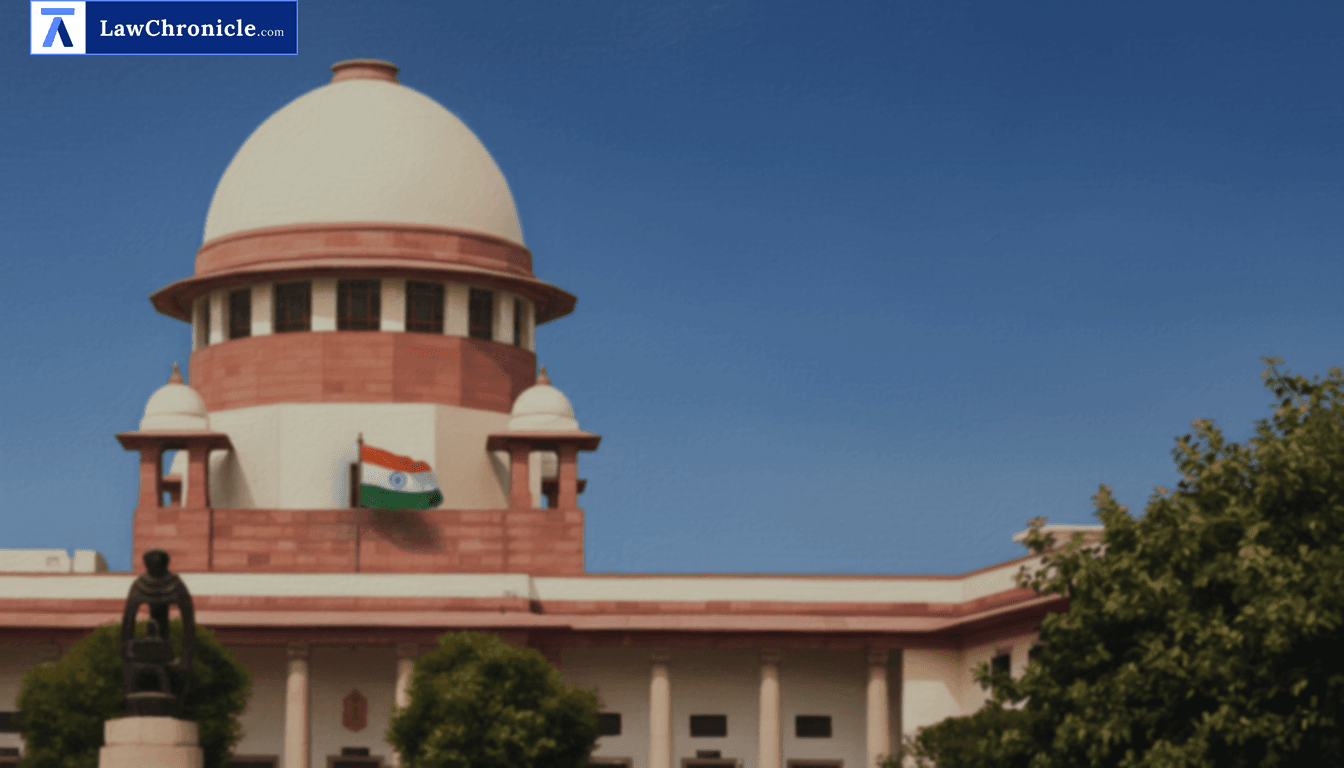
A bench of Justices Sanjay Karol and Prashant Kumar Mishra heard appeals by the State of West Bengal against Calcutta High Court orders and Tribunal directions concerning payment and computation of Dearness Allowance (DA) to State employees. The appeals arose from long‑running litigation on whether DA formed part of “existing emoluments” under the West Bengal (Revision of Pay and Allowance) Rules, 2009 (RoPA Rules), and whether the State was obliged to compute DA by reference to the All‑India Consumer Price Index (AICPI) and to pay arrears for 2008–2019.
The Court held that entitlement to DA, as recognised by RoPA Rules and the State’s own actions, amounted to a legally enforceable right; that the AICPI methodology incorporated in the statutory framework governed computation of “existing emoluments”; and that executive memoranda issued without reference to the AICPI could not supplant the statutory scheme. The Court emphasised that inability or paucity of funds did not defeat a legal right to earned emoluments. The Court, in its reasoning, observed: “Given its incorporation in RoPA Rules, the AICPI is the standard to be followed by the appellant – State of West Bengal for determination of ‘existing emoluments’.” The bench directed payment of arrears for 2008–2019 and set up a monitoring Committee to determine the total amount and a phased schedule for release; it also rejected a decretal right to insist that DA must mandatorily be paid twice a year. As the Court noted in its exposition of the policy behind DA, “Dearness Allowance is designed to neutralise the impact of inflation.”
Background The dispute arose after the State enacted RoPA Rules, 2009, which defined “existing emoluments” using the index average 536 (1982=100). On 23 February 2009 the State issued a clarificatory memorandum and a first memorandum on drawal of DA; subsequently the State released several notifications revising DA rates but without expressly anchoring them to the AICPI methodology. Employees and unions alleged that DA revisions were delayed and lower than Central Government rates, and that employees serving in New Delhi and Chennai were treated differently. The employees moved the Administrative Tribunal in 2016; the Tribunal initially dismissed the OA but the High Court in Round One found a legally enforceable right to DA to the extent RoPA adopted the Pay Commission recommendations and remanded certain issues. On remand the Tribunal held that DA must be fixed on the basis of AICPI (1982=100) and directed the State to evolve norms and pay arrears; the High Court on second consideration affirmed that the State had accepted the 5th Pay Commission recommendations and held that DA was payable in accordance with the statutory scheme, treating denial without basis as arbitrary. The State appealed to this Court.
The Supreme Court partly allowed the appeals in form but affirmed core remedies for employees: it declared that DA receipt was a legally enforceable right; it found the AICPI standard to be determinative; it held that executive memoranda that departed from that statutory standard were improperly issued and could not displace the Rules; it rejected the defence of paucity of funds for non‑payment; and it refused to convert an administrative practice of twice‑annual revision into a mandatory legal right. The Court constituted a three‑member monitoring Committee (including a retired Supreme Court judge, a former High Court judge and a representative of the CAG) to determine the total liability and a payment schedule, directed initial compliance steps and ordered the State to bear the Committee’s expenses. Interim orders previously directing immediate partial payments remained operative and the Court clarified that amounts paid in compliance would not be recoverable.
Case Details: Case No.: 2026 INSC 123 Case Title: State of West Bengal & Anr. v. Confederation of State Government Employees, West Bengal & Ors. Appearances: For the Petitioner(s): Mr. Kapil Sibal, Sr. Advocate; Mr. Shyam Divan, Sr. Advocate; Mr. Huzefa Ahmadi, Sr. Advocate. For the Respondent(s): Mr. Gopal Subramaniam, Sr. Advocate; Mr. P.S. Patwalia, Sr. Advocate; Mr. Bikash Ranjan Bhattacharya, Sr. Advocate; Ms. Karuna Nundy, Sr. Advocate.
Similar Articles
 Breaking News


