Writ Courts Cannot Resolve Disputed Factual Violations of Civil Injunctions: Calcutta HC
 Copy Link
 Share
 Save
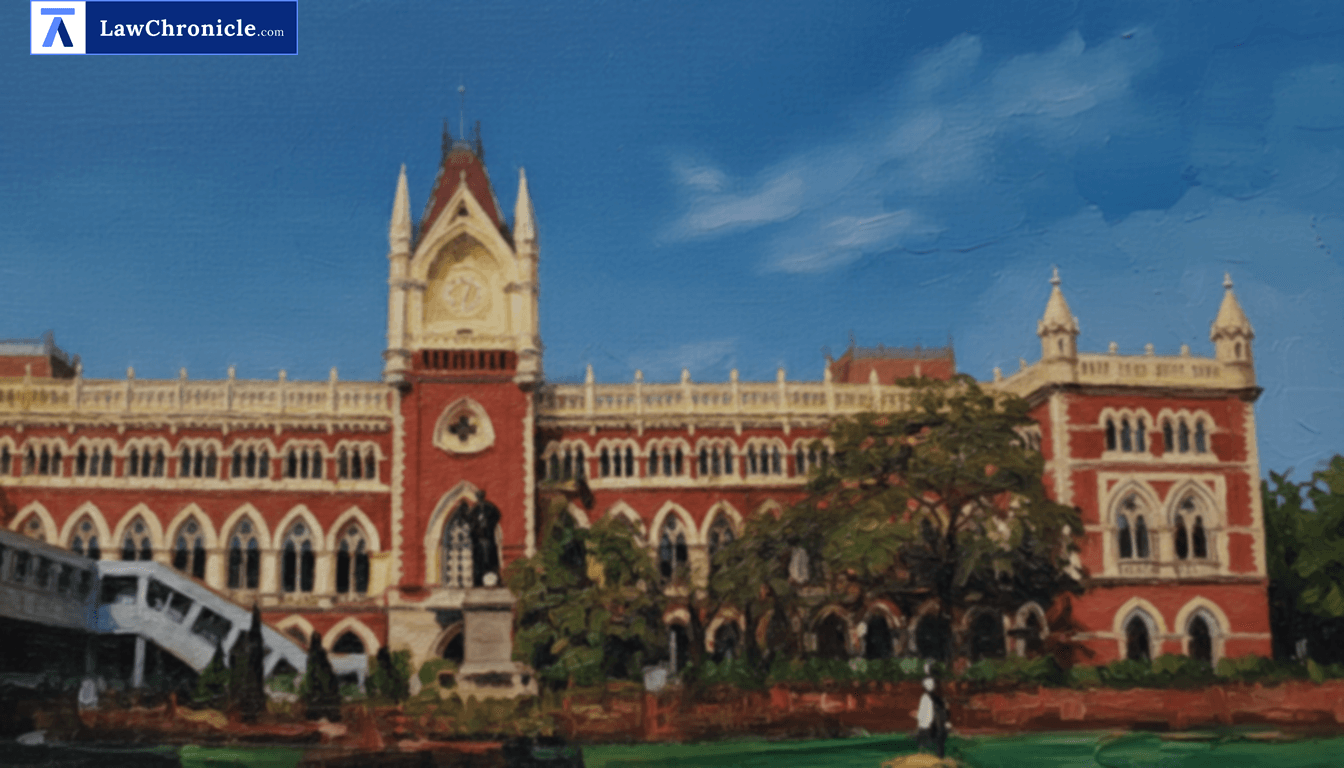
The Calcutta High Court has clarified that writ courts must refrain from conducting detailed evidentiary inquiries into disputed factual questions involving the violation of status quo orders, directing litigants to seek remedies from the concerned civil court instead. The ruling underscores that while administrative bodies are bound by their undertakings, the appropriate forum for determining specific factual breaches and directing restoration of possession remains the Trial Court where the original dispute is pending.
A Division Bench comprising Justice Sabyasachi Bhattacharyya and Justice Sandip Kumar De heard an appeal against a Single Judge’s order involving an alleged encroachment by the Maheshtala Municipality on private property despite a subsisting status quo order. The Court addressed whether a writ court should exercise its extraordinary jurisdiction to order demolition and restoration when the facts surrounding the timing and extent of construction are contested.
Key Takeaways
Jurisdictional Boundaries of Writ Courts
Disputed questions of fact requiring extensive evidence for adjudication are outside the scope of writ jurisdiction and must be relegated to civil courts.
Enforcement of Judicial Undertakings
Administrative authorities cannot contravene undertakings given before a court by relying on riders such as 'not claiming equity' to justify additional construction.
Trial Court Empowerment
Civil courts possess the necessary procedural resources to conduct factual inquiries into violations of status quo orders and grant consequential reliefs like demolition or restoration.
Civil Court to Adjudicate Disputed Factual Breaches
The Court noted that determining whether the Municipality violated its earlier undertaking and the status quo order requires a granular assessment of the property's state at different timelines. Such a task, the Court observed, involves taking evidence on disputed facts, which is not suitable for a writ proceeding.
The Court, in its reasoning, observed: "It is well-settled that if disputed questions of fact requiring evidence to be taken at length are brought before the writ court for adjudication, such questions cannot be resolved in a writ petition and the civil court would be the appropriate forum for deciding such disputes. In the present case, there is already a pending partition suit between the parties, where the Municipality is also arrayed as a party."
The Court has following directions:
"...granting liberty to the appellant to approach the Trial Court, where a partition suit is already pending between the parties, with an appropriate application, if not already filed, for restoration of the appellant’s possession and/or demolition of the portion of construction made on the subject property, if any, by the respondent-Municipality after passing of the order of status quo by the Trial Court as well as after May 19, 2022 when WPA 5157 of 2021 was disposed of, in violation of such orders and in contravention of the undertaking given by the Municipality before the writ court. If such an application has been/is filed, it is expected that the civil court shall decide the same as expeditiously as possible, preferably within six weeks from this date or the date of filing of the same, whichever is later. If such an application is made, the civil court shall decide the said application on merits and in accordance with law, upon giving adequate opportunity to the respondent no. 2, Maheshtala Municipality, and the other parties to the suit, to controvert such application by way of written objections."
Ratio
When a writ petition involves disputed questions of fact regarding the violation of a court order or undertaking that require detailed evidence, the writ court should not adjudicate the dispute; instead, the parties must be directed to the civil court, which has the legal resources to conduct such factual inquiries and provide relief such as restoration or demolition.
Background
The dispute arose when the appellant alleged that the Maheshtala Municipality encroached upon a passage owned by him despite a status quo order passed in a pending partition suit. The appellant had previously filed WPA 5157 of 2021, where the Municipality undertook not to make further constructions. However, the appellant contended that construction continued in violation of both the civil court's order and the undertaking given to the writ court.
The appellant filed an application under Order XXXIX Rule 2A of the Code of Civil Procedure before the civil court and subsequently filed a new writ petition seeking restoration of possession. The Single Judge disposed of the writ petition relying on the Municipality's submission that it would not claim equity, but did not order demolition. On appeal, the Division Bench agreed with the disposal of the writ but modified the reasoning, clarifying that the civil court is the proper forum for the requested reliefs due to the evidentiary nature of the dispute.
Case Details:
Case No.: MAT 663 of 2026 with CAN 1 of 2026
Neutral Citation: 2026:CHC-AS:1447-DB
Case Title: Swapan Kumar Paul Vs. The State of West Bengal and Ors.
Appearances:
For the Petitioner(s): Mr. Pampa Dey (Dhabal), Ms. Debangana Dey, Advs.
For the Respondent(s): Ms. Susmita Saha Dutta, Adv. for the State; Mr. R. N. Chakraborty, Mr. R. Singh, Advs. for the Maheshtala Municipality
Source: 2026 CaseBase(CAL) 2556
Similar Articles
 Breaking News