


Writ Petition Against Nomination Rejection In Municipal Polls Not Maintainable: Andhra Pradesh HC
 Copy Link
 Share
 Save
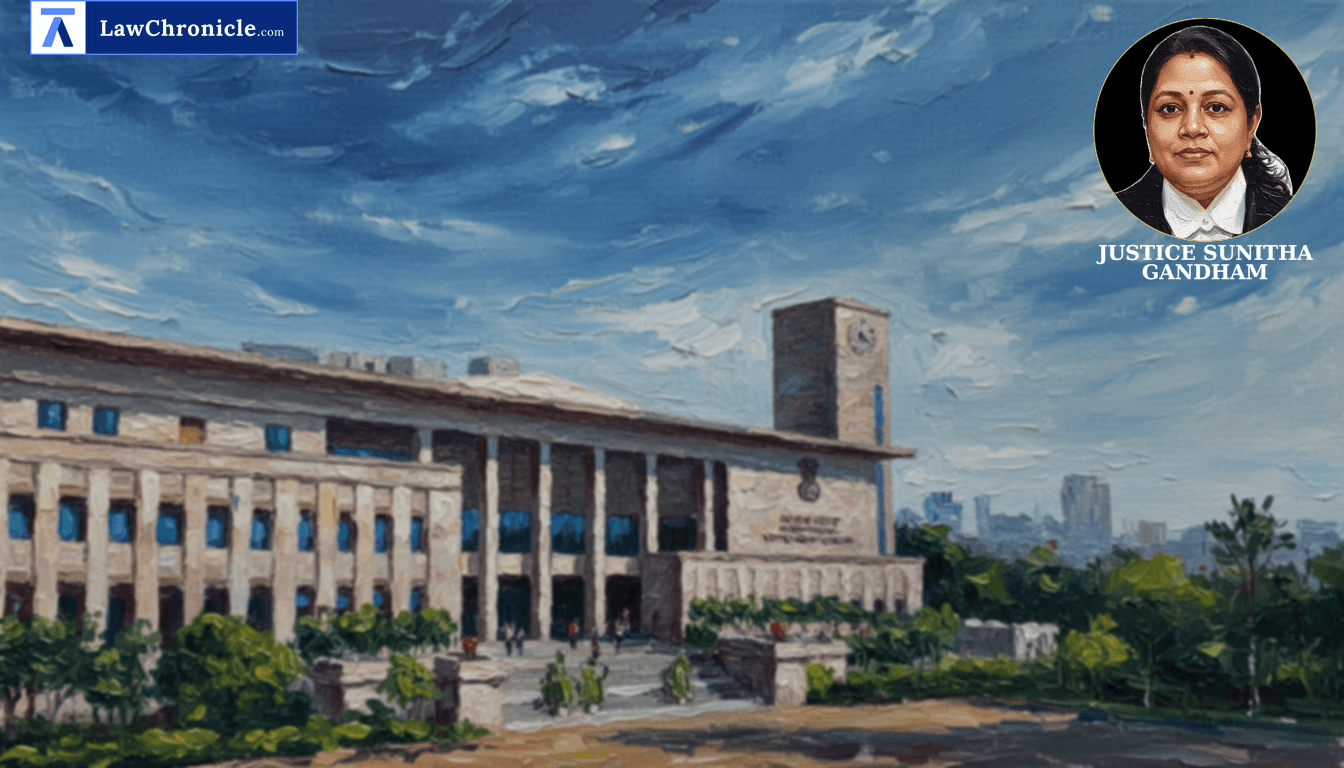
The Andhra Pradesh High Court has slammed the door on pre-election judicial interventions, ruling that candidates cannot bypass the constitutional mandate of filing an election petition to challenge the rejection of their nomination papers. This decisive clarification reinforces the principle that the sanctity and continuity of the election process must remain immune to mid-poll litigation under writ jurisdiction.
A Single Judge Bench of Justice Sunitha Gandham heard the matter concerning the rejection of a nomination for the post of Chairperson of Dachepalli Nagar Panchayat. The petitioner approached the Court seeking a Writ of Mandamus to set aside the Returning Officer's decision and compel the acceptance of his nomination for the upcoming 2026 local body elections.
Key Takeaways
Constitutional Bar on Election Disputes
The Court reaffirmed that Article 243ZG(b) acts as a complete bar to judicial interference in municipal elections once the process has commenced.
Election Petition as Exclusive Remedy
Any grievance regarding the improper rejection of a nomination must be addressed post-election through a specialized election petition, rather than through a Writ Petition.
Non-Disclosure vs. Defective Information
The Court distinguished between furnishing 'false' information (which may have certain protections) and the complete 'non-disclosure' of mandatory criminal antecedents.
Election Process Continuity
The judgment ensures that local body elections are not stalled by individual litigations, prioritizing the timely completion of the democratic exercise.
Justice Sunitha Gandham, presiding over the matter, emphasized the constitutional scheme that governs local body polls. The Bench observed that the petitioner sought to challenge an action that arises directly out of the election process, which is strictly regulated by Constitution of India. The Court noted that creating a separate category of pre-election challenges would contradict established Supreme Court precedents.
The Court has the following directions:
"For the foregoing reasons, this Court is not inclined to entertain the writ petition challenging the rejection of the petitioner’s nomination during the ongoing municipal election process. The petitioner is left at liberty to avail himself of the remedy available under the applicable election law before the competent forum, in accordance with law. All contentions on the merits of the rejection are left open to be considered by that forum, if and when properly raised. Accordingly, the writ petition is dismissed as not maintainable. There shall be no order as to costs."
The Court, in its reasoning, observed: "The constitutional scheme does not permit the Court to create a separate category of pre-election challenges merely because a candidate asserts that the rejection is plainly erroneous. In the present case, no exceptional circumstance has been established that would justify departing from the constitutional scheme."
Ratio
Under Article 243ZG(b) of the Constitution of India, no election to any Municipality shall be called in question except by an election petition. A writ petition under Article 226 challenging the rejection of a nomination during an ongoing election process is not maintainable, as the proper remedy lies in a post-election challenge before the competent authority as prescribed by state law.
Background
The petitioner, Shaik Shareef, filed his nomination for the post of Chairperson of the Dachepalli Nagar Panchayat. However, on 19.10.2026, the Returning Officer (Respondent No. 4) rejected the nomination under Rule 12(2)(iii) and Rule 8(10) of the A.P. Municipalities and Nagar Panchayats (Conduct of Elections to the office of Chairpersons and Ward Members), Rules 2026. The rejection was based on the petitioner's failure to disclose information regarding his involvement in a criminal case within the prescribed declaration.
The petitioner’s counsel argued that the nomination was otherwise complete and relied on Manik Lal Prasad, Son of late Mahendra Prasad v. State of Bihar and a State Election Commission circular, claiming that a nomination should not be rejected for mere defects in a declaration. Conversely, the State Election Commission, relying on the Supreme Court's ruling in Meenakshi Natrajan v. Election Commission of India and another ( "(2026 INSC 643)": 2026 CaseBase(SC) 573), argued that the writ petition was not maintainable due to the specific constitutional bar on election matters.
The High Court analyzed the Constitution of India and found that the constitutional bar is intended to prevent the interruption of the election process. It further clarified that the circular cited by the petitioner distinguishes between 'false' or 'defective' information and the complete 'failure to furnish' required information. Since the petitioner admitted to not disclosing the criminal case, the Court found no reason to deviate from the standard procedure of filing an election petition.
Case Details:
Case No.: WRIT PETITION NO: 31131 OF 2026
Neutral Citation: 2026:APHC:45346
Case Title: Shaik Shareef v. The State of Andhra Pradesh and others
Appearances:
For the Petitioner(s): Bhuvanagiri Subramanya Kumar, Advocate
For the Respondent(s): GP For Home, GP Muncipal Admn And Urban Dev AP
Source: 2026 CaseBase(AP) 19555
Similar Articles



 Breaking News


