


Ad-Hoc Appointment Seniority Rules: Gauhati HC Directs State to Decide Superintendent's Representation
 Copy Link
 Share
 Save
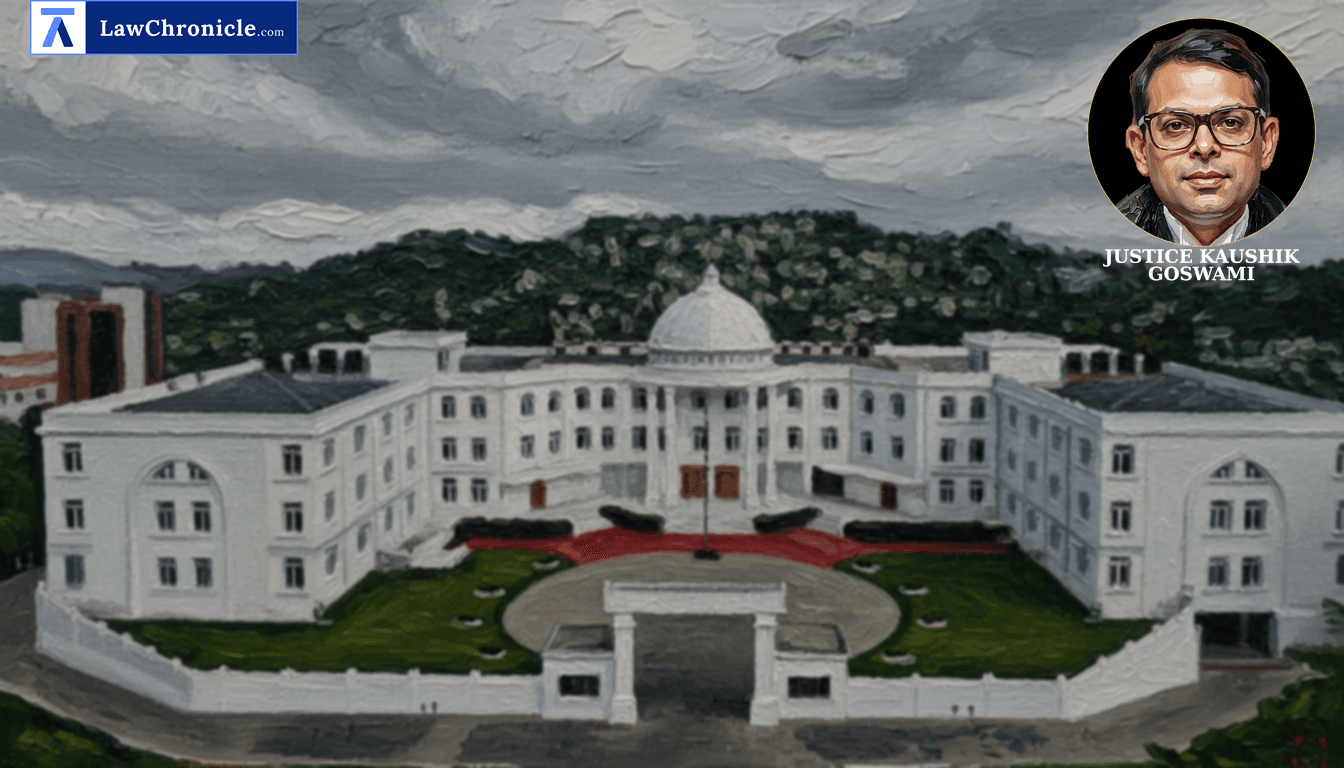
The Gauhati High Court has intervened in a long-standing seniority dispute within the Assam Prisons Department, mandating the State government to formally adjudicate a representation seeking the inclusion of ad-hoc service periods for career progression.
Justice Kaushik Goswami, presiding over the matter, heard the petition filed by a Jail Superintendent who contended that his seniority should be calculated from his initial ad-hoc appointment in 1994 under the Assam Public Service Commission (Limitation of Functions) Regulation, 1951, rather than his regularisation date in 2000.
Key Takeaways
Speaking Order Mandate
Administrative authorities must issue clear, reasoned speaking orders when resolving seniority disputes, even if an informal 'amicable settlement' is claimed.
Impact on Promotions
Unresolved seniority lists can stall promotions to high-ranking positions like Deputy Inspector General of Prisons, necessitating swift judicial or executive clarification.
Ad-hoc Service Reckoning
Whether continuous officiating service prior to regularisation can be counted for seniority remains a pivotal legal question for government employees under specific state regulations.
Judicial Scrutiny of Administrative Inaction
The Gauhati High Court focused on the procedural failure of the State to issue a formal order following a hearing conducted in 2020. While the State argued that the dispute was settled amicably during that hearing, the Court noted the absence of a recorded speaking order. The petitioner argued that the officiating period cannot be ignored, relying on the landmark principle in Direct Recruitment Class II Engineering Officers’ Association -VS- State of Maharashtra and Ors..
The Gauhati High Court commented that "the said letter dated 31.12.2020, annexed as Annexure-F to the affidavit-in-opposition is not followed by any speaking order as directed by the earlier judicial order... the materials on record do not disclose the specific terms and conditions of the alleged settlement arrived at between the parties."
Ratio
When a High Court directs an authority to consider a claim for seniority after hearing the parties, the authority is legally bound to pass a formal, reasoned speaking order that clearly outlines the terms of the decision or settlement; mere informal agreements or internal communications do not suffice to discharge the judicial directive.
Background
The petitioner was appointed as an Assistant Jailor on an ad-hoc basis in 1994 under Regulation 3F of the Assam Public Service Commission (Limitation of Functions) Regulation, 1951. Following a recruitment process, his services were regularised on December 22, 2000. However, the gradation list published in 2012 reckoned his seniority only from the date of regularisation, placing several juniors above him. The petitioner initially challenged this in WP(C) No. 4932/2012, where the Court directed the Inspector General of Prisons to consider his claim.
Although a hearing took place in December 2020, no final speaking order was communicated. During the current proceedings, the State respondents cited Nabin Ch. Bordoloi v. State of Assam and Ors., Anup Kumar Das (Dr.) v. Sanjib Kakati (Dr.) and Ors., and Malook Singh and Ors. -Vs- State of Punjab and Ors. to argue that seniority should only be fixed based on merit in the select list. The petitioner, nearing eligibility for promotion to Deputy Inspector General, filed a new representation in November 2024 under Article 226 of the Constitution of India, leading to the present court direction for a time-bound resolution.
Case Details:
Case No.: WP(C)/160/2025
Neutral Citation: 2026:GAU-AS:15447
Case Title: TAPASH KUMAR BHUYAN VS THE STATE OF ASSAM AND 12 ORS
Appearances:
For the Petitioner(s): Mr. P R Sarma, Advocate
For the Respondent(s): Mr. D Nath, Sr. Govt. Advocate; Mr. T Sonowal; Mr. D J Boro, Ms. C Saikia, Advocates
Source: 2026 CaseBase(GAU) 1468
Similar Articles



 Breaking News


