


Allahabad HC Commutes Death Sentence Over 'Ante-Timed' FIR and Flawed Investigation
 Copy Link
 Share
 Save
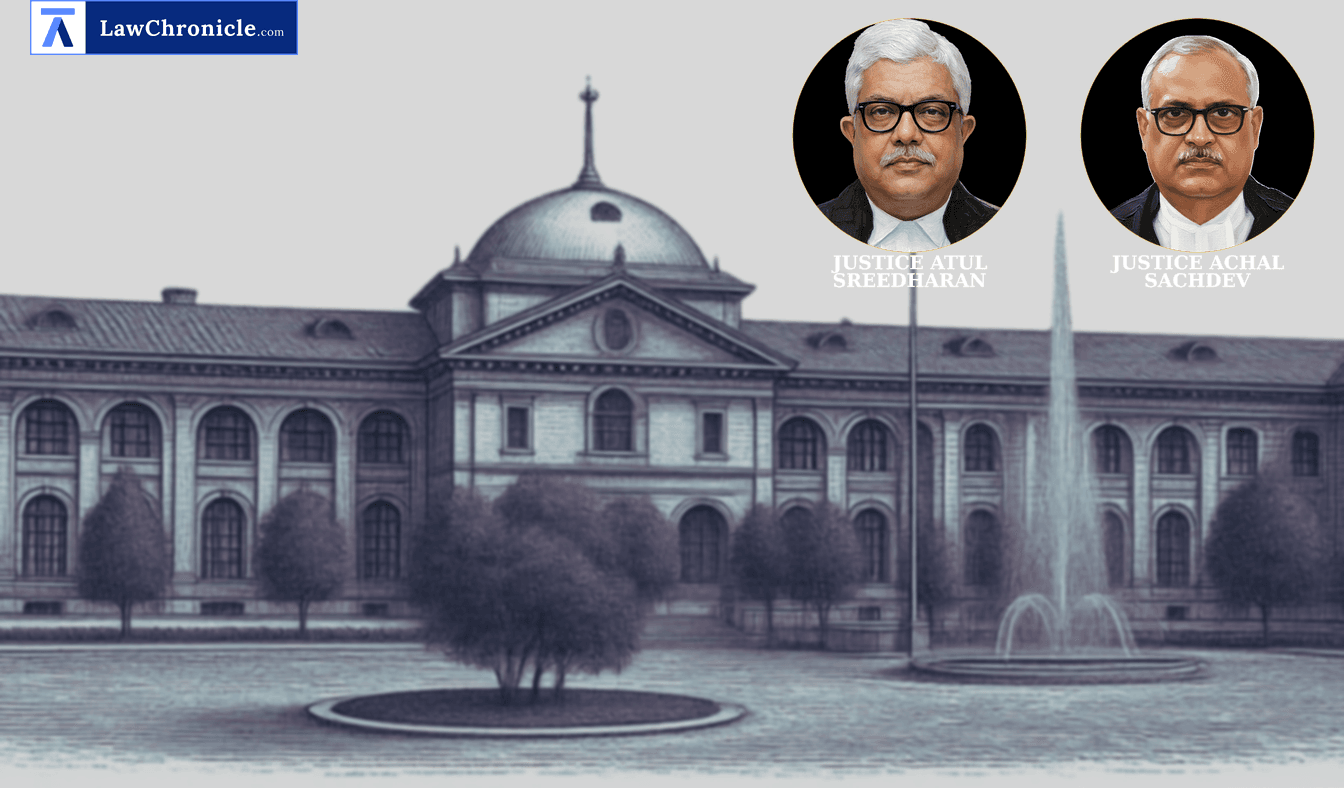
The Allahabad High Court has commuted the death sentence of two convicts to life imprisonment, ruling that 'residual doubt' arising from an ante-timed FIR and manipulated police records serves as a critical mitigating factor against the capital penalty.
A division bench comprising Justice Atul Sreedharan and Justice Achal Sachdev set aside the death penalty imposed on two individuals, observing that while the testimony of injured witnesses was sufficient to prove guilt, the egregious lapses in official record-keeping by the police necessitated a move away from the 'rarest of rare' category.
Key Takeaways
Residual Doubt as Mitigation
Evidence of an ante-dated FIR and altered inquest papers, while not necessarily resulting in acquittal, creates a 'residual doubt' that prevents the imposition of the death penalty.
Custodial Conduct and Reform
Courts cannot confirm a death sentence without a formal assessment of the offender’s social background, mental health, and potential for reform under Section 235(2) of the Code Of Criminal Procedure, 1973.
Integrity of Official Records
Deliberate alterations in Chik FIRs and inquest reports to 'fit the prosecution case' constitute serious misconduct, warranting independent departmental and criminal inquiries against investigating officers.
Common Intention Limits
When fatal injuries cannot be specifically attributed to a single attacker in a group assault, it is unsafe to impose the death penalty based solely on joint liability under Section 34 of the Indian Penal Code, 1860.
Court Observations on Investigative Lapses
The Allahabad High Court expressed profound concern regarding the authenticity of the records, noting that the time of the FIR was altered in inquest papers without explanation. The Bench observed that such conduct not only risks the conviction of the innocent but also jeopardizes the pursuit of justice for victims' families.
The Allahabad High Court observed that "In this case of two murders, those records were not kept honestly, and the Court had to look past them to the injured witnesses and the medical evidence to find the truth... These are not clerical slips. Taken together, they show that entries in official records were made or altered after the event to fit the prosecution case and in the alternative, to cast aspersions on it."
Ratio
An ante-timed FIR and manipulated investigation records, while insufficient to displace reliable injured witness testimony for conviction, establish 'residual doubt' regarding the premeditated nature of the crime, thereby precluding the death sentence as the 'rarest of rare' option under the principles established in [Sharad Birdhichand Sarda v. State of Maharashtra ( "(1984) 4 SCC 116": 1984 CaseBase(SC) 194) and [Manoj v. State of M.P. ( "(2023) 2 SCC 353": 2022 CaseBase(SC) 592).
Background
The dispute originated from a boundary conflict involving poplar trees and a pending civil suit between two neighboring families. On November 9, 2011, a group attack resulted in the death of two persons, whose hands were severed during the assault, and injuries to two others. The Trial Court sentenced the appellants to death under Section 302 of the Indian Penal Code, 1860 and Arms Act, 1959, relying on a recovery of weapons and the informant’s testimony.
Upon review, the Allahabad High Court found the informant (PW-1) to be an unreliable witness and the FIR to be ante-dated, citing Meharaj Singh v. State of U.P.. Furthermore, the recovery of weapons was discarded due to the absence of proved disclosure statements, following the rule in Subramanya v. State of Karnataka ( "(2023) 11 SCC 255": 2022 CaseBase(SC) 1045). While upholding the conviction based on the 'built-in assurance' of injured witnesses as per Abdul Sayeed v. State of M.P. and Balu Sudam Khalde v. State of Maharashtra ( "AIR 2023 SC 1736": 2023 CaseBase(SC) 460), the Allahabad High Court commuted the sentence, noting that the Trial Court failed to consider mitigating circumstances as mandated in Manoj v. State of M.P. ( "(2023) 2 SCC 353": 2022 CaseBase(SC) 592) and Santosh Kumar Satishbhushan Bariyar v. State of Maharashtra. The appellants were acquitted of charges under the Arms Act, 1959 but directed to pay compensation under Section 357 of the Code Of Criminal Procedure, 1973.
Case Details:
Case No.: CAPITAL CASES No. - 2915 of 2017
Case Title: Barik and another v. State of U.P.
Appearances:
For the Petitioner(s): Sri Saghir Ahmad (Senior Advocate), Sri Ishwar Chandra Tyagi
For the Respondent(s): Sri Anurag Pathak (Senior Advocate), Sri Chandra Bhushan Tiwari, Ms. Divya Ojha (A.G.A.-I)
Source: 2026 CaseBase(ALL) 1195
Similar Articles


 Breaking News


