


Lethal Weapons and Ocular Evidence Seal Life Sentence for Murder: Gauhati HC
 Copy Link
 Share
 Save
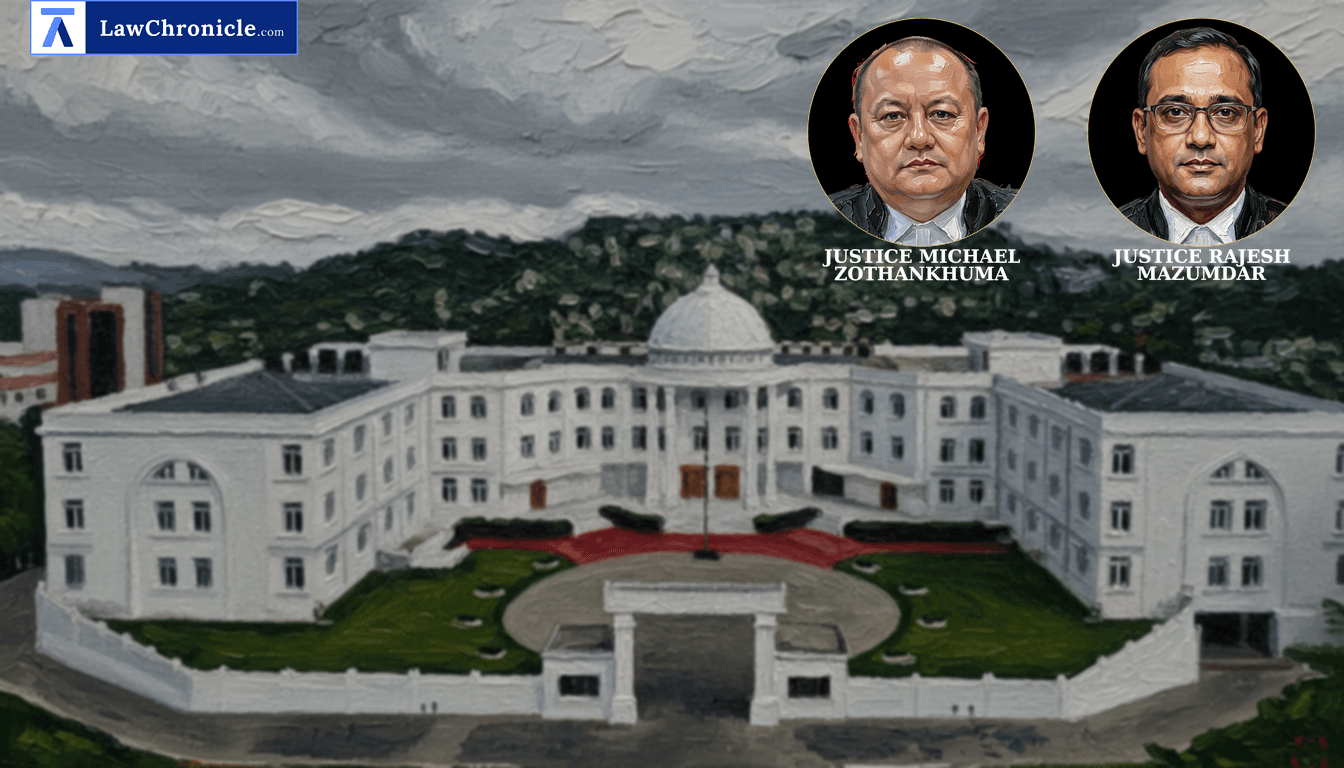
The Gauhati High Court has underscored the primacy of credible ocular testimony over forensic lapses, ruling that the failure to send weapons to a laboratory cannot dismantle a prosecution case supported by reliable injured witnesses. Dismissing the appeals against life imprisonment, the court clarified that private defense claims are unsustainable when the accused act as aggressors on communal property without proof of ownership.
A bench of Justice Michael Zothankhumara and Justice Rajesh Mazumdar heard the appeal challenging the conviction of five persons involved in a fatal 2013 assault over a land dispute. The case reached the High Court after the Sessions Judge, Morigaon, found the appellants guilty of murder and rioting following an incident where a village auditorium foundation was demolished.
Primacy of Ocular Testimony and Injured Witnesses
The Court emphasized that the testimony of Om Pal & Ors. vs. State of U.P (now State of Uttarakhand) carries significant weight in criminal jurisprudence. Rejecting the appellants' argument regarding forensic failures, the Court noted that the specific and consistent accounts of the eyewitnesses regarding the fatal blows dealt with a dao, axe, and spade were sufficient to bring home the guilt. The Court, in its reasoning, observed: "The ocular evidence in the present case is overwhelming. It was not the case of the defence during trial that there could have been other reasons for the death of the victim or that PW-2 has suffered injury apart from the assault made by the accused. The defence did not attempt to improbablise the presence of the eyewitnesses."
Rationale on Private Defence and Section 302 IPC
Addressing the plea of private defense of property and person, the Bench noted that the appellants failed to lead any evidence to prove their possession or ownership of the land where the incident occurred. The Court observed that the act of demolishing communal property and attacking those who resisted cannot be termed a 'sudden fight' under Exception 4 of Section 300 of the IPC.
The Court has following directions:
"Consequently, the appeal is dismissed. The Trial Court Records be sent back along with the copy of this order."
Key Takeaways
Ocular vs Forensic Evidence
While forensic reports like FSL are important, they are not fatal to a prosecution case if eyewitness accounts, particularly from injured witnesses, are found to be consistent and trustworthy.
Burden of Proof in Private Defence
A party claiming the right of private defense must establish, at least on a preponderance of probabilities, that they had a legal right to the property or that the apprehension of danger was imminent and not of their own creation.
Aggression Negates Exceptions
Using lethal weapons to destroy property and assaulting those who offer verbal resistance indicates premeditation, making the 'sudden fight' exception under Section 300 IPC inapplicable.
Ratio
Precise and credible ocular evidence provided by stamped injured witnesses outweighs technical investigative omissions, such as the failure to conduct forensic analysis of weapons or blood-stained earth. Furthermore, the right of private defense cannot be invoked by individuals who are the initial aggressors or who fail to prove a lawful claim to the property where the violence occurred.
Background:
The dispute originated in May 2013 in Morigaon, Assam, when the village community attempted to construct an auditorium on land gifted by local donors. The appellants, claiming the land belonged to them, demolished the foundation pillars. When the deceased and PW-2 (the injured witness) intervened to restrain them, the appellants launched a violent assault using a dao, an axe, and a spade. The victim, Bolu Bangthai, died on the spot from head and thoracic injuries.
The defense relied on several precedents, including Kartarey and Ors v. State of U.P to argue that the medical officer should have been shown the weapons, and Ganesh Datt v. State of Uttarakhand ( "(2014) 12 SCC 389": 2014 CaseBase(SC) 310) regarding the failure to send blood-stained earth to the FSL. They also cited Lakshmi Singh & Ors. v. State of Bihar ( "(1976) 4 SCC 394": 1976 CaseBase(SC) 49) regarding the importance of explaining injuries sustained by the accused. However, the High Court distinguished these cases, noting that the evidence in the current matter was "clear, cogent, independent, and disinterested." The Court upheld the conviction under Section 302, Section 324, and Section 143 of the IPC.
Case Details:
Case No.: Crl.A./204/2022
NeutralCitation: 2026:GAU-AS:10151-DB
Case Title: Brajeswar Bordoloi and 4 Ors. vs. The State of Assam and Anr.
Appearances:
For the Petitioner(s): Mr. A Atreya, Mr. D K Bhattacharyya
For the Respondent(s): Mr. R. R. Kaushik, Addl. P.P., Assam
Source: 2026 CaseBase(GAU) 34
Similar Articles

 Breaking News


