


Allahabad HC: Mere Taped Joints In Pulsar Cable Not Proof of Tampering
 Copy Link
 Share
 Save
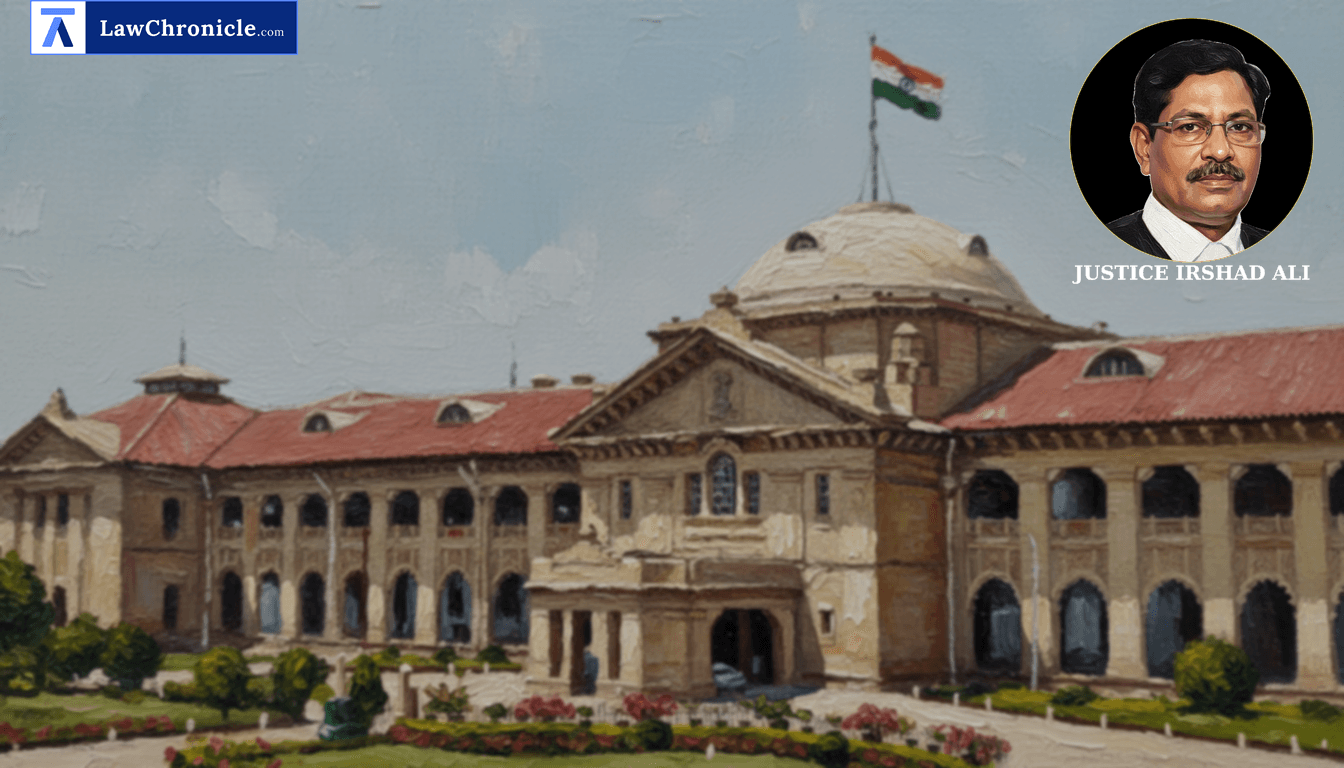
The Allahabad High Court has delivered a stinging rebuke to oil corporations for arbitrary dealership terminations based on mere suspicion, ruling that internal cable repairs or broken seals cannot be equated with fuel manipulation without definitive scientific evidence.
A Single Judge bench of Justice Irshad Ali heard the challenge against the termination of a retail outlet dealership that had been operating since 1973. The Court scrutinized whether technical irregularities detected during an inspection without proof of short delivery or unauthorized electronic chips could justify the permanent closure of a fuel station under the Constitution of India, 1950.
Technical Irregularities Without Manipulation Fail Legal Test
The Court observed that every irregularity noticed in a dispensing unit does not automatically amount to tampering. The bench emphasized that since termination of dealership visits a dealer with serious civil consequences, the ingredients of critical irregularities must be established by cogent and reliable material rather than mere assumptions.
The Court has the following directions:
"The respondents are directed to restore the petitioner's dealership and all consequential benefits flowing therefrom within a period of six weeks from the date of production of a certified copy of this order, subject to there being no other legal impediment."
The Court, in its reasoning, observed: "...suspicion, however strong, cannot take the place of proof. The Corporation was required to establish, through cogent technical evidence, that the alleged irregularities were capable of manipulating delivery and that such manipulation was attributable to the petitioner. No such evidence is forthcoming."
Judicial Precedents on Non-Functional Units and Technical Evidence
The bench relied heavily on the principles established in Chairman Indian Oil Corporation and others v. M/s Lallite Filling Centre and another, noting that when a dispensing unit is already non-functional or not dispensing fuel on the date of inspection, the burden on the corporation to prove an intention to manipulate delivery becomes even higher. Paraphrasing the ratio in Indian Oil Corporation Ltd. v. M/s Modern Service Station, the Court reiterated that failure to consider the specific defense of a dealer such as the unit being old or recently repaired by authorized personnel constitutes a violation of natural justice.
Background:
The dispute began following a joint inspection of a retail outlet in District Balrampur on May 10, 2017. Authorities found taped joints in pulsar cables and a broken Weights and Measures seal on a motherboard. Based on these findings, the Indian Oil Corporation terminated the dealership, alleging violation of Clauses 5.1.2, 5.1.3, and 5.1.4 of the Marketing Discipline Guidelines, 2012. The petitioner argued that the machines were manufactured in 2003, were old and shifted from other locations, and had been lying defective since March 2017.
The Court found that the corporation failed to address the petitioner's request made just days before the inspection to replace rusted sealing wires. Citing M/s Aliganj Kisan Seva Kendra and another Vs. Indian Oil Corporation Ltd. and others, the Court noted that if a corporation supplies an old machine, it must prove the unit was free from defects at the time of installation before shifting the burden to the dealer. The court further distinguished cases like M/s Chaudhary Filling Point, Kazipur through its Prop. And another vs. State of U.P. through Prin. Secy. Food & Civil Supplies and Ors. and M/s Prakash Automobiles Indian Oil Dealer Vs. Indian Oil Corporation Ltd. to conclude that the mere presence of foreign components or soldering marks is insufficient to establish a penal violation of Clause 5.1.4 of the guidelines without proof of actual fuel delivery manipulation.
Key Takeaways:
Proof of Impact Required
For an irregularity to qualify as 'tampering,' there must be evidence that the alteration was capable of, or resulted in, short delivery of fuel.
Technical Expertise Over Visual Inspection
Visual observations of cable joints or soldering marks by non-experts cannot substitute for a scientific or laboratory analysis of electronic components.
Corporate Maintenance Accountability
Since maintenance is handled by corporation engineers, dealers cannot be held liable for internal machine conditions without evidence of unauthorized access.
Administrative Due Process
Appellate authorities must independently evaluate technical defenses instead of merely affirming disciplinary orders based on presumptive findings.
Ratio Decidendi:
The extreme penalty of dealership termination under the Marketing Discipline Guidelines cannot be sustained on the basis of suspicion or presumptive findings of tampering. In the absence of recovery of unauthorized electronic devices, evidence of short delivery, or scientific proof that a technical irregularity (like a taped joint) affects fuel measurement, the corporation fails to meet the requisite standard of proof for 'tampering' as contemplated under Clause 5.1.4.
Case Details:
Case No.: WRIT - C No. - 22251 of 2018
NeutralCitation: 2026:AHC-LKO:43245
Case Title: M/s Sardar Baldev Singh and Co. Thru. Prop.Sri Karamjeet Singh Versus Indian Oil Corporation Ltd. Thru. Executive Director and Ors.
Appearances:
For the Petitioner(s): Radhika Singh, Richa Mishra, Tushar Hirwani
For the Respondent(s): Ratnesh Chandra, Manish Jauhari
Source: 2026 CaseBase(ALL) 231
Similar Articles
 Breaking News


