


Gauhati HC Refuses To Re-Appreciate Evidence In Petrol Pump Termination Dispute
 Copy Link
 Share
 Save
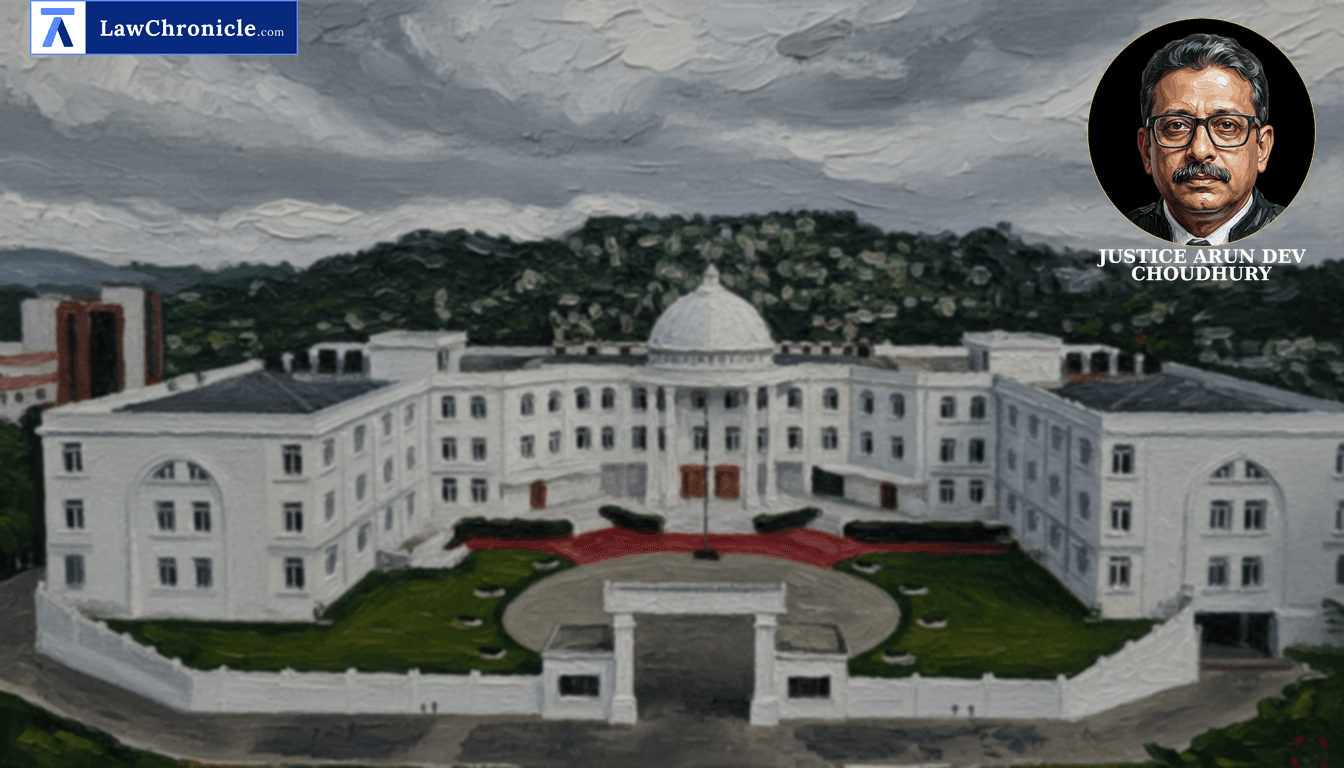
The Gauhati High Court has underscored the limits of judicial review in contractual disputes involving public sector undertakings, ruling that writ courts cannot act as appellate bodies to re-weigh complex factual evidence like forensic inspection reports and equipment tampering allegations. In a high-stakes battle between a retail outlet proprietor and the Indian Oil Corporation, the Bench held that where specialized Marketing Discipline Guidelines provide an internal appellate mechanism, litigants must exhaust such remedies before seeking constitutional intervention.
Justice Arun Dev Choudhury, presiding over the matter, deliberated upon a challenge brought by the proprietor of M/s Mohamaya KSK against a termination order issued by the Indian Oil Corporation. The case centered on the discovery of an unauthorized fitting within a fuel dispensing unit, raising significant questions regarding the evidentiary weight of conflicting inspection reports and the procedural sanctity of dealership agreements under the Companies Act.
Key Takeaways
Exhaustion of Alternative Remedies
The Court reaffirmed that when specific regulatory guidelines like the Marketing Discipline Guidelines 2012 provide an internal appeal process, the High Court will generally refrain from exercising its discretionary jurisdiction under Constitution of India, 1950.
Limited Scope of Judicial Review
Writ courts are not equipped to conduct a trial-like re-appreciation of disputed facts, such as the condition of holographic seals or the validity of photographs taken during surprise inspections.
Livelihood vs. Regulatory Compliance
While termination affects the right to livelihood under Constitution of India, 1950, the existence of a partial operation (interim relief) balances the equities, requiring the dispute to be resolved by competent technical authorities rather than the judiciary.
Conflicting Inspections and Tampering Allegations
The dispute originated from an inspection conducted by the Anti-Adulteration Cell in March 2018, where a “Double Metallic Gear”, a device used to manipulate fuel delivery, was allegedly found. While the petitioner argued that subsequent joint inspections involving the Original Equipment Manufacturer (OEM) found no foreign objects, the Corporation maintained that the tampering was evident from initial photographs and that the subsequent absence of the device was due to a staged accident that compromised the holographic seals.
The Gauhati High Court stated that “In the opinion of this Court, neither the subsequent absence of foreign object nor the finding recorded during the first inspection can be considered in isolation. The evidentiary significance of the photographs, the documents signed by the petitioner's representative, the explanation relating to the accident, and the observations recorded during the subsequent inspection require consideration as a whole... it would not be appropriate for this Court, in exercise of judicial review, to re-appreciate the disputed factual materials as if it were an appellate court over the Corporation's findings.”
Ratio
In matters involving technical irregularities and contractual terminations governed by specific Marketing Discipline Guidelines, the High Court will not invoke its writ jurisdiction to resolve deeply disputed factual controversies if an efficacious alternative appellate remedy is available. The evidentiary value of inspection reports and photographs is a matter of factual appreciation reserved for the competent appellate authority under the guidelines.
Background
The petitioner, Jyotsna Saha, operated a retail outlet under an agreement dated 19.04.2010. Following a series of inspections, the Indian Oil Corporation terminated the dealership on 29.11.2019, alleging critical irregularities under Clause 5.1.4 of the Marketing Discipline Guidelines. The petitioner contended that the termination was arbitrary, citing an accident on 13.06.2018 that damaged the dispensing unit seals, and pointed to a joint inspection where no unauthorized gears were found. The Corporation argued that the writ petition was not maintainable due to the availability of an alternative remedy under Clause 8.9 of the Guidelines. The Gauhati High Court ultimately disposed of the petition by relegating the petitioner to the appellate authority while extending interim protection for one dispensing unit.
Case Details:
Case No.: WP(C)/686/2020
Neutral Citation: 2026:GAU-AS:16098
Case Title: JYOTSNA SAHA VS. THE UNION OF INDIA AND 6 ORS.
Appearances:
For the Petitioner(s): Mr. P. K. Tiwari, Sr. Advocate; Mr. H. K. Das, Advocate.
For the Respondent(s): Mr. D. K. Sarmah, Advocate.
Source: 2026 CaseBase(GAU) 1602
Similar Articles
 Breaking News


