Andhra Pradesh HC Allows Jatara Mahotsavam With Safeguards
 Copy Link
 Share
 Save
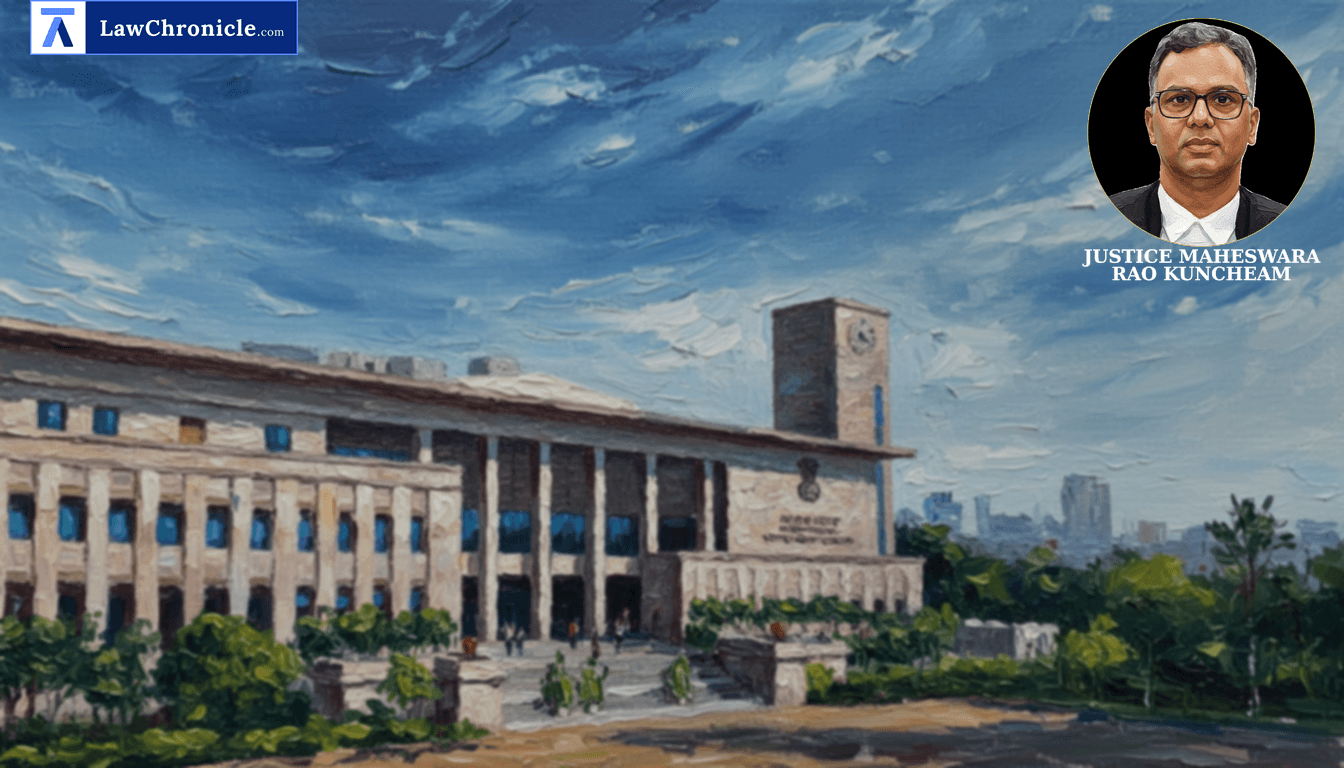
The Andhra Pradesh High Court has directed law enforcement to facilitate the smooth conduct of the Sri Sri Sri Maremma Mavulamma Ammavarla Jatara Mahotsavam, balancing the petitioner's right to religious celebrations with the State's duty to maintain public order and decency. While permitting the three-day festival in West Godavari district, the Court mandated rigorous monitoring to ensure that cultural programs remain free from obscenity and political affiliations.
A single-judge bench of Justice Maheswara Rao Kuncheam heard the petition filed under Article 226 of the Constitution of India. The petitioner sought a Writ of Mandamus against the police authorities for their alleged inaction on a representation dated June 26, 2026, which requested permission and protection for the annual religious and cultural festival.
Court Mandates Conditional Permission for Religious Events
The High Court observed that since the respondent police, through the Sub-Inspector of Achanta Police Station, expressed no objection to the festival subject to certain conditions, the proceedings could be disposed of by formalizing those safeguards. The Petitioner had approached the court citing potential interference by police personnel in their personal liberty, which they argued was violative of Article 14 and 21 of the Constitution of India and provisions of the BNS.
The Court, in its reasoning, observed: "In the light of the above facts and circumstances, respondent-police are directed to consider the petitioner’s representation dated 26.06.2026 and accord permission and provide necessary police protection for the cultural and other programmes that are being conducted during the Sri Sri Sri Maremma Mavulamma Ammavarla Jatara Mahotsavam..."
Guidelines for Maintaining Decorum During Utsavam
To ensure that the religious festivities are not misused, the Court relied on the principles earlier laid down in Maremma Poleramma Varla Jathara Utsava Committee, Kavitam v. State of Andhra Pradesh. The Court has the following directions:
"i) Petitioner shall take all stringent and necessary steps so that no obscene dances or vulgar programmes are being staged and performed during the course of Utsavam.
ii) Respondent police shall take steps to video-graph the programmes at the expense of the petitioner and if he finds any obscene programmes are conducted, he can submit a report to the Court for taking action against the concerned persons for contempt of the Court Order.
iii) No dance or songs, touching upon any political party or religion or community or caste shall be played.
iv) No flex boards in support of any political party or communal leader, shall be erected at the premises of the programme.
v) If there is violation of anyone of the conditions imposed, the concerned police officer is at liberty to take necessary action, as per law and stop such performance forthwith; and
vi) Petitioner shall furnish a letter of undertaking to the respondents that they will strictly adhere to the above conditions."
Key Takeaways:
Religious Liberty vs. Regulatory Control
While the court protects the right to conduct customary rituals, it reaffirms the State's power to impose reasonable restrictions to prevent obscenity.
Compulsory Videography of Public Events
By directing the police to video-graph programs at the petitioner's expense, the Court creates a high standard of accountability and evidence-based enforcement.
Decoupling Religion from Politics
Through strict prohibitions on political flex boards and songs, the ruling enforces a clear boundary between religious festivals and political campaigning.
Ratio Decidendi:
The State cannot arbitrarily refuse permission for long-standing religious and cultural festivals; however, such permission is inherently subject to the maintenance of public morality, communal harmony, and the prevention of obscene performances under the regulatory framework of local police laws.
Background:
The dispute arose when Bobba Ramesh Chowdary, the petitioner, filed a representation for the Jatara Mahotsavam scheduled for July 12-14, 2026, but faced inaction and alleged harassment from the Achanta police. The petitioner moved the High Court seeking a direction to allow the customary programs. The Government Pleader for Home clarified that the police were not opposed to the event itself but intended to regulate it to prevent law and order issues. The Court ultimately disposed of the petition by granting conditional permission and directing the Assistant Government Pleader to communicate the order to local authorities by July 9, 2026.
Case Details:
Case No.: WRIT PETITION NO: 18206/2026
NeutralCitation: 2026:APHC:26113
Case Title: BOBBA RAMESH CHOWDARY vs. THE STATE OF ANDHRA PRADESH
Appearances:
For the Petitioner(s): MR. MEDAPATI SANTOSH REDDY
For the Respondent(s): GP FOR HOME
Source: 2026 CaseBase(AP) 227
Similar Articles
 Breaking News