


Arbitrator Cannot Travel Beyond Contract or Rewrite Damages Rules: Delhi HC
 Copy Link
 Share
 Save
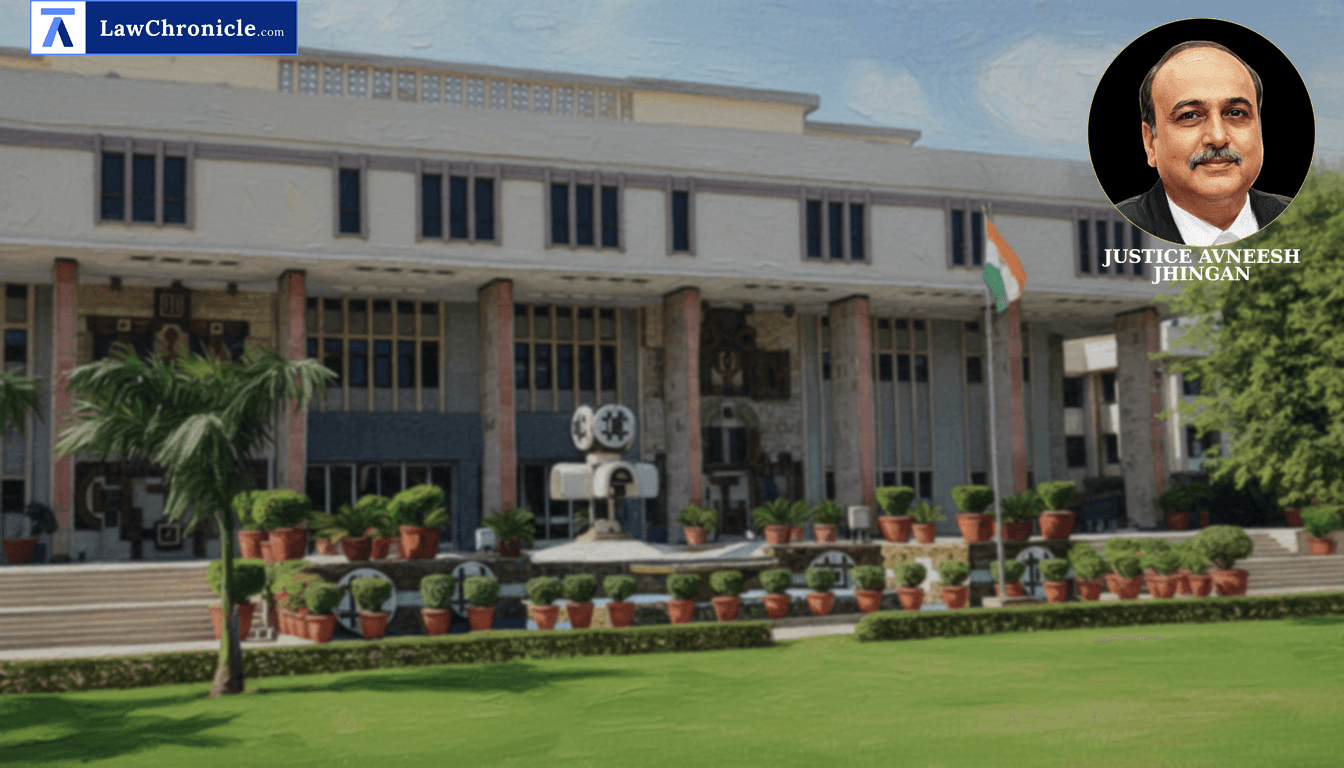
The Delhi High Court has set aside an arbitral award against IGNOU, ruling that an arbitrator commits a fatal jurisdictional error and renders an award patently illegal when ignoring vital contractual conditions and granting unproven damages beyond the scope of reference.
A single-judge bench of Justice Avneesh Jhingan was hearing a petition under Section 34 of the Arbitration and Conciliation Act, 1996 challenging an arbitral award dated 30.04.2018, which had awarded various financial claims to a contractor despite the non-issuance of a final completion certificate and lack of proof for actual losses suffered.
Key Takeaways
Strict Adherence to Contractual Terms: Arbitrators are creatures of contract and cannot ignore specific preconditions, such as mandatory completion certificates or contractual tax deduction clauses.
Proof of Loss Mandatory Under Section 73: Escalation or damages for contract prolongation cannot be granted without explicit pleading and proof of actual loss, even if delay is attributable to the employer.
No External Enquiries Behind Parties' Backs: Unilateral market enquiries or uncommunicated rate moderations by an arbitrator violate natural justice and Section 18 and 24(3) of the Arbitration and Conciliation Act, 1996.
Scope of Reference Limits: Awarding damages under general contract law when the reference was limited to specific contractual escalation clauses constitutes an impermissible jurisdictional error.
Court's Rationale on Patent Illegality and Contractual Boundaries
The High Court observed that the arbitrator ignored clear documentary evidence establishing that defects remained unrectified and that statutory completion drawings were not timely submitted by the contractor. The Court stressed that partial user occupation does not automatically signify formal completion when contractual provisions mandate a completion certificate.
Further, the Court condemned the procedure adopted by the tribunal to fix rates for extra items by relying on external market enquiries and DSR-2007 moderation without confronting the parties. Paraphrasing the binding precedent in Ssangyong Engineering and Construction Co. Ltd. v. NHAI ( "(2019) 15 SCC 131": 2019 CaseBase(SC) 226), the bench held that reliance on material taken behind the back of the parties deprives them of a fair opportunity to present their case, resulting in patent illegality.
The Court, in its reasoning, observed: "An Arbitral Tribunal being a creature of contract, is bound to act in terms of the contract under which it is constituted. An award can be said to be patently illegal where the Arbitral Tribunal has failed to act in terms of the contract or has ignored the specific terms of a contract."
Regarding the grant of escalation claims, the bench cited Kailash Nath Associates v. DDA ( "(2015) 4 SCC 136": 2015 CaseBase(SC) 937) and State of Rajasthan v. Ferro Concrete Construction (P) Ltd. to highlight that actual loss or damage is a sine qua non for claiming compensation under Section 73 of the Contract Act, 1872. Since the contractor failed to plead or establish actual loss, the tribunal erred in quantifying damages by substituting Hudson's formula or standard cost indices.
Ratio
An arbitral tribunal acts without jurisdiction and renders its award patently illegal under Section 34 of the Arbitration and Conciliation Act, 1996 if it ignores explicit contractual stipulations regarding contract completion and security deposits, relies on evidence collected behind the parties' backs, or awards unpleaded damages under the Contract Act, 1872 without proof of actual loss.
Background
IGNOU invited bids for constructing the Vice-Chancellor's Office and VIP Guest House on March 30, 2009. The work was awarded to Roshan Real Estates Pvt Ltd for Rs. 10,67,38,025/- with a scheduled completion date of September 18, 2010. The contractor claimed to have completed the project on November 30, 2011, leading to monetary disputes over extra items, RA bills, and escalation due to prolongation.
Arbitration was invoked under Clause 25 of the contract. The arbitrator awarded substantial sums under Claim 1 (executed work rates), Claim 2 (12th RA bill without permitting security and PBG deductions), Claim 4 (escalation costs under general contract law after finding Clause 10CC inapplicable), and Claims 6 & 7 (idling losses combined).
IGNOU challenged the award contending that the tribunal ignored letters establishing pending defects, traveled beyond the contract, applied uncommunicated market rates, and ignored rulings in PSA SICAL Terminals (P) Ltd. v. Board of Trustees of V.O. Chidambaranar Port Trust Tuticorin, Ssangyong Engineering and Construction Co. Ltd. v. NHAI ( "(2019) 15 SCC 131": 2019 CaseBase(SC) 226), and Indian Oil Corporation Ltd. v. Shree Ganesh Petroleum Rajgurunagar ( "(2022) 4 SCC 463": 2022 CaseBase(SC) 382). Conversely, the respondent relied on Dyna Technologies Pvt. Ltd. v. Crompton Greaves Ltd. ( "(2019) 20 SCC 1": 2019 CaseBase(SC) 2340), Reliance Infrastructure Ltd. v. State of Goa ( "(2023) SCC OnLine SC 604": 2023 CaseBase(SC) 1007), and Associated Builders v. DDA ( "(2015) 3 SCC 49": 2014 CaseBase(SC) 661) to argue that interpretation of contract terms falls exclusively within the arbitrator's domain and that courts should refrain from reappreciating evidence.
Finding that the tribunal committed jurisdictional errors, ignored vital contractual terms, and relied on undisclosed evidence, the High Court set aside the arbitral award in its entirety.
Case Details:
Case No.: O.M.P. (COMM) 416/2018 & I.A. 13436/2018
Case Title: IGNOU v. ROSHAN REAL ESTATES PVT LTD
Appearances:
For the Petitioner(s): Mr. Amit Gupta, Sr. Adv with Mr. Aly Mirza and Mr. Kshitij Vaibhav, Advs.
For the Respondent(s): Ms. Anusuya Salwan, Ms. Nikita Salwan, Mr. Bankim Garg and Mr. Rachit Wadhwa, Advs.
Source: 2026 CaseBase(DEL) 4786
Similar Articles

 Breaking News


