


Armed Forces Cannot Deny Disability Pension Citing 'Lifestyle Disorder' Alone: Kerala HC
 Copy Link
 Share
 Save
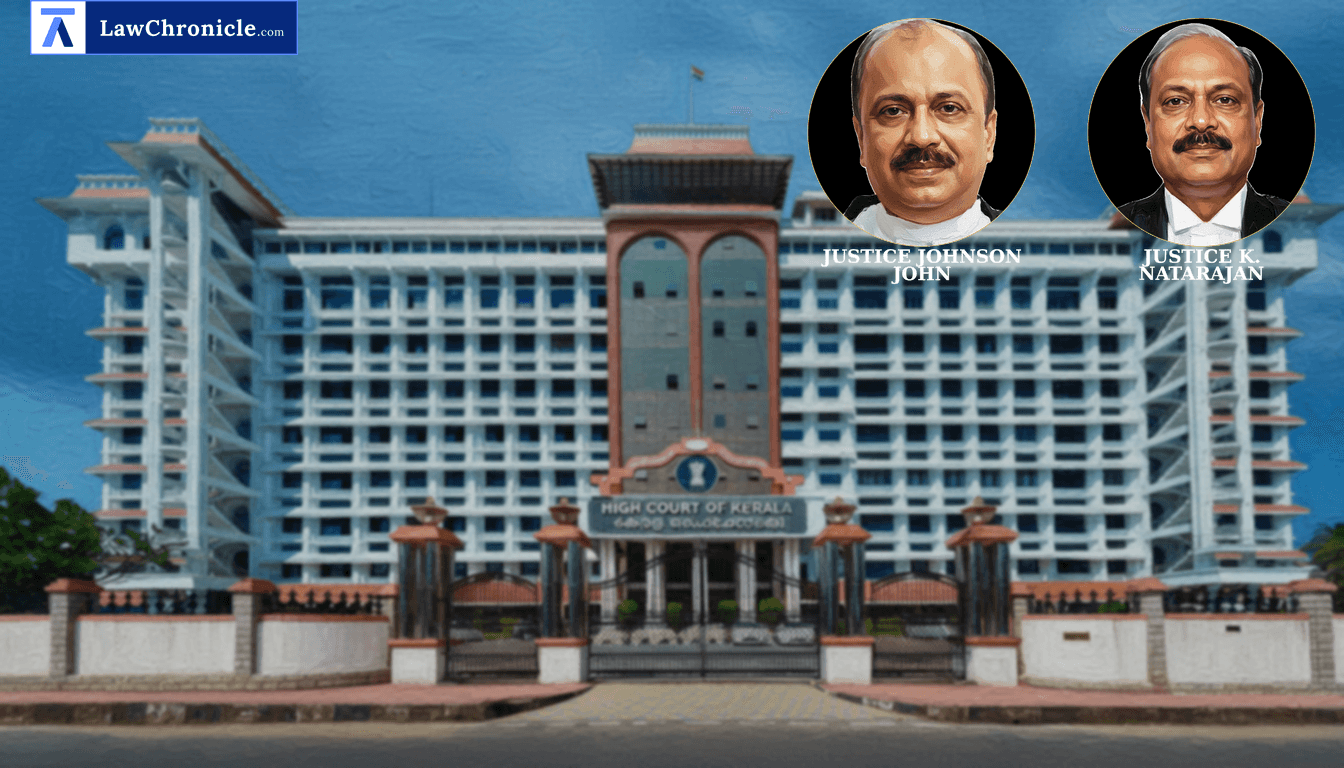
Soldiers who sacrifice their rights and safety for the nation cannot be denied disability pension on the mere ground that their ailments are 'lifestyle disorders', as the High Court reaffirms the statutory presumption of service-related aggravation for conditions not recorded at recruitment.
In a robust defense of military personnel rights, a division bench comprising Justice K. Natarajan and Justice Johnson John dismissed a challenge by the Union of India against an Armed Forces Tribunal (AFT) order. The court emphasized that the morale of the armed forces is a matter of national importance and that the state cannot abdicate its responsibility toward disabled veterans by citing simplistic medical justifications.
The Presumption of Sound Health at Entry
The High Court relied heavily on the legal principle that a member of the armed forces is presumed to be in sound physical and mental health upon entering service unless a specific note is recorded at the time of enrollment. Under Regulation 423 of the Regulation for Medical Services for Armed Forces, 1983, any deterioration in health during service is presumed to be attributable to or aggravated by military service. The bench noted that the burden of proof lies squarely on the employer to prove otherwise.
Referring to the landmark rulings in Dharamvir Singh v. Union of India ( "(2013) 7 SCC 316": 2013 CaseBase(SC) 992) and Sukhvinder Singh v. Union of India ( "(2014) 14 SCC 364": 2014 CaseBase(SC) 553), the court reiterated that if medical opinion fails to state specific reasons why a disease could not be detected at the time of recruitment, the benefit of doubt must be extended to the claimant.
Rejection of 'Lifestyle Disease' as Ground for Denial
The petitioners argued that Type-II Diabetes Mellitus and Primary Hypertension are lifestyle-related and thus not attributable to military service. However, the court found this reasoning insufficient. The bench observed that the mere fact that a soldier was posted in a 'peace location' or that the disorder is categorized as a lifestyle disease does not automatically sever the link to military service. This aligns with the precedent set in Rajumon T.M. v. Union of India and others ( "2025 SCC OnLine SC 1064": 2025 CaseBase(SC) 780).
Regarding the duty to protect soldiers, the Court, in its reasoning, observed: "It is a core responsibility of the Government and society to protect the morale of the soldiers, as soldiers are the ones who risk their lives for the country. A soldier is a blank cheque written to the country for any amount up to and including his life. Article 33 of the Constitution of India, 1950 allows the Government to restrict or abrogate some rights of the members of the armed forces... in such a situation, the contention that the disease is a lifestyle disorder cannot be accepted as a sufficient reason to deny the claim for disability element of pension."
Court's Directions
The Court has following directions:
"petitioners 3 and 4/respondents 3 and 4 to obtain composite degree of disability of the applicant’s diseases: (1) Type II Diabetes Mellitus at 20%; and (2) Primary Hypertension at 30% ’assessed from a competent Medical Board/authority/advisor at the earliest and at any rate within three months from date of receipt of a copy of the order and also to issue a Corrigendum PPO granting disability element of pension to the respondent/applicant for his invaliding diseases as per the composite disability to be quantified by the competent Medical Board/authority from the date of his discharge and pay arrears within six months from the date of receipt of a copy of the order, and failing which it was directed that unpaid amounts would carry interest at the rate of 9% per annum."
Key Takeaways:
Morale Protection is a Judicial Duty
Courts will prioritize the morale and welfare of the armed forces over technical medical objections to ensure that those who serve are not left without recompense.
Onus on the State, Not the Soldier
If a disease was not recorded during recruitment, the legal burden is on the Union of India to prove with specific evidence and reasons that the ailment was not aggravated by service.
Limited Scope of Article 226 in AFT Matters
High Courts will only invoke extraordinary jurisdiction under Article 226 of the Constitution of India, 1950 to prevent manifest injustice or jurisdictional errors, not to correct minor factual mistakes in Tribunal orders, as held in Union of India and others v. Parashotam Dass.
Ratio Decidendi:
A disease leading to discharge which was not recorded at the time of entry into military service is deemed to have arisen in or been aggravated by service. The mere characterization of an ailment as a 'lifestyle disorder' is insufficient to rebut this statutory presumption or to deny disability pension, especially when the soldier's rights are already restricted under Article 33 of the Constitution of India, 1950.
Background:
The respondent, a Subedar Major (Honorary Captain), was discharged with multiple ailments including Type-II Diabetes Mellitus and Primary Hypertension. The Medical Board had denied disability attribution, citing 'lifestyle modification' as the reason. The respondent challenged this before the AFT Kochi, which ruled in his favor. The Union of India moved the High Court, contending that the Medical Board's expert opinion should be final. However, the High Court found that the medical opinion lacked substantial reasoning and failed to rebut the legal presumption that the respondent was healthy at the time of joining. Consequently, the High Court upheld the AFT's direction to assess composite disability and grant pensionary benefits.
Case Details:
Case No.: WP(C) NO. 19501 OF 2026
NeutralCitation: 2026:KER:52646
Case Title: UNION OF INDIA vs K SUB MAJ (HONY CAPT) MOHANRAJ TK
Appearances:
For the Petitioner(s): SMT.M.S.KIRAN, SENIOR PANEL COUNSEL
For the Respondent(s): SHRI.RATHEESH B., ADVOCATE
Source: 2026 CaseBase(KER) 423
Similar Articles
 Breaking News


