


State Must Prove Non-Attributability to Deny Disability Pension: Kerala High Court
 Copy Link
 Share
 Save
The Kerala High Court has reinforced the legal presumption in favor of armed forces personnel, ruling that any disability not recorded at the time of recruitment must be presumed as service-related unless the state provides Cogent evidence to the contrary. This judgment slams the door on arbitrary denials of disability pension based on medical opinions that lack specific reasoning or fail to account for the rigors of military service.
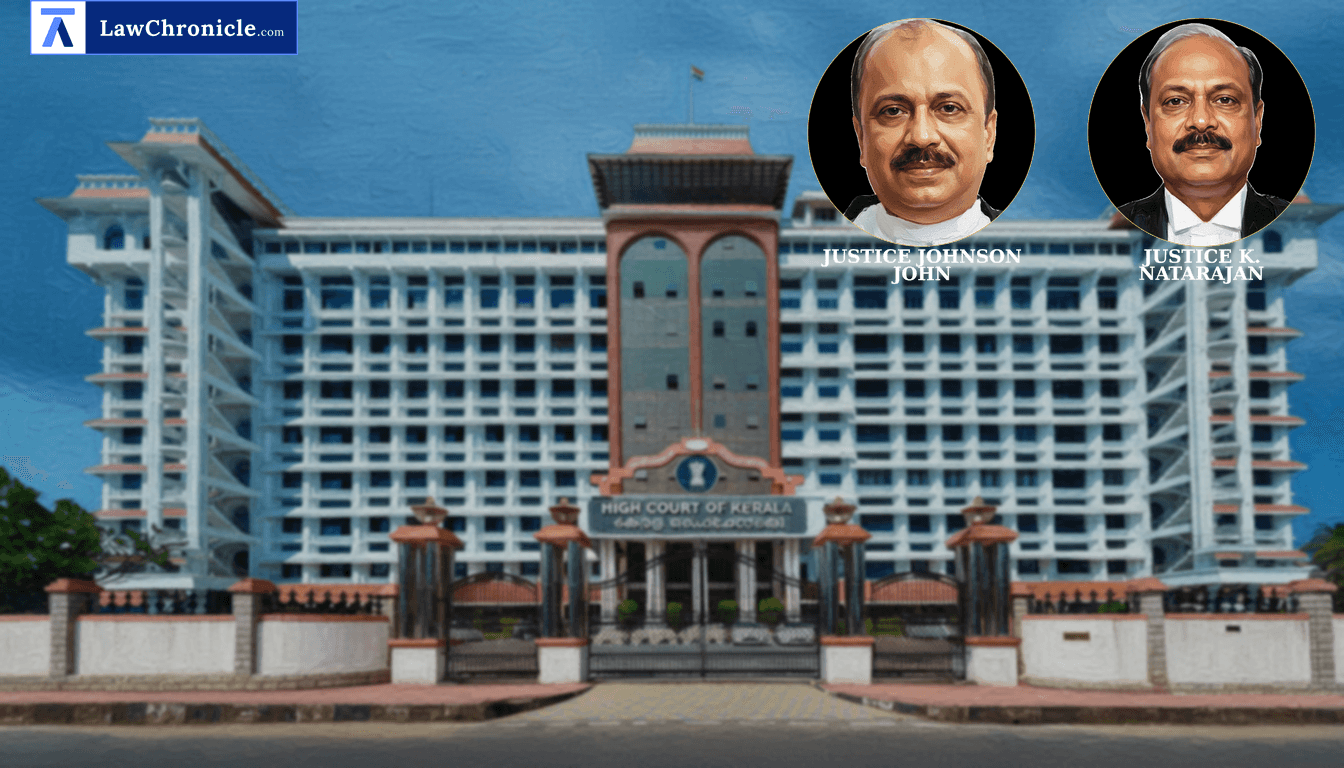
A division bench comprising Justice K. Natarajan and Justice Johnson John delivered the verdict while dismissing a writ petition filed by the Union of India. The Court was hearing a challenge against an order of the Armed Forces Tribunal which had granted disability pension to a former Havildar despite his discharge on compassionate grounds.
Key Takeaways
Presumption of Sound Health
Personnel are presumed to be in sound physical and mental condition upon enrolment if no disability is recorded at the entry-level medical examination.
Shifted Onus of Proof
The burden lies entirely on the employer to prove that a disability is neither attributable to nor aggravated by military service, rather than the employee proving its connection.
Voluntary Retirement No Bar
Discharge on compassionate grounds or voluntary request does not automatically disqualify a soldier from receiving disability pension benefits if medical criteria are met.
Limitation on Writ Jurisdiction
High Courts will not exercise Article 226 jurisdiction to resurrect claims that have become unenforceable due to significant, unexplained delays in filing.
Judicial Scrutiny of Medical Opinions
The Court emphasized that the mere opinion of a Medical Board is insufficient to deny benefits if it is devoid of specific reasons. Drawing from Rajumon T.M. v. Union of India and others ( "2025 SCC OnLine SC 1064": 2025 CaseBase(SC) 780), the bench noted that lifestyle disorders or service in peace locations do not inherently negate the attributability of a disease to military service. The Court observed that since no disease was recorded when the respondent enrolled, he was entitled to statutory presumptions under the Armed Forces Tribunal Act, 2007.
The Court, in its reasoning, observed: "...any disability not recorded at the time of recruitment must be presumed to have been caused subsequently and unless proved to the contrary to be a consequence of military service. The benefit of doubt is rightly extended in favour of the member of the armed forces; any other conclusion would tantamount to granting a premium to the Recruitment Medical Board for their own negligence."
Strict Adherence to Limitation and Final Directions
Apart from the merits, the Court took a grim view of the Union's delay of 561 days in representing the writ petition. Citing A. V. Venkateswaran, Collector of Customs, Bombay v. Ramchand Sobhraj Wadhwani and another and Assistant Commissioner of Central Excise v. Krishna Poduval ( "2006 (1) S.T.R. 185 (Ker.)": 2005 CaseBase(KER) 147), the Court held that the jurisdiction under Article 226 of the Constitution of India, 1950 cannot be used to bypass the law of limitation.
The Court has the following directions:
"issue a corrigendum PPO granting disability pension to the respondent/applicant at 50% for two years from 01.01.2006 within four months from the date of receipt of a copy of the order, failing which it was directed that the unpaid arrears will carry interest at the rate of 9% per annum."
Ratio
In the absence of a record of any disease at the time of entry into military service, a subsequent disability is deemed to have arisen during service. The employer bears the mandatory burden of proof to rebut this presumption with reasoned medical evidence, and a delay beyond the statutory period for appeal prevents the High Court from interfering with the Tribunal's orders under writ jurisdiction.
Background
The respondent was recruited into the Indian Army in 1971 and discharged in 1990 on compassionate grounds. The Release Medical Board assessed his disability, "Entrapment Neuropathy (Rt) Popliteal Nerve," at 30% but labeled it as non-attributable to service. This led to the rejection of his pension claim by adjudicating authorities. The respondent successfully challenged this before the Armed Forces Tribunal, citing Sukhvinder Singh v. Union of India ( "(2014) 14 SCC 364": 2014 CaseBase(SC) 553) and Dharamvir Singh v. Union of India ( "(2013) 7 SCC 316": 2013 CaseBase(SC) 992). The Union of India moved the High Court in 2026 to challenge the 2021 Tribunal order, arguing that voluntary discharge precludes disability pension. However, the High Court upheld the Tribunal’s decision, noting that the Union failed to provide any evidence to rebut the legal presumption of service-connection.
Case Details:
Case No.: WP(C) NO. 19603 OF 2026
Neutral Citation: 2026:KER:71099
Case Title: Union of India v. Ex No. 2568119 X Havildar Nazurulla Baig
Appearances:
For the Petitioner(s): Shri. T.V. Vinu, CGC
For the Respondent(s): Sri. T.R. Jagadeesh, Shri. Adi Narayanan, Smt. Manasi Jagadeesh
Source: 2026 CaseBase(KER) 21556
Similar Articles

 Breaking News


