


Disability Benefit Presumed If No Pre-Service Record of Ailment: Kerala HC
 Copy Link
 Share
 Save
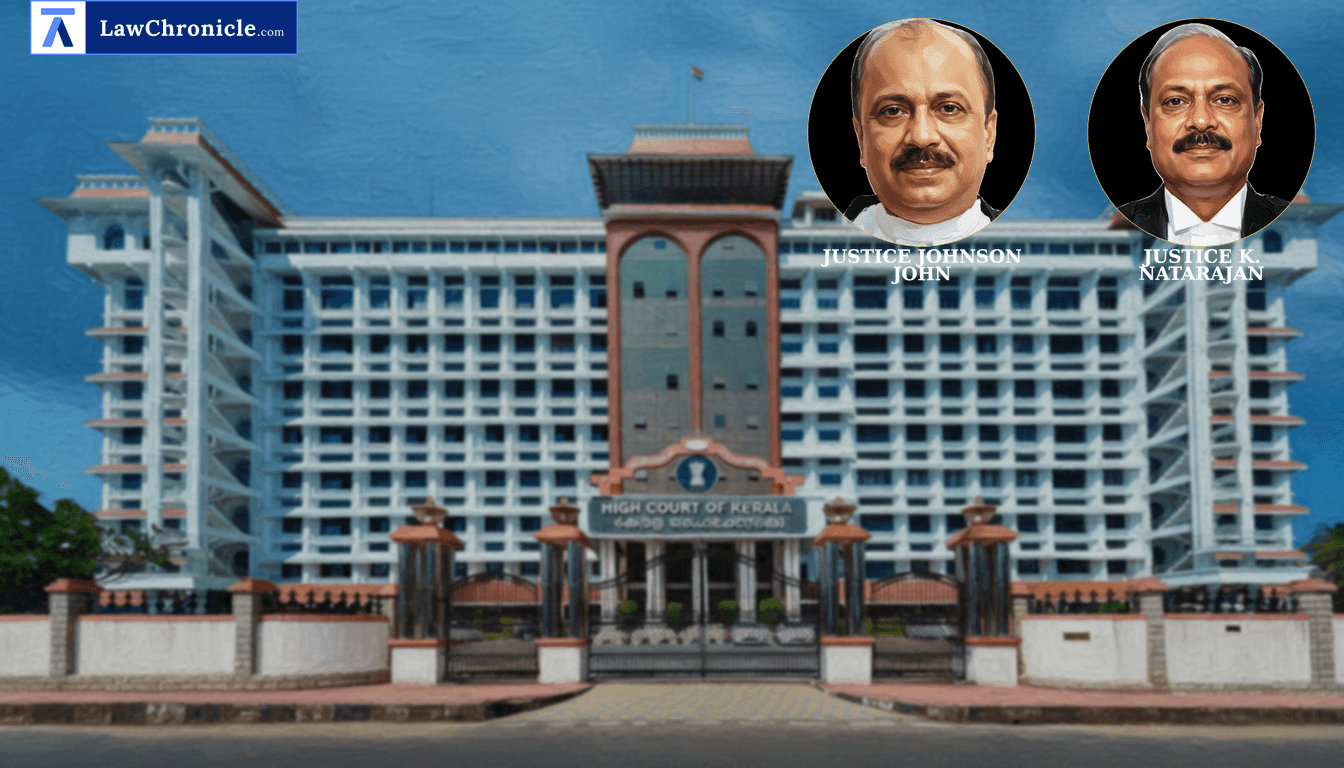
In a decisive reinforcement of veteran rights, the Kerala High Court has ruled that any medical deterioration following recruitment must be presumed as service-related unless the state provides rigorous evidence to the contrary. The Court further cautioned that writ jurisdiction cannot be invoked to bypass statutory limitation periods, effectively barring the Union of India from challenging a pension award after the expiry of the appellate window.
Justice K. Natarajan and Justice Johnson John presided over the hearing, which challenged an order of the Armed Forces Tribunal granting disability pension to a retired Lieutenant Colonel. The Union of India had contested the tribunal's findings, arguing that the officer's hypertension was not attributable to military service, despite the absence of any medical note indicating the condition at the time of his enrollment.
Key Takeaways
Presumption of Sound Health
A recruit is legally presumed to be in sound physical and mental health upon entry if no adverse medical notes exist in their recruitment records.
Burden of Proof on Employer
The onus lies strictly on the military authorities, not the employee, to prove that a subsequent disability is neither attributable to nor aggravated by service.
Limitation Bars Writ Remedy
High Courts will not exercise Article 226 jurisdiction to resurrect a cause of action that has become unenforceable due to the expiry of the statutory appeal period under the Armed Forces Tribunal Act, 2007.
Benefit of Doubt for Veterans
Judicial interpretation favors a liberal approach toward pensionary benefits, ensuring the morale of the armed forces remains protected against unrecompensed injuries.
Judicial Scrutiny of Medical Board Findings
The Court observed that the Release Medical Board had initially assessed the respondent's primary hypertension at 30% for life, attributing it to the stress and strain of military service. However, higher administrative authorities had summarily rejected this without sufficient medical grounds. The bench emphasized that the benefit of doubt must be extended to the member of the armed forces.
The Court, in its reasoning, observed: "...any disability not recorded at the time of recruitment must be presumed to have been caused subsequently and unless proved to the contrary to be a consequence of military service. The benefit of doubt is rightly extended in favour of the member of the armed forces; any other conclusion would tantamount to granting a premium to the Recruitment Medical Board for their own negligence."
The Court has following directions:
"...the Tribunal directed the 3rd and 4th respondents in the OA to issue a corrigendum PPO granting disability element of pension to the applicant at 30% which would stand rounded off to 50% from the date of retirement and pay the arrears at the earliest, at any rate within a period of four months from the date of receipt of a copy of the order, failing which it was directed that the unpaid amount would carry interest at 9% per annum. It was also ordered that considering the delay in filing the OA, the arrears shall be limited to a period of three years prior to the filing of the OA."
Ratio
In the absence of a medical record at the time of entry into service, any subsequent disability is deemed to have arisen during service under Regulation 423 of the Regulations for Medical Services for Armed Forces, 1983. Furthermore, the High Court’s discretionary jurisdiction under Constitution of India, 1950 cannot be used to circumvent the law of limitation when a statutory appeal under Section 30 of the Armed Forces Tribunal Act, 2007 has lapsed.
Background
The respondent was recruited in 1970 and superannuated in 2005. Upon retirement, the Release Medical Board found him suffering from 'Primary Hypertension' aggravated by service. Despite this, the adjudicating authorities denied his pension claim. The Armed Forces Tribunal (AFT) subsequently ruled in favor of the officer, applying the principles laid down in Sukhvinder Singh v. Union of India ( "(2014) 14 SCC 364": 2014 CaseBase(SC) 553) and Dharamvir Singh v. Union of India ( "(2013) 7 SCC 316": 2013 CaseBase(SC) 992).
The Union of India filed the present writ petition after a significant delay, surpassing the 90-day window provided for appeals. The High Court relied on A. V. Venkateswaran, Collector of Customs, Bombay v. Ramchand Sobhraj Wadhwani and another and Lt Col K. C. Chandra Bhanu v. Union of India to hold that the petition was a delayed attempt to bypass the Armed Forces Tribunal Act, 2007. Citing Rajumon T.M. v. Union of India and others ( "2025 SCC OnLine SC 1064": 2025 CaseBase(SC) 780), the Court reiterated that lifestyle disorders or peace-station postings do not automatically disqualify a claimant from disability benefits. Consequently, the High Court dismissed the Union's petition, upholding the AFT's order.
Case Details:
Case No.: WP(C) NO. 6230 OF 2024
Neutral Citation: 2026:KER:68852
Case Title: Union of India v. Lt. Col. Sunny Thomas (Retd.)
Appearances:
For the Petitioner(s): Kum. S. Krishna, Central Government Counsel
For the Respondent(s): Shri. K.I. Mayankutty Mather (Sr.), Smt. T.K. Sreekala, Smt. S. Parvathi, Smt. Kalliyani Krishna B.
Source: 2026 CaseBase(KER) 20073
Similar Articles

 Breaking News


