


Armed Interception And Vicarious Liability: Calcutta HC Affirms Life Term In Political Murder Case
 Copy Link
 Share
 Save
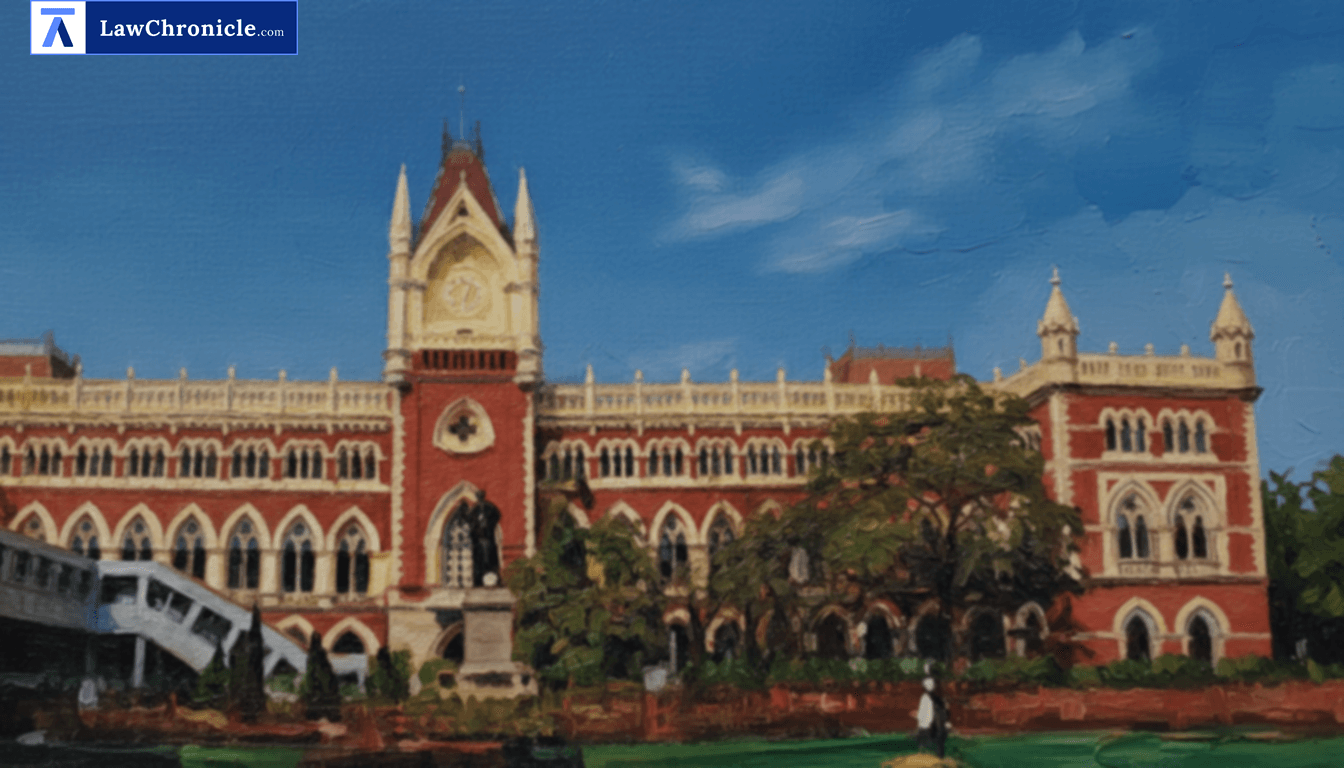
In a decisive reinforcement of the doctrine of vicarious criminal liability, the Calcutta High Court has upheld the life imprisonment of multiple convicts for a brutal political ambush, ruling that armed presence and blocking escape routes are sufficient to prove common object under Section 149 even without a direct fatal blow. The judgment underscores that members of an unlawful assembly who guard narrow exits to prevent victims from escaping are as legally culpable for murder as the primary assailants who strike the final blow.
A division bench of Justice Rajasekhar Mantha and Justice Anuj Singh heard the appeals challenging the conviction and sentencing orders passed by the Special-cum-Additional Sessions Judge, Cooch Behar. The case involved the 1985 murder of two Congress supporters who were pulled from a minibus and killed during a pre-planned political ambush by rival CPI(M) supporters.
Key Takeaways
Vicarious Liability Without Overt Acts
Active participation in an unlawful assembly, such as blocking roads or guarding exits, attracts murder charges under Section 149 even if the specific member did not personally inflict the fatal wound.
Credibility of Injured Witnesses
Testimony from witnesses who survived the attack carries high legal weight and cannot be discarded due to minor inconsistencies caused by the lapse of time between the incident and the trial.
Pre-planned Ambush Inference
The use of boulders to block a public transport bus and the selective removal of non-targeted passengers conclusively establishes a pre-meditated common object for an unlawful assembly.
Hostile Witness Limitations
The evidence of a witness who turns hostile can still be relied upon to the extent it is found dependable and corroborated by other unimpeachable eye-witness accounts.
Court Observation on Section 149 and Common Object
The Court dismissed the argument that those standing outside the bus were mere onlookers. It observed that the group outside acted in concert with those inside, using boulders and weapons to ensure the victims remained trapped. The Bench emphasized that the roles were divided for execution, not for liability. The Court has the following directions:
"Criminal Appeal No. 560 of 2010 and Criminal Appeal No. 511 of 2010 are dismissed insofar as the surviving appellants are concerned. Their convictions under Sections 302 and 324, each read with Section 149 of the Indian Penal Code, and the sentences imposed by the learned trial court are affirmed. The substantive sentences shall run concurrently, as directed by the learned trial court."
The Court, in its reasoning, observed: "The law fastens liability on each member of an unlawful assembly for acts done in furtherance of their common shared purpose or for consequences which every member knew were likely to follow because of such unlawful act. ... The mere fact that the member did not inflict a wound does not absolve him from the constructive liability that fastens upon every member of the assembly."
Ratio
Proof of a specific overt physical assault is not a condition precedent for a conviction under Section 149 of the Indian Penal Code, 1860. An assembly of five or more persons entertaining a common object to commit a crime renders every member liable for the acts of the assembly, provided they are aware of the facts and intentionally join or continue in that assembly. Guarding an exit or preventing escape during a lethal attack constitutes active participation in the common object.
Background
The dispute originated from political rivalry in Village Bhogramguri between Congress(I) and CPI(M) supporters. On August 7, 1985, a group of Congress supporters boarded a minibus to attend a meeting. The bus was intercepted at Santababur mor, where the road was blocked with stones. A group of 20 to 25 armed miscreants boarded the bus, allowed neutral passengers to leave, and then mercilessly assaulted the remaining Congress members, resulting in two deaths.
The Court relied on Ramvilas v. State of M.P ( "(2016) 16 SCC 316": 2015 CaseBase(SC) 379) to affirm that injuries suffered by surviving victims must be given substantial weight. It also applied principles from Masalti v. State of Uttar Pradesh ( "1964 SCC Online SC 30": 1964 CaseBase(SC) 74) and Rajendran v. State of Tamil Nadu ( "2004 (10) SCC 689": 2004 CaseBase(SC) 963) regarding the vicarious liability of assembly members who prevent victims from escaping. Despite the defense's reliance on Balakrushna Swain v. State of Orissa ( "(1971) 3 SCC 192": 1971 CaseBase(SC) 87) regarding the delay in recording statements, the Court found the evidence of seven injured eye-witnesses to be "sterling quality." The appeals of those who died during the pendency of the case were abated, while the convictions of the surviving appellants were upheld.
Case Details:
Case No.: CRIMINAL APPEAL NO. 560 OF 2010 and CRIMINAL APPEAL NO. 511 OF 2010
Neutral Citation: 2026:CHC-AS:1858-DB
Case Title: Suresh Barman & Ors. v. The State of West Bengal
Appearances:
For the Petitioner(s): Mr. Prabir Kumar Mitra, Ld. Sr. Adv, Mr. Kaustav Talukdar, Ms. Sudarshana Srivastave, Ms. Ankita Dutta, Advocates
For the Respondent(s): Mr. Debojyoti Deb, Ms. Nayana Mukhopdhyay, Advocates
Source: 2026 CaseBase(CAL) 2956
Similar Articles


 Breaking News


