


Bare Injunction Suit Barred If Specific Performance Is Efficacious Remedy: Karnataka HC
 Copy Link
 Share
 Save
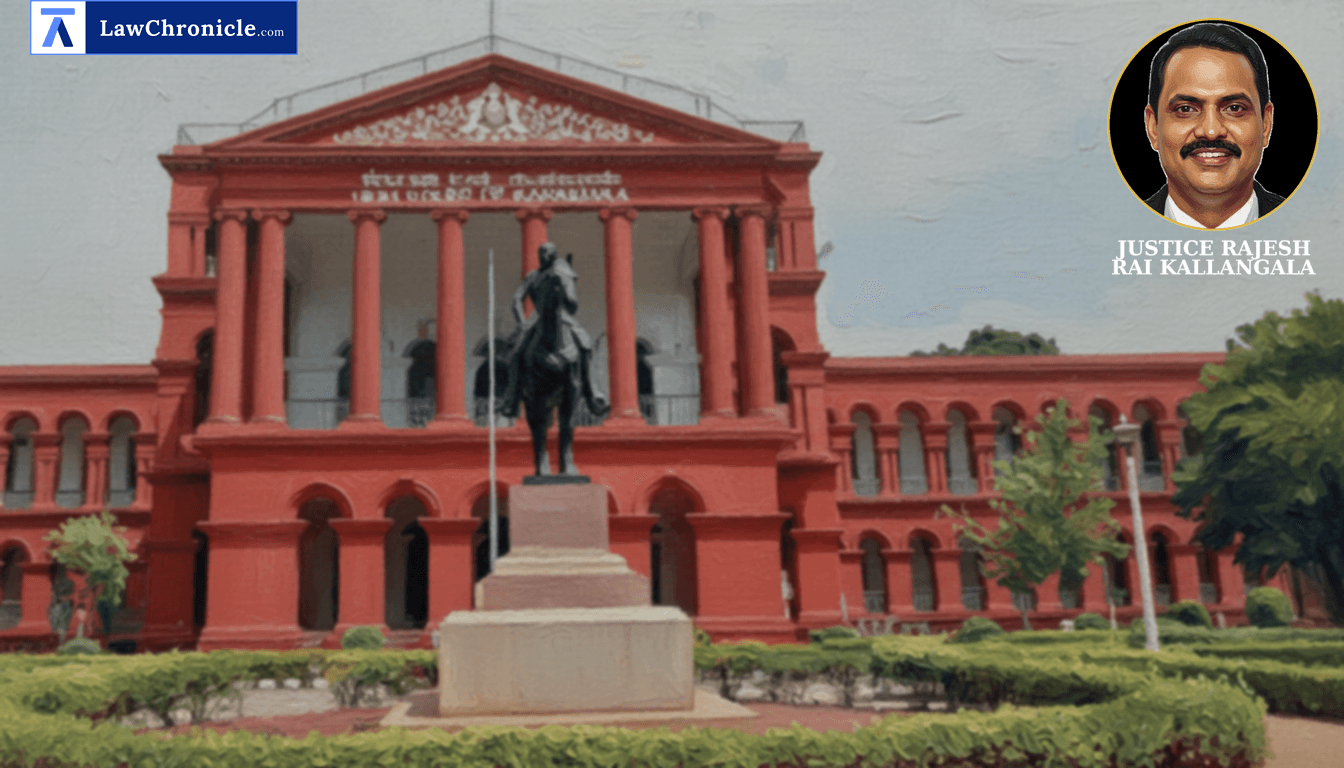
The Karnataka High Court has slammed the door on litigants attempting to bypass the comprehensive requirement of specific performance through clever drafting, ruling that a bare suit for permanent injunction is legally unsustainable when the primary remedy of enforcing a sale agreement is available. This decision reinforces that an unregistered agreement holder out of possession cannot maintain a possessory claim against the owner or subsequent registered transferees once a clear repudiation of the contract has occurred.
A single-judge bench of Justice Rajesh Rai K delivered this significant ruling while dismissing appeals against a Trial Court's decision to reject plaints. The Court examined whether a plaintiff could strategically defer seeking the substantive relief of specific performance by filing a simplified injunction suit to restrain alienation of property.
Key Takeaways
Curbing Evasive Litigation
Courts are mandated to scrutinize plaints to weed out 'clever drafting' that seeks to create an illusion of a cause of action when the suit is otherwise barred by substantive law.
Statutory Bar under Section 41(h)
An injunction cannot be granted if an equally efficacious relief, such as specific performance, is available to the plaintiff through the usual mode of proceeding.
Accrual of Cause of Action
The right to sue for specific performance triggers immediately upon the discovery of a third-party alienation, which constitutes an unequivocal repudiation of the prior agreement.
Unregistered Agreements and Possession
Prospective purchasers under unregistered agreements who lack physical possession cannot assert possessory rights or restrain the recorded owner from dealing with the property.
Mandatory Efficacious Remedy Must Be Pursued
The Court observed that the primary remedy for a breach of an agreement to sell is a comprehensive suit for specific performance. The Court emphasized that filing a bare suit for permanent injunction without claiming the substantive relief of specific performance is legally impermissible under Section 41(h) of the Specific Relief Act, 1963.
The Court has following directions:
"In view of the above conclusions, both the Regular First Appeals (RFA No. 1887/2019 and RFA No. 1888/2019) are dismissed."
The Court, in its reasoning, observed: "Where an agreement to sell is alleged to be breached or repudiated, the primary and efficacious remedy available to the purchaser is to file a comprehensive suit for specific performance of the agreement and seek an interim injunction against alienation as an interlocutory relief temporary injunction within that suit. Filing a bare suit for permanent injunction without claiming the substantive relief of specific performance is legally impermissible."
Ratio
A suit for bare permanent injunction is barred by Section 41(h) of the Specific Relief Act, 1963, if the plaintiff has an available and equally efficacious remedy of filing a suit for specific performance. An application under Order II Rule 2 of the CPC seeking leave to omit the relief of specific performance cannot override this substantive statutory bar or validate a fundamentally non-maintainable suit.
Background
The dispute originated from unregistered Agreements of Sale dated August 10, 2008, entered into between the appellant, Messrs Sana Group, and the respondents. The agreements were contingent upon the vendors obtaining a Khatha Certificate and a No Objection Certificate (NOC) from the Defence Department. While the Khatha was obtained in 2016, the NOC remained outstanding. In 2018, the appellant discovered that the respondents had executed a registered Agreement of Sale in favour of a third party (Defendant No. 3).
Instead of filing for specific performance, the appellant filed suits for bare permanent injunction in the Trial Court to restrain further alienation. The appellant also filed applications under Order II Rule 2 of the Code of Civil Procedure, 1908 seeking leave to file for specific performance at a later date. The Trial Court rejected the plaints under Order VII Rule 11(a) and (d) of the Code of Civil Procedure, 1908, concluding they were barred by Section 41(h) of the Specific Relief Act, 1963.
On appeal, the High Court upheld the Trial Court's view. It relied on State of Punjab v. Gurdev Singh to determine that the right to sue accrued in October 2018 when the third-party interest was discovered. Referring to RBANMS Educational Institution v. B. Gunashekar & Another ( "2025 INSC 490": 2025 CaseBase(SC) 998), the Court noted that agreements of sale do not create title under Section 54 of the Transfer of Property Act, 1882. It also cited Sucha Singh Sodhi v. Baldev Raj Walia & Another to clarify that an Order II Rule 2 application cannot save a suit from a substantive statutory bar. Consequently, the High Court affirmed the rejection of the plaints.
Case Details:
Case No.: RFA No. 1888 of 2019 C/W RFA No. 1887 of 2019
Case Title: Messrs Sana Group v. Shri Jay Prakash Agarwal and Others
Appearances:
For the Petitioner(s): Sri. S. Sreevatsa, Senior Counsel for Smt. Yuktha Anil, Advocate
For the Respondent(s): Sri. Shirish Krishna, Advocate for R1; Sri. P.B. Appaiah, Advocate for R3
Source: 2026 CaseBase(KAR) 26205
Similar Articles
 Breaking News


