


Heavy Burden Lies On Plaintiff To Prove Concluded Oral Sale Agreement of Immovable Property: SC
 Copy Link
 Share
 Save
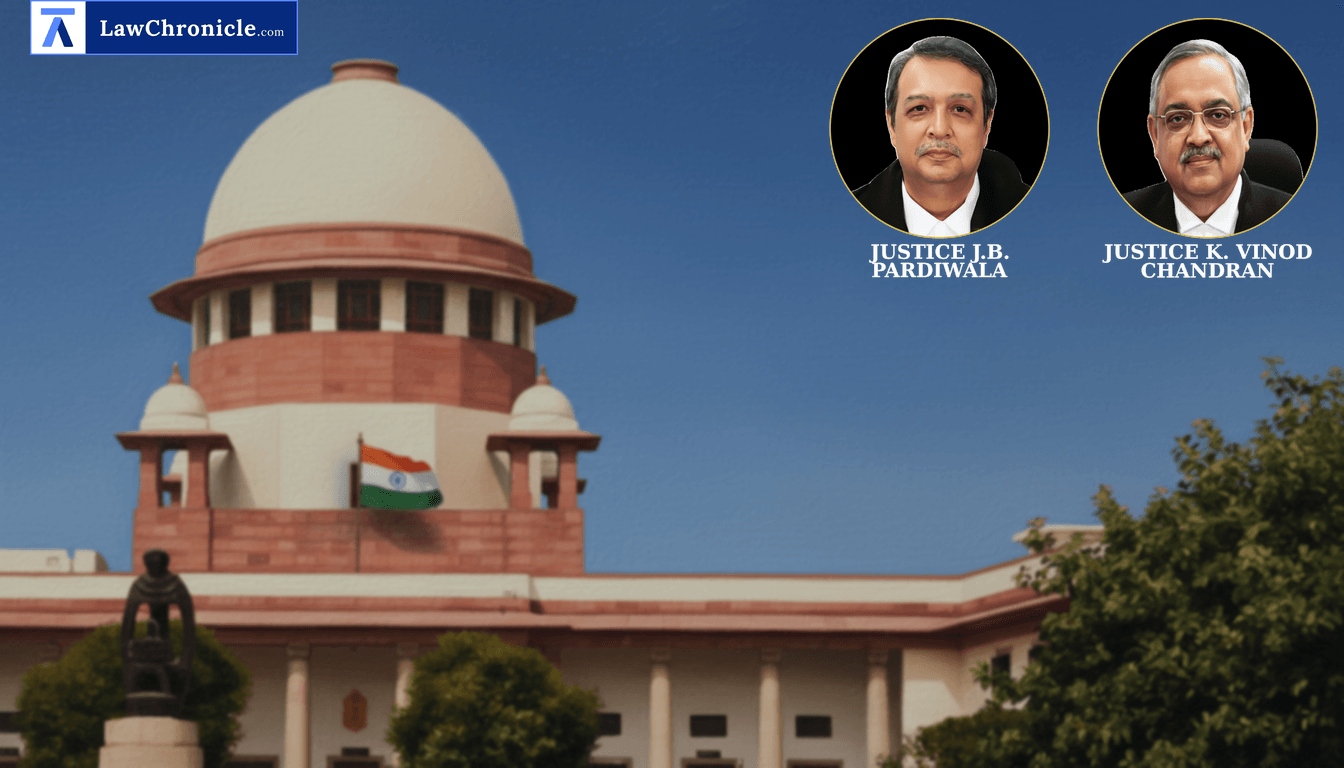
Supreme Court has ruled that a suit for specific performance based on an oral sale agreement of immovable property must establish a complete consensus ad idem without relying on inferential deductions or the evasive conduct of the defense. Clarifying the procedural rigors of civil litigation, the Apex Court also held that initiating a fresh suit for specific performance after withdrawing an earlier injunction suit, without securing leave at the time of initial institution, is barred by Order II Rule 2 of the Code of Civil Procedure, 1908.
A bench of Justice J.B. Pardiwala and Justice K. Vinod Chandran set aside concurrent findings of the Trial Court and High Court which had decreed a suit for specific performance based on alleged oral negotiations.
Key Takeaways
Strict Proof Required for Oral Contracts: Parties seeking specific performance of an oral sale agreement of immovable property carry a heavy burden to prove a concluded contract and complete consensus on vital terms beyond doubt.
Order II Rule 2 CPC Operates as a Strict Bar: Omitting a known claim for specific performance in an earlier suit for injunction without seeking leave at the time of institution permanently bars a subsequent suit for that relief.
Subsequent Liberty Does Not Cure Initial Omission: Seeking liberty to file a fresh suit at the time of withdrawing an earlier action under Order XXIII Rule 1 cannot retrospectively bypass the mandatory leave required under Order II Rule 2 at the time of filing.
Defense Flaws Cannot Replace Plaintiff's Burden: Evasive or inconsistent testimony by defense witnesses cannot automatically lead to an inference of a concluded contract in favor of the plaintiff.
Validity of Oral Sale Agreement
The Supreme Court emphasized that while law does not mandate every sale agreement to be in writing, oral agreements require clear and unambiguous proof of settled terms. Observing the flaws in the lower court findings, the Apex Court observed that "Whether there was such a concluded oral contract or not would be a question of fact to be determined in the facts and circumstances of each individual case. It has to be established by the plaintiffs that vital and fundamental terms for sale of immovable property were concluded between the parties orally and a written agreement if any to be executed subsequently would only be a formal agreement incorporating such terms which had already been settled and concluded in the oral agreement."
Addressing the procedural defect under Order II Rule 2, the Supreme Court noted that the cause of action for specific performance had fully matured when the earlier injunction suit was filed. Emphasizing the bar on subsequent suits, the Court observed: “Order II Rule 2 applies when a prior suit is filed and withdrawn to file a fresh suit, when in the prior suit the entire reliefs entitled and available to the plaintiff are not sought; in which event, the second suit would be maintainable only if at the time of filing of the suit, the plaintiff had obtained leave of the Court to agitate the reliefs not claimed at the appropriate time.”
Ratio
A suit for specific performance based on an oral agreement requires strict proof of a concluded contract and consensus ad idem on all vital terms. Furthermore, when a plaintiff is entitled to seek specific performance at the time of filing an initial suit but chooses to limit the prayer to a permanent injunction without obtaining prior leave of the court, a subsequent suit claiming specific performance is barred under Order II Rule 2 of the Code of Civil Procedure, 1908.
Background
The dispute arose out of alleged oral negotiations for the purchase of real estate belonging to an entity where the plaintiff claimed that terms were finalized over multiple meetings. The plaintiff alleged that token cash advances were paid and a cheque for Rs. 5 crores was handed over. When the defendants allegedly refused to perform the contract, the plaintiff initially filed a suit for permanent injunction at Mirzapur to restrain alienation of the property.
That earlier suit was subsequently withdrawn on the pretext of ongoing settlement talks, with the plaintiff submitting a withdrawal pursis expressing an intention to file a fresh suit. Thereafter, the plaintiff instituted a fresh suit claiming the relief of specific performance. The defendants opposed the suit, contending that it was barred by Order II Rule 2 of the Code of Civil Procedure, 1908 and that no concluded contract ever existed. They further argued that negotiations held with individuals having no corporate authorization or compliance under Section 46 of the Companies Act, 1956 could not bind the company.
Both the Trial Court and the High Court decreed the suit in favor of the plaintiff, relying heavily on inconsistencies and evasive answers in the oral testimony of defense witnesses. Reversing these concurrent judgments, the Supreme Court relied on precedent in Brij Mohan and Ors. v. Smt. Sugra Begum and Ors. and K. Nanjappa (Dead) by Legal Representatives v. R.A. Hameed @ Ameersab (Dead) by Legal Representatives and Another to reiterate that oral contracts require strict proof. Examining procedural principles established in Gurbux Singh v. Bhooralal ( "1964 SCC OnLine SC 101": 1964 CaseBase(SC) 271), Vurimi Pullarao v. Vemari Vyankata Radharani ( "(2020) 14 SCC 110": 2019 CaseBase(SC) 3481), Cuddalore Powergen Corporation Ltd. v. M/s. Chemplast Cuddalore Vinyls Limited and Anr. ( "2025 INSC 73": 2025 CaseBase(SC) 180), and Virgo Industries (Eng.) Private Limited v. Venturetech Solutions Private Limited, the Apex Court concluded that the cause of action for specific performance had already accrued when the first suit was filed. Because no leave was obtained at the time of initial filing, the second suit was legally unmaintainable and the evidence failed to establish a concluded oral contract.
Case Details:
Case No.: Civil Appeal No. of 2026 (@Special Leave Petition (C) No.25909 of 2024)
Neutral Citation: 2026 INSC 1066
Case Title: Bombay Garage Ahmedabad Limited & Ors. v. J P Iscon Private Ltd. & Anr.
Source: 2026 CaseBase(SC) 8118
Similar Articles
 Breaking News


