


BNS Section 69 Requires Proof Of Deceit from Inception: Supreme Court
 Copy Link
 Share
 Save
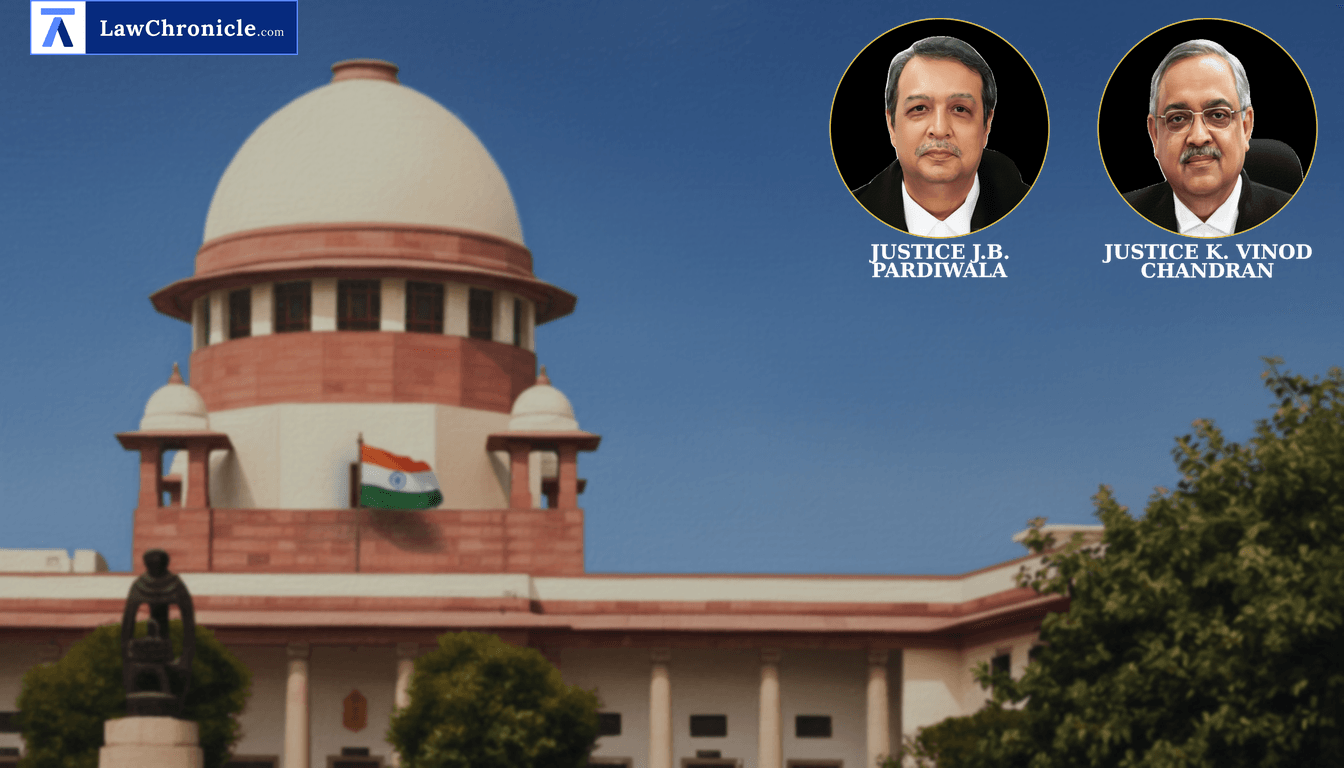
Setting a strict evidentiary bar for prosecuting relationship fallouts, the Supreme Court ruled that a subsequent refusal to marry due to family opposition does not constitute fraudulent or deceitful conduct under Section 69 of the Bhartiya Nyaya Sanhita. Clarifying that the newly enacted provision carries the same rigor as pre-existing rape law jurisprudence regarding false promises of marriage, the Apex Court quashed a criminal prosecution where physical relations were found to be purely consensual.
A bench of Justice J.B. Pardiwala and Justice K. Vinod Chandran allowed an appeal challenging the Gujarat High Court's refusal to quash an FIR registered against a man under Section 69 of the Bhartiya Nyaya Sanhita. The Bench held that mere communication of a desire to marry followed by a breakdown in relationship owing to parental disapproval cannot be criminalized as deceitful inducement.
Key Takeaways
Strict Proof Of Intent Required: To attract Section 69 of Bhartiya Nyaya Sanhita, prosecution must prove the accused had no intention of fulfilling the promise to marry right from inception.
Family Disapproval Is Not Deceit: Resiling from a promise to marry due to parental opposition indicates good faith at the outset, barring criminal liability.
Consensual Relationships Protected: Romantic relationships based on mutual desire cannot be retroactively converted into criminal offences upon a breakup.
Prosecution for False Promise of Marriage
The Supreme Court analyzed the structural shift brought by the new criminal codification while holding that the underlying legal rigor remains unchanged. The Bench discussed the meaning of deceit under Section 69 of BNS that "The BNS by incorporating Section 69 brought in a separate offence carving out the fraudulent and deceitful conduct as spoken of therein from the grave offence of rape, while at the same time providing a penalty for the deceptive conduct alleged therein. The word employed 'deceitful means or by making a promise to marry to a woman without any intention of fulfilling the same' brings in the same rigor of the promise having been given with an intention of never being fulfilled, which is the deceitful conduct sought to be punished."
Addressing the factual background, the bench highlighted that the complainant succumbed to the appellant's entreaties during their very first physical meeting without even alleging that physical intimacy was permitted solely on a promise to marry.
Ratio
An offence under Section 69 of the Bhartiya Nyaya Sanhita is established only when there is clear evidence that the accused made a promise to marry with a dishonest intention of never fulfilling it at the time of making it. A failure to perform a promise to marry due to subsequent unavoidable circumstances or family non-consent does not amount to deceitful means or a false promise under the law.
Background
The dispute originated from an FIR registered at Sayajiganh Police Station, Vadodara City, Gujarat, alleging an offence under Section 69 of the Bhartiya Nyaya Sanhita. The complainant alleged that the appellant entered into physical relations with her on the pretext of a promise to marry after they connected on a digital platform, but later resiled stating his mother was opposed to the alliance.
The Gujarat High Court had refused to quash the FIR by referring to Deepak Gulati v. State of Haryana ( "(2013) 7 SCC 675": 2013 CaseBase(SC) 323), which governed cases under Section 375 read with Section 90 of the IPC. Aggrieved, the appellant approached the Supreme Court.
Reversing the High Court decision, the Supreme Court observed that under both the IPC and the newly introduced Bhartiya Nyaya Sanhita, the core requirement is to establish that the promise was made without any intention to fulfill it from the very beginning. Since the complaint itself demonstrated that the refusal stemmed from the mother's disapproval, it indicated that the promise was made with good intention. Consequently, the Supreme Court quashed the FIR and allowed the appeal.
Case Details:
Case No.: Criminal Appeal No. of 2026 (@ Special Leave Petition (Crl.) No.11526 of 2026)
Neutral Citation: 2026 INSC 987
Case Title: Kunal Rameshbhai Kalyani v. The State of Gujarat & Anr.
Source: 2026 CaseBase(SC) 8079
Similar Articles

 Breaking News


