


Marriage Promise By Already Married Person Attracts Section 69 BNS: Himachal Pradesh HC
 Copy Link
 Share
 Save
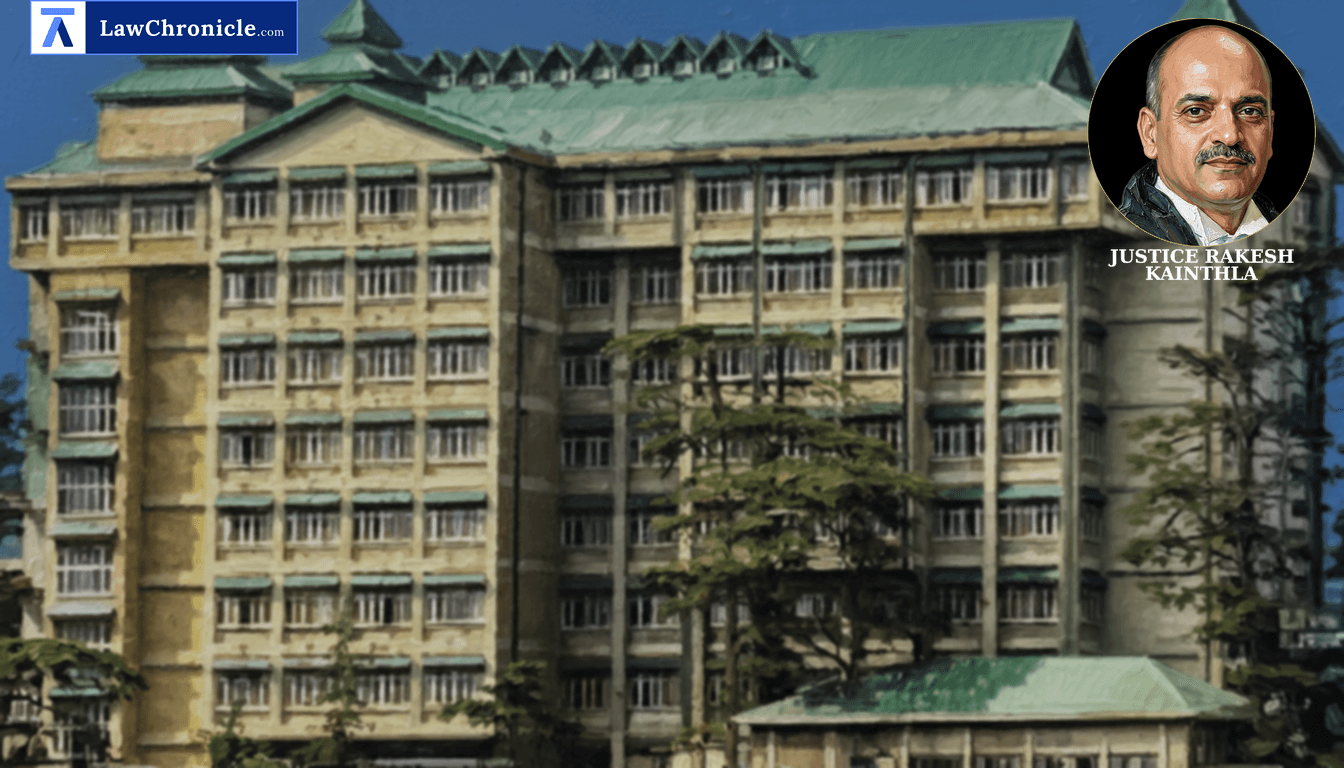
The Himachal Pradesh High Court has refused to quash criminal proceedings against a man who allegedly induced a widow into a sexual relationship through a false promise of marriage while concealing his existing marriage. In a significant clarification of new criminal laws, the Court ruled that a representation of marriage made by a person who is legally incapable of marrying due to a subsisting spouse prima facie constitutes a dishonest intention under the Bharatiya Nyaya Sanhita.
Justice Rakesh Kainthla, sitting as a single-judge bench, dismissed the petition filed under Section 482 of the Code of Criminal Procedure (now applicable under Bharatiya Nagarik Suraksha Sanhita), observing that the ingredients of the newly enacted Section 69 of the Bharatiya Nyaya Sanhita were satisfied where a promise was made without any possibility or intention of fulfillment.
Key Takeaways
Deception at Inception
Making a promise to marry while already being married and having a child constitutes a prima facie case of having no intention to fulfil the promise.
Scope of Section 69 BNS
Sexual intercourse obtained through a false promise to marry, particularly by concealing existing marital status, squarely falls under the penal provisions of the Bharatiya Nyaya Sanhita.
Limited Scope of Quashing
High Courts cannot conduct a 'mini-trial' at the 482 stage to test the credibility or age-appropriateness of the parties when the FIR disclose a cognizable offence.
Magisterial Discretion Post-Charge Sheet
Once a charge sheet is filed, the appropriate remedy for an accused is to seek discharge before the trial court rather than invoking the High Court's extraordinary jurisdiction.
Court Observations on Section 69 BNS
The Court emphasized that Section 69 of the Bharatiya Nyaya Sanhita specifically penalizes sexual intercourse on the basis of a promise to marry without the intention of fulfilling it. The petitioner had argued that the informant was a mature 36-year-old woman and he was 29, suggesting that deception was improbable. Rejecting this, the Court noted that the informant's status as a widow made her vulnerable to such promises.
The Court, in its reasoning, observed: "The petitioner was married and could not have married the informant; therefore, he had no intention of fulfilling the promise made by him to the informant. Thus, prima facie, the ingredients of Section 69 of BNS are duly satisfied."
Regarding the lack of entries in the hotel visitor register, the Court relied on Punit Beriwala v. State (NCT of Delhi) to hold that at the quashing stage, the allegations in the complaint must be treated as correct. It further cited Maneesha Yadav v. State of U.P. to underscore that the Court cannot embark upon an enquiry as to the reliability or genuineness of the allegations.
The Court has following directions:
"In view of the above, the present petition fails, and it is dismissed. The present petition stands disposed of, and so are the miscellaneous applications, if any. The observations made hereinbefore shall remain confined to the disposal of the petition and will have no bearing whatsoever on the merits of the case."
Ratio
A representation of marriage made by a person who is already legally married, and thus incapable of entering into a fresh marriage, constitutes a promise made without the intention of fulfilling it. If such a promise induces a woman to enter into sexual relations, it satisfies the necessary ingredients for prosecution under Section 69 of the Bharatiya Nyaya Sanhita, and such criminal proceedings cannot be quashed by the High Court by conducting a factual enquiry into the reliability of the evidence.
Background
The petitioner and the informant met on Instagram, where the petitioner allegedly represented himself as a bachelor and an Excise Inspector. He allegedly promised to marry the informant and maintained a physical relationship during a visit to Dharamshala. Financial transactions involving approximately ₹1,86,000/- were also alleged. The informant later discovered that the petitioner was married and had a two-year-old child.
The petitioner moved the High Court seeking to quash FIR No. 187 of 2025, contending that the relationship was consensual and that the age difference made the allegation of deception improbable. The State, relying on the fact that the petitioner was already married, argued that the dishonest intention was clear from the start. The Court, following the principles laid down in B.N. John v. State of U.P. ( "2025 SCC OnLine SC 7": 2025 CaseBase(SC) 328) and Ajay Malik v. State of Uttarakhand ( "2025 SCC OnLine SC 185": 2025 CaseBase(SC) 133), held that where the FIR discloses a cognizable offence, the High Court must not interfere, especially after the investigation is complete and the charge sheet is filed. Relying on Iqbal v. State of U.P., the Court directed that the matter should be adjudicated by the Trial Court.
Case Details:
Case No.: Cr. MMO No. 1002 of 2026
Neutral Citation: 2026:HHC:40552
Case Title: Sachin Kumar Versus State of H.P. & anr.
Appearances:
For the Petitioner(s): M/s M.A. Safee, Pranav Kaushal and Saurav, Advocates.
For the Respondent(s): Mr Jitender Sharma, Additional Advocate General.
Source: 2026 CaseBase(HP) 8040
Similar Articles

 Breaking News


