


Himachal Pradesh HC: Quashing of FIR for Rape on False Marriage Promise Not Permissible After Framing of Charges
 Copy Link
 Share
 Save
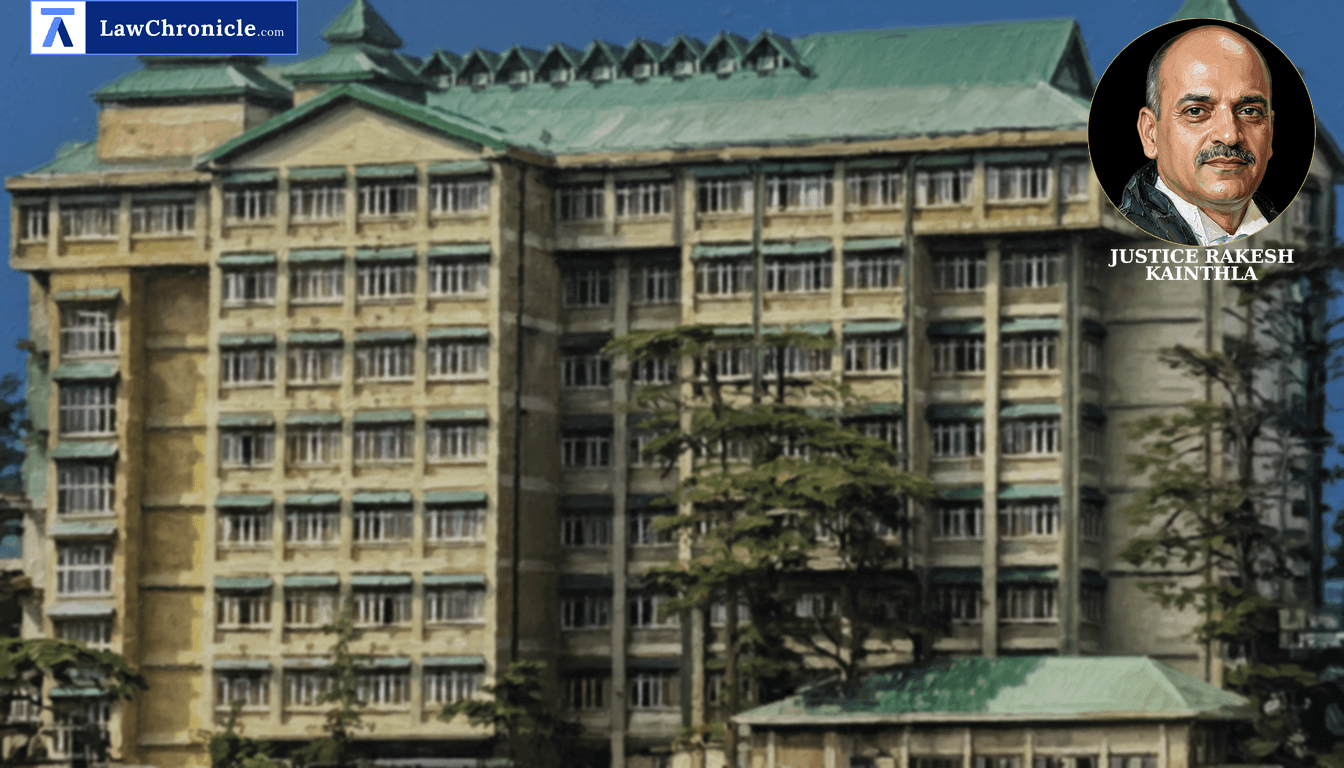
The Himachal Pradesh High Court has reinforced the principle that the extraordinary power to quash criminal proceedings cannot be invoked as a tool to bypass statutory limitation periods or alternate efficacious remedies, particularly after a trial court has already applied its mind to frame charges. The ruling underscores that while consensual relationships falling apart may not always constitute an offence, the timing and procedural stage of a legal challenge are critical to its maintainability.
Justice Rakesh Kainthla, presiding over the matter, heard a petition seeking the quashing of an FIR registered for an offence punishable under Section 69 of the Bharatiya Nyaya Sanhita, 2023. The petitioner contended that the relationship was consensual and its breakdown did not amount to a 'false promise to marry,' whereas the State argued that the petitioner's conduct from the outset indicated a mala fide intent to deceive.
Court's Rationale on Maintainability Post-Framing of Charges
The Court observed that once a competent court has framed charges based on a prima facie case, the aggrieved person should ideally invoke revisional jurisdiction rather than seeking quashing under inherent powers. Relying on B.N. John v. State of U.P. ( "2025 SCC OnLine SC 7": 2025 CaseBase(SC) 328) and Minakshi Bala v. Sudhir Kumar ( "(1994) 4 SCC 142": 1994 CaseBase(SC) 613), the Court noted that inherent powers should be used sparingly, especially when the trial has already progressed.
Regarding the merits of the case under the Bharatiya Nyaya Sanhita, 2023, the Court, in its reasoning, observed: "Therefore, a prima facie inference can be drawn at this stage that the petitioner had maintained the relationship with the victim by making a promise to marry, which he never intended to fulfill... The petitioner's act of asking his relatives to visit the informant's relative in her native place showed that the allegation made by the informant that the petitioner had promised to marry her has substance."
The Court further cited Pramod Suryabhan Pawar vs. The State of Maharashtra & anr. and Samadhan vs. State of Maharashtra & another to distinguish between cases where relationships lasted several years versus the present instance where the engagement was abruptly terminated and communication blocked shortly after the marriage proposal stalled.
Directions Issued by the Court
The Court has the following directions:
"The present petition fails, and it is dismissed. The observations made hereinabove are regarding the disposal of this petition and will have no bearing whatsoever on the merits of the case."
Key Takeaways:
Procedural Bar Post-Charge Framing
Petitions for quashing FIRs are generally not entertained once the Trial Court has framed charges; the proper remedy is to file a Revision Petition.
Prima Facie Intent in Marriage Promises
Conduct such as blocking communication and refusing to meet parents shortly after seeking a marriage proposal can be viewed by courts as evidence of an initial lack of intention to marry.
Distinction from Long-Term Consensual Ties
Short-term relationships (less than a year) ending in blocked access are distinguished from multi-year consensual relationships where physical intimacy is based on emotional attachment rather than a singular deceptive promise.
Ratio Decidendi:
When a competent trial court has already framed charges against an accused, the High Court will not exercise its inherent jurisdiction to quash the FIR except in the rarest of cases involving forensic exigencies. The appropriate legal recourse for an accused at this stage is to invoke the revisional jurisdiction of the High Court or the Sessions Judge to challenge the order of framing charges, rather than seeking the quashing of the underlying FIR.
Background:
The petitioner moved the High Court to quash an FIR filed under Section 69 of the Bharatiya Nyaya Sanhita, 2023, asserting that a failed marriage proposal did not constitute a criminal offence. The informant alleged that the petitioner established a physical relationship after promising marriage but subsequently blocked her contact and prepared to marry someone else when a meeting between their families failed to materialize due to her illness. The Court evaluated the guidelines for quashing as established in Pramod Suryabhan Pawar vs. The State of Maharashtra & anr., Samadhan vs. State of Maharashtra & another, Ajay Malik v. State of Uttarakhand ( "2025 SCC OnLine SC 185": 2025 CaseBase(SC) 133), and Iqbal v. State of U.P.. Finding that the charges had already been framed and witnesses were being examined, the Court declined to intervene, relegating the petitioner to the ongoing trial process.
Case Details:
Case No.: Cr. MMO No. 165 of 2026
NeutralCitation: 2026:HHC:28280
Case Title: Yogesh Kumar Versus The State of H.P. & another
Appearances:
For the Petitioner(s): Ms Madhurika Sekhon, Advocate.
For the Respondent(s): Mr Ajit Sharma, Deputy Advocate General, for respondent No.1/ State.
Source: 2026 CaseBase(HP) 30
Similar Articles
 Breaking News


