


Board Cannot Discriminate Between Similarly Situated Employees In Regularization Claims: Jammu & Kashmir HC
 Copy Link
 Share
 Save
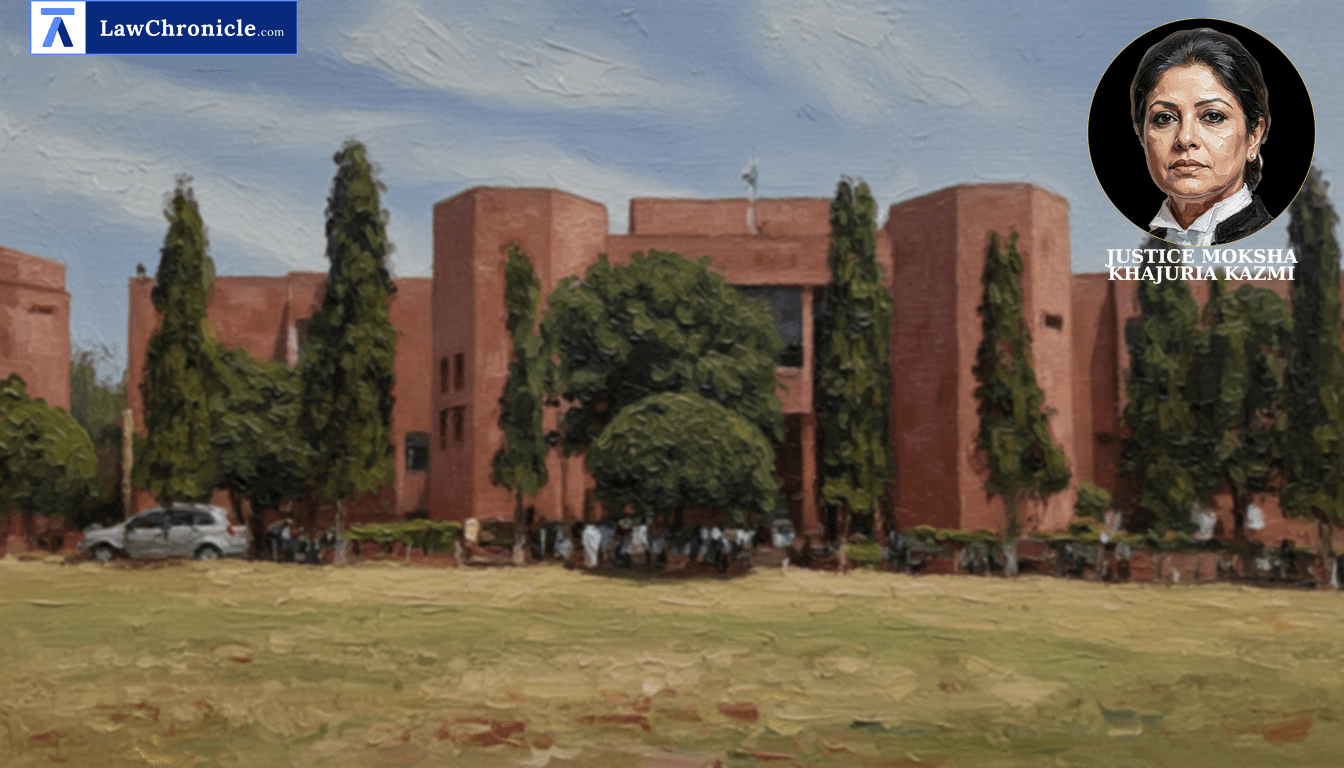
The Jammu & Kashmir and Ladakh High Court has reinforced the principle of parity in public employment, ruling that a statutory board cannot selectively deny regularization benefits to individuals who form part of the same recruitment batch and engagement order. In a sharp rebuke to administrative inconsistency, the Court held that once a Division Bench has established the eligibility of a specific batch of workers, the authorities cannot rely on a misreading of prior orders to exclude similarly situated candidates.
Justice Moksha Khajuria Kazmi, sitting as a single-judge bench, adjudicated upon two writ petitions filed by consolidated workers of the Jammu & Kashmir Board of School Education (JKBOSE). The petitioners sought the quashing of a 2018 rejection order and a direction for their regularization, citing parity with colleagues who had already secured relief through prior litigation including Saleem Ali v. State of J&K and others and Kewal Krishan v. State & Ors.
Key Takeaways
Binding Parity for Same-Batch Recruits
Administrative authorities are legally bound to extend the same benefits to all members of a specific recruitment or engagement batch once a court has declared the entitlement for some members.
Prohibition of Misinterpreting Judicial Orders
Statutory bodies cannot use a selective or literal misreading of a 'liberty to fill vacancies' clause to deny the legitimate claims of existing employees who have been judicially recognized as eligible.
Notional Seniority Protected
While regularization may be subject to vacancy availability and eligibility, the effective date must be notional from when it originally became due, ensuring that procedural delays do not permanently prejudice the employee's career progression.
Court's Rationale on Administrative Parity
The Court observed that the petitioners were part of the same Engagement Order dated 09.05.2007 as other employees whose rights were already settled by the Division Bench in LPA against judgment in SWP No. 1806/2012 and LPA against judgment in SWP 2090/2017. The Court noted that the Board's attempt to distinguish the petitioners' case was legally flawed.
The Court, in its reasoning, observed: "The petitioners are part of the same Engagement Order dated 09.05.2007 as Kewal Krishan, whose case was considered by the Division Bench... The reasoning of the Division Bench, therefore, applies to them with equal force, and it is not open to the Board to treat them differently from a person engaged under the same order. The Board's ground for rejection is a misreading of the judgment dated 16.08.2017. The liberty to fill 'the remaining vacancies in the regular process' relates to the vacancies that remain after the petitioners in Saleem Ali v. State of J&K and others are regularised. It does not take away the claim of persons of the same batch who have since been held entitled to the same treatment."
The Court has the following directions:
"(i) Order No. 821-V of 2018 dated 11.12.2018 is quashed;
(ii) The respondents shall regularise the services of the petitioners as Class IV against the available vacancies, on the lines directed in Saleem Ali v. State of J&K and others, by judgment dated 16.08.2017;
(iii) Regularization shall be subject to the availability of vacancies, the inter se seniority of the petitioners, and their fulfillment of the eligibility criteria;
(iv) Regularization shall take effect notionally from the date on which it became due to each petitioner, and no arrears shall be payable on that account;
(v) The exercise shall be completed within a period of 08 weeks from the date of receipt of the copy of this judgment.
(vi) The Board shall be at liberty to fill the remaining vacancies through the regular process;
(vii) The benefit of this judgment shall be available only to petitioners whose names are borne on the record of this petition."
Ratio
When a group of employees is engaged through the same selection process and under a single engagement order, they constitute a single class. Any judicial determination of eligibility or entitlement for regularization for a member of that batch applies equally to all similarly situated members, and the state cannot selectively apply judicial precedents to deny benefits to one while granting them to another.
Background
The petitioners were appointed as consolidated workers in the J&K Board of School Education in 2004. Their journey was marked by multiple rounds of litigation, including a 2004 challenge to their selection and a subsequent 2005 disengagement. Following a direction in Joginder Kumar vs JKBOSE, the Board eventually issued an engagement order on May 9, 2007, for a batch of 12 persons, including the petitioners.
While other members of the same batch obtained regularization orders through Saleem Ali v. State of J&K and others and Kewal Krishan v. State & Ors, the Board rejected the petitioners' claim in 2018, arguing that the Court had allowed the Board to fill 'remaining vacancies' via a regular recruitment process. The High Court found this to be a fundamental misinterpretation, clarifying that 'remaining vacancies' only referred to those left over after the consolidated workers of that specific batch were absorbed. The Court set aside the rejection order, directing the Board to complete the regularization process within eight weeks.
Case Details:
Case No.: WP (C) No. 1956/2019 & 1959/2019
Case Title: Sheetal Nagotra & Ors. v. State of J&K through Commissioner/Secretary, School Education Department & Ors.
Appearances:
For the Petitioner(s): Mr Achal Sharma, Advocate
For the Respondent(s): Ms Meenakshi Salathia, Dy.AG for R-1; Mr Rudresh Pratap Singh Thakur, Adv vice Mr K. D. S. Kotwal, Adv for R-2 & 3
Source: 2026 CaseBase(JK) 1048
Similar Articles

 Breaking News


