


Bombay HC Orders Eviction of Pune Lodge Over Persistent Nuisance
 Copy Link
 Share
 Save
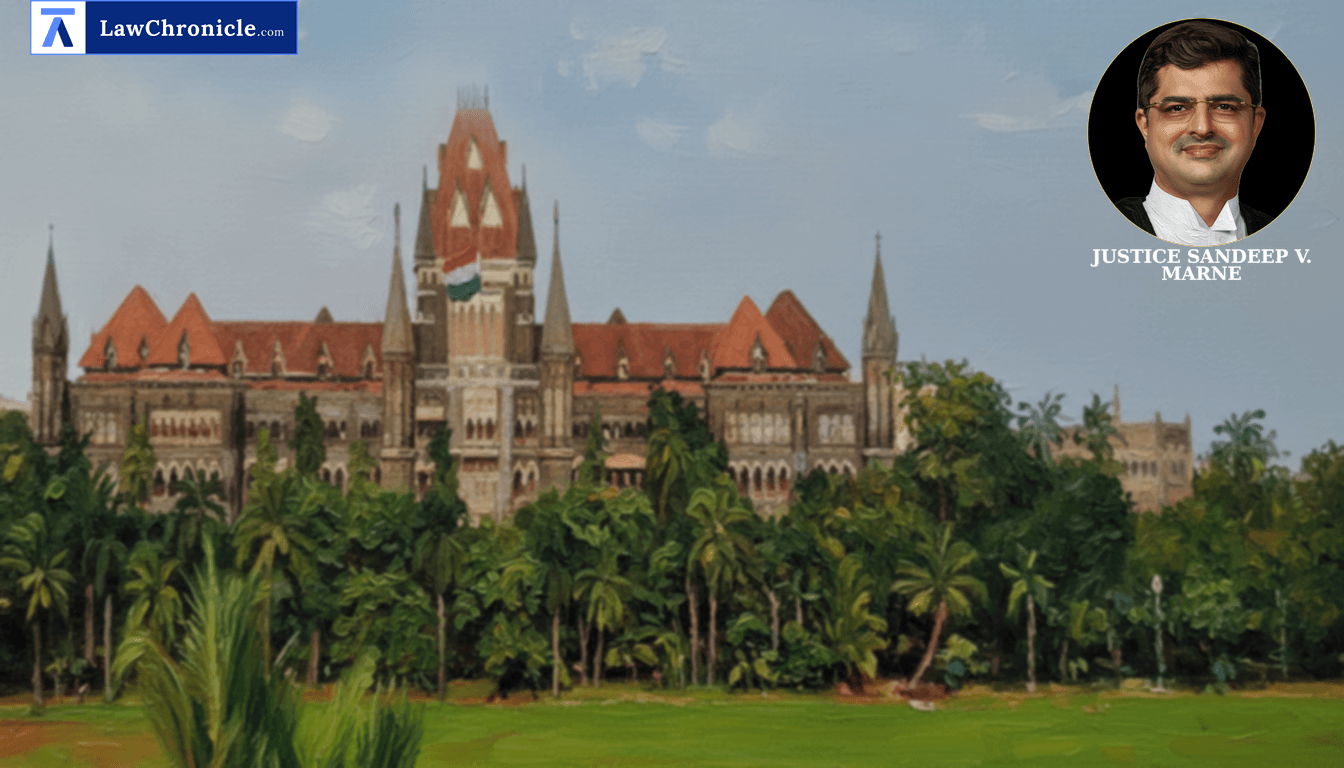
The Bombay High Court has set a significant precedent by ruling that even if a landlord is not physically residing in an adjoining property, they can maintain an eviction suit on grounds of nuisance and annoyance if the tenant’s conduct disturbs their reasonable peace. Justice Sandeep V. Marne set aside concurrent findings of lower courts, emphasizing that a tenant cannot rely on a decades-old business legacy to justify ongoing harassment of the property owner.
A single-judge bench of Justice Sandeep V. Marne heard the challenge against concurrent orders of the Trial and Appellate Courts that had originally dismissed a suit for eviction. While the High Court upheld the findings regarding bona fide requirement and rent arrears, it found the lower courts committed a jurisdictional error by ignoring blatant evidence of nuisance.
Court Identifies Nuisance in Narrow Passages and Immoral Acts
The Court observed that the landlords, residing on the fourth floor of the building, were subjected to constant annoyance by the customers of the lodge operated by the respondent on the lower floors. The evidence included photographs of patrons sleeping in narrow corridors, littering common areas, and obstructing staircases. The Court, in its reasoning, observed: "Everything that affects the ordinary comfort of a person would be nuisance. Every act of tenant which interferes with landlord’s right to use or occupy his property would amount to actionable nuisance and every act of a tenant which disturbs the reasonable peace of ordinary person and which leads to unpleasurable feeling would constitute nuisance or annoyance."
Legal Interpretation of 'Adjoining or Neighbouring Occupier'
The Court clarified that the expression ‘adjoining or neighboring occupier’ under Section 16(1)(c) of the Maharashtra Rent Control Act, 1999 includes the landlord themselves. It relied on the ratio in M/s. Impex (India) Limited V/s. Mr. Dinashah Jal Daruwala and Ors. and Gulam Husain Mirza V/s. Laxmidas Premji and Another to establish that any material interference with ordinary comfort such as patrons wandering in few clothes or consuming liquor in common passages constitutes valid grounds for eviction.
Directions Issued to the Respondent
The Court has the following directions:
"(i) Judgment and order dated 11 June 2015 passed by Additional Judge, Small Causes Court, Pune in Civil Suit No.419 of 2007 and judgment and order dated 16 March 2022 passed by the District Judge-22, Pune, in Regular Civil Appeal No.371 of 2015 are set aside.
(ii) Civil Suit No. 419 of 2007 is decreed on the ground of nuisance and annoyance under Section 16(1)(c) of the Maharashtra Rent Control Act, 1999.
(iii) Defendant/Respondent shall accordingly handover possession of the suit premises to the Plaintiffs within a period of 3 months."
Background:
The dispute originated from a 2007 suit filed by the landlords against the respondent, who operated 'Shriraj Lodge' in a building at Budhwar Peth, Pune. The landlords alleged that the lodge was being misused for immoral purposes and that patrons caused a significant nuisance. The Trial Court and Appellate Court had dismissed the suit, heavily relying on a 1994 compromise in a previous suit filed by the landlord's father. The lower courts believed the landlord had relinquished future claims by once accepting an increase in rent.
However, Justice Marne noted that the previous compromise did not grant the tenant a license for perpetual nuisance. Referring to Kanahaiya Lal Arya V/s. Md. Ehshan and others ( "2025 SCC OnLine SC 432": 2025 CaseBase(SC) 301), the Court held that a compromise decree does not mean a landlord gives up rights for future eviction proceedings. Regarding the ground of bona fide requirement, the Court noted the landlords had secured other commercial premises but granted licenses to third parties, which contradicted their claim of urgent need for their son’s business. While that ground was rejected, the established nuisance was sufficient to order the tenant's eviction under the Maharashtra Rent Control Act, 1999 and the Constitution of India, 1950.
Case Details:
Case No.: WRIT PETITION NO.15535 OF 2022
NeutralCitation: 2026:BHC-AS:22195
Case Title: Shabbir Fidahusain Kachwala and Anr. vs. Purushottam Chalvayya Shetty
Appearances:
For the Petitioner(s): Mr. Sanjiv Sawant with Mr. Abhishek Matkar & Mr. Malhar Bageshwar
For the Respondent(s): Mr. S.N. Chandrachood with Mr. A.V. Pitre
Source: 2026 CaseBase(BOM) 219


 Breaking News


