


Bombay HC Rebukes Routine Tax Appeals Sans Substantial Questions Of Law
 Copy Link
 Share
 Save
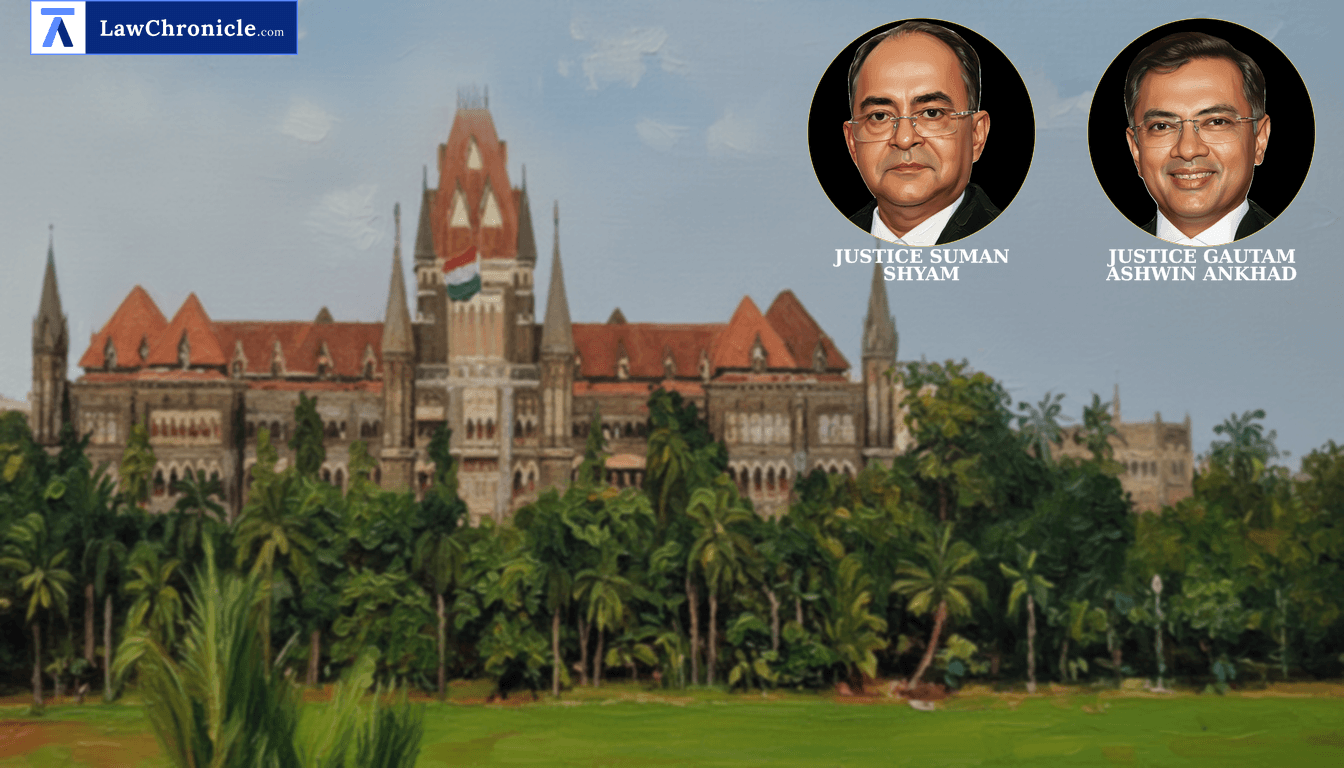
The Bombay High Court slammed the Income Tax Department for filing appeals in a routine and mechanical manner, warning that such practices exacerbate judicial backlog and hinder the resolution of serious revenue matters. While dismissing an appeal against an infrastructure developer, the Bench clarified that the High Court's jurisdiction under Section 260A of the Income Tax Act, 1961 is not an automatic continuation of litigation but is strictly confined to resolving debatable and unsettled points of law.
A bench comprising Justice Suman Shyam and Justice Gautam A. Ankhad heard the appeal filed by the Principal Commissioner of Income Tax against a developer who had claimed tax benefits for infrastructure projects. The Revenue Department challenged the concurrent findings of the lower authorities, which had classified the assessee as a 'developer' rather than a mere 'contractor'.
Key Takeaways
Jurisdictional Threshold Reaffirmed
Section 260A of the Income Tax Act, 1961 does not grant a general right of appeal; it requires the existence of a 'substantial' question of law rather than a mere disagreement with factual findings.
Curbing Mechanical Litigation
Government departments must exercise due diligence before filing appeals to ensure they are not simply re-litigating facts or settled legal principles.
Finality of Concurrent Findings
Where the CIT(A) and the Tribunal concurrently hold a factual view based on evidence, the High Court will not interfere unless the findings are proved to be perverse or legally erroneous.
Impact on Judicial Resources
Routine filings of meritless appeals impede the disposal of high-stakes revenue cases that actually require judicial interpretation.
Court Observations on 'Substantial Questions of Law'
The Bombay High Court emphasized that the term 'substantial question of law' has a specific legal threshold, relying on the test established in Sir Chunilal V. Mehta & Sons Ltd. v. Century Spg. and Mfg. Co. Ltd.. The bench noted that if a question is already settled by the highest court or involves the mere application of well-settled principles, it does not qualify as a substantial question of law.
The Bombay High Court observed that "Section 260-A does not confer a general appellate jurisdiction upon the High Court to re-appreciate evidence or substitute its own view for the view concurrently taken by the authorities below on questions of fact. An Appeal under Section 260A of the Act can be admitted only when the High Court is convinced that the same involves 'substantial question(s) of law' begging an answer of the Court and not otherwise."
Furthermore, the Bench expressed concern over the Department's litigation strategy, stating: "This Bench has noticed that Appeals under Section 260A of the Act are filed by the Department in a routine manner whereby the suggested substantial questions of law(s) are drafted mechanically. Having regard to the legislative scheme of Section 260A, the remedy thereunder, cannot be permitted to become a routine or automatic continuation of the proceeding instituted before the learned Tribunal."
The Bombay High Court finally concluded that "The pendency of large number of Appeals filed under Section 260A, where no substantial question of law is involved, is, on one hand, increasing back log of cases and on the other hand, coming in the way of expeditious disposal of Appeals involving the interest of the Revenue where serious questions of law are awaiting consideration of the Court. We, therefore, expect the Departmental Authorities to look into these aspects of the matter and take corrective step(s),as may be deemed necessary. A copy of this order be sent to the Principal Chief Commissioner of IT Department."
Ratio
An appeal under Section 260A of the Income Tax Act, 1961 is maintainable only when it involves a substantial question of law that is debatable, not previously settled by binding precedent, and has a material bearing on the case. The High Court cannot exercise appellate jurisdiction to re-appreciate evidence or overturn concurrent findings of fact unless they are shown to be perverse or based on an erroneous application of law.
Background
The Respondent-Assessee, a firm engaged in road construction and infrastructure works, had claimed deductions under Section 80-IA(4) of the Income Tax Act, 1961 for the Assessment Year 2011-12. The Assessing Officer (AO) initially disallowed the claim, arguing that the Assessee was a 'contractor' and not a 'developer'. However, the Commissioner of Income Tax (Appeals) reversed this decision, a view that was subsequently upheld by the Income Tax Appellate Tribunal (ITAT).
In its appeal to the Bombay High Court, the Department argued that the ITAT's reliance on its own previous orders was arbitrary. However, the High Court found that a Co-ordinate Bench in Principal Commissioner of Income Tax-1 v. Mahalaxmi Infra Projects Limited had already dismissed a similar appeal involving the same Assessee for a different year. The Bombay High Court applied the principles laid down in Vijay Kumar Talwar v. CIT, Santosh Hazari v. Purushottam Tiwari, and Hero Vinoth v. Seshammal to determine that no new legal issue was presented. Consequently, the Court dismissed the appeal, holding that the Department failed to demonstrate any perversity in the lower authorities' findings.
Case Details:
Case No.: INCOME TAX APPEAL NO.2691 OF 2018
Neutral Citation: 2026:BHC-OS:20892-DB
Case Title: The Principal Commissioner of Income Tax-1 v. Mahalaxmai Infra Projects Ltd.
Appearances:
For the Petitioner(s): Mr Arjun Gupta, Advocate
For the Respondent(s): Mr Rohan Deshpande with Mr. Vihit Shah, Advocates
Source: 2026 CaseBase(BOM) 6490
Similar Articles




 Breaking News


