


Section 260A Income Tax Appeal Unmaintainable Without Substantial Law Question: HC
 Copy Link
 Share
 Save
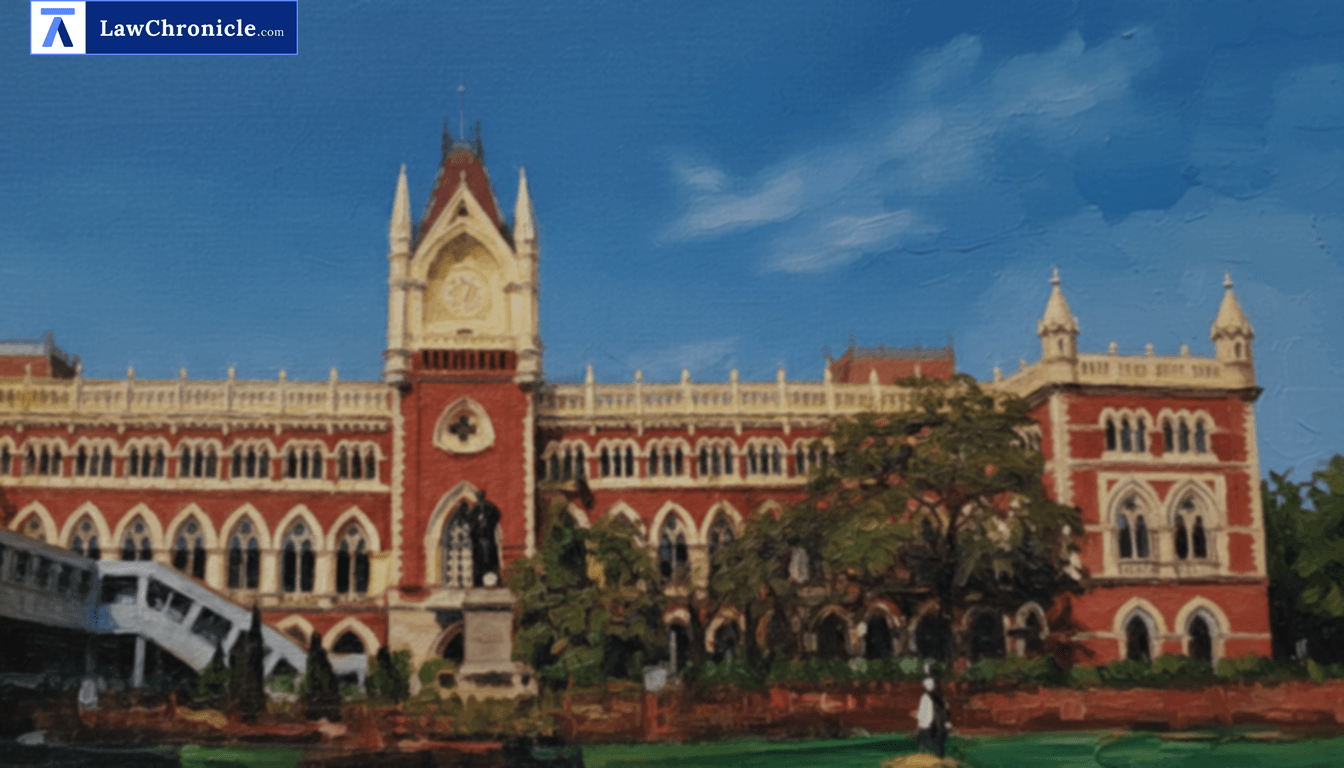
In a firm reiteration of statutory appellate limits, the High Court at Calcutta has ruled that an assessee cannot maintain an appeal without establishing a compelling and foundational substantial question of law. The Court highlighted that statutory thresholds under tax law cannot be bypassed on grounds of harshness or sympathy.
A division bench of Justice Rajarshi Bharadwaj and Justice Uday Kumar was considering an appeal filed under Section 260A of the Income Tax Act, 1961 against an Income Tax Appellate Tribunal order that rejected a delayed appeal in limine.
Key Takeaways
- Substantial Question Mandatory: An appeal under Section 260A cannot be entertained unless it presents a clear-cut and debatable substantial question of law.
- CBDT Circulars Restrict Revenue Only: Internal administrative circulars on monetary ceilings under Section 268A limit only the Revenue from litigating small tax effects, not the assessee.
- Factual Disputes Barred: Evaluation of medical evidence for delay condonation and property stamp valuations constitute pure questions of fact beyond High Court jurisdiction.
Court Observations and Rationale
The High Court emphasized that it does not sit as a regular court of first or second appeal on facts, nor does it re-appreciate evidence or medical certificates. The Court, in its reasoning, observed: "The gateway to this appellate court under Section 260A of the Income Tax Act, 1961 is neither wide nor indiscriminate; it is guarded by a strict statutory sentinel. An appeal before this High Court is maintainable only if it gives rise to a compelling, clear-cut, and undiluted Substantial Question of Law. Without such a foundational question, the doors of this court remain firmly bolted."
The Court noted that questions surrounding sufficiency of cause for delay and property valuation under Section 56(2) of the Income Tax Act, 1961 do not involve statutory interpretation or judicial conflicts. The Court has following directions:
"The appeal (I.T.A.T. No. 186 of 2026) along with the connected application (G.A. No. 1 of 2026) are, therefore, dismissed as non-maintainable, being devoid of any substantial question of law."
Ratio
To cross the threshold of Section 260A of the Income Tax Act, 1961, the proposed question must be debatable, novel, and directly impact the interpretation of a statutory provision; pure factual re-appraisals cannot transform a factual dispute into a substantial question of law.
Background
The matter pertained to Assessment Year 2018–19. The assessee filed a return declaring an income of Rs. 6,51,020/-. During scrutiny, the Assessing Officer examined an immovable property purchased for Rs. 10,00,000/- and replaced the transaction price with the stamp duty valuation of Rs. 39,69,000/-. Invoking Section 56(2) of the Income Tax Act, 1961, an addition of Rs. 29,69,000/- was made.
After the Commissioner of Income Tax (Appeals) dismissed the first appeal, the assessee approached the Income Tax Appellate Tribunal with a delay, citing physical health issues and arm swelling. The Tribunal rejected the delay condonation request because the illness did not result from a vehicular accident and dismissed the appeal in limine. Finding no substantial question of law in the subsequent appeal, the High Court dismissed the petition as non-maintainable.
Case Details:
Case No.: ITAT 186 OF 2026, IA NO: GA 1 OF 2026
Case Title: Rahul Singh VS Principal Commissioner of Income Tax Asansol & Ors.
Appearances:
For the Petitioner(s): Mr. Rajesh Kumar Mishra, Mr. Sutirtha Das
For the Respondent(s): Ms. Sanjukta Gupta, Ms. Sukanya Dutta
Source: 2026 CaseBase(CAL) 1621
Similar Articles
 Breaking News


