


Negligent Litigants Cannot Claim Relief for Counsel’s Inaction: Punjab & Haryana HC
 Copy Link
 Share
 Save
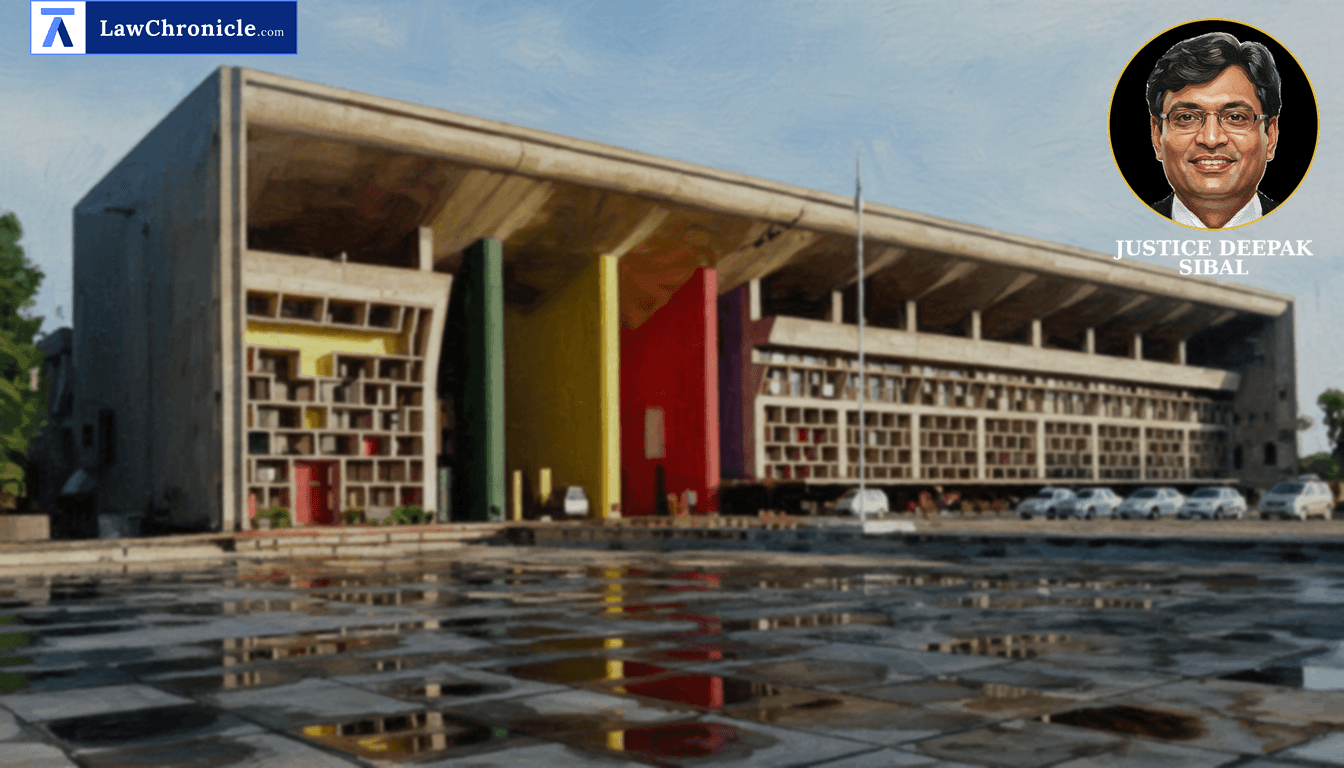
The Punjab and Haryana High Court barred negligent litigants attempting to mask procedural delays behind their counsel's personal tragedies, ruling that the shield of 'sufficient cause' cannot be invoked by those who display chronic indifference toward statutory proceedings. In a definitive stance on the limits of judicial leniency, the Bench clarified that while 'justice-oriented' approaches exist, they do not grant unfettered immunity to parties who fail to exercise basic diligence in their legal affairs.
Justice Deepak Sibal and Justice Sunish Bindlish presided over the appeal, which challenged a decision by the Income Tax Appellate Tribunal (ITAT). The bench was tasked with determining whether a substantial question of law arises when a litigant seeks condonation for an inordinate delay of 441 days, primarily blaming their tax consultant's health and family bereavement, despite having a prior record of non-cooperation during assessment proceedings.
Key Takeaways
Condonation Is Not an Absolute Right
Section 249(3) of the Income Tax Act, 1961 makes the existence of 'sufficient cause' a mandatory statutory condition, not a matter of routine equitable relief.
Diligence Burden on Litigant
Parties cannot act as passive observers; they must demonstrate personal diligence and cannot shift entire blame to counsel if their own conduct reflects indifference.
Concurrent Findings Limit Appeals
When lower authorities concurrently find an absence of sufficient cause based on facts, High Courts will not interfere unless the findings are proved to be perverse or based on no material.
Medical Pleas Require Substantiation
General assertions of illness, without supporting medical certificates or records, are insufficient to discharge the burden of explaining inordinate delays.
Judicial Scrutiny of 'Sufficient Cause'
The Punjab and Haryana High Court observed that while the law of limitation may appear harsh, it must be applied with rigor when the statute so prescribes. The bench highlighted that the appellant's own conduct at the assessment stage, specifically refusing to accept statutory notices, indicated a pattern of non-cooperation that weighed heavily against the plea for leniency. The Court emphasized that "In case a party is found to be negligent, or for want of bona fide on his part in the facts and circumstances of the case or found to have not acted diligently or remained inactive, there cannot be a justified ground to condone the delay... the concept of liberal approach has to encapsulate the conception of reasonableness and it cannot be allowed totally unfettered free play."
Ratio
The sufficiency of cause for condonation of delay is primarily a finding of fact. Once a fact-finding authority applies its mind and declines condonation for appropriate reasons, it does not give rise to a substantial question of law under Section 260-A of the Income Tax Act, 1961. The principle that a party should not suffer for their counsel's default is inapplicable where the party themselves has failed to act with bonafides or reasonable diligence.
Background
The appellant, a proprietor of a dairy business, faced a best-judgment assessment under Section 144 of the Income Tax Act, 1961 after failing to comply with notices under Section 143(2) and Section 142(1). The Assessing Officer estimated a net profit at 3% of gross receipts, leading to a significant tax addition. The appellant approached the CIT(A) with a delay of 441 days, citing that his counsel was unavailable due to his mother's death and subsequent personal ailments.
Both the CIT(A) and the Tribunal dismissed the appeal as time-barred, noting the lack of medical evidence and the appellant's negligent conduct. The Punjab and Haryana High Court analyzed precedents including Collector, Land Acquisition, Anantnag v. Mst. Katiji and N. Balakrishnan v. M. Krishnamurthy ( "(1998) 7 SCC 123": 1998 CaseBase(SC) 331) regarding liberal construction, but balanced them against Basawaraj v. Special Land Acquisition Officer ( "(2013) 14 SCC 81": 2013 CaseBase(SC) 411) and Esha Bhattacharjee v. Managing Committee of Raghunathpur Nafar Academy ( "(2013) 12 SCC 649": 2013 CaseBase(SC) 742) which emphasize that negligence cannot be condoned. Distinguishing Rafiq v. Munshi Lal ( "AIR 1981 SC 1400": 1981 CaseBase(SC) 89), the Punjab and Haryana High Court noted that the present case involved a failure to institute the appeal itself, rather than a mere failure to appear at a hearing. Consequently, the High Court affirmed the lower orders, finding no perversity in the refusal to condone the delay.
Case Details:
Case No.: ITA-3-2020
Case Title: Rijwan v. Income Tax Officer, Ward-3(5), Gurgaon
Appearances:
For the Petitioner(s): Mr. Rishabh Singla, Advocate with Mr. Anirudh Garg, Advocate
For the Respondent(s): Mr. Ranvijay Singh, Senior Standing Counsel with Mr. Vidul Kapoor, Junior Standing Counsel
Source: 2026 CaseBase(PNH) 24110
Similar Articles
 Breaking News


